
Posts Tagged learning space
Education is Changing – Libraries Enhance Learning Support
Posted by acohen in Library Planning Research, work in progress on May 9th, 2013
Library buildings can be designed to enhance learning support and research. Librarians can support the workflow of their researchers by directly supporting, managing and aggregating the content. These days there are plenty of librarians preaching community, but what about how we can design libraries to enhance the digital world?
Libraries are places where solutions are possible through access to knowledge and higher education. Planning learning environments requires us to be aware of new opportunities in education technology, open-source software or open-access publishing.
According to “Open Online Courses – an avalanche that might just get stopped“- In the US, the growing chorus for online education through massive open online courses, or moocs, has been deafening.” For example, the California legislature created a bill for the “New University of California” – one that offered no instruction but would issue credentials to people merely for passing exams. Does this model assure that our students are learning in the online world?
The New University of California bill did not pass, but California lawmakers detailed a plan on May 8, 2013 to require the state’s 145 public colleges and universities to grant credit for low-cost online courses offered by outside groups, including classes offered by for-profit companies.
The bottom line is that there really is no replacement for face-to-face interaction between teachers, professors, librarians and students. Digital and online methods can enrich those interactions, but it is no match for the community of services at our Universities and Colleges provide; the community of professors, tutors, peer mentors, librarians, IT help, libraries, computers labs, disability services and academic support.
It seems unlikely that libraries and learning spaces can be replaced by online learning without considerable investment in electronic resources. No wonder 72% of those who have taught moocs over the past three years believe students who took their classes had not done sufficient work to deserve credit from their institution.
Libraries and Learning Commons can be created with clusters of valuable and distinctive services. Librarians can ensure that the learning environment, enhances the reputation of the community, faculty and the institution. Librarians will continue to ask – What services does the community need? How can their output be preserved, discovered and re-used?
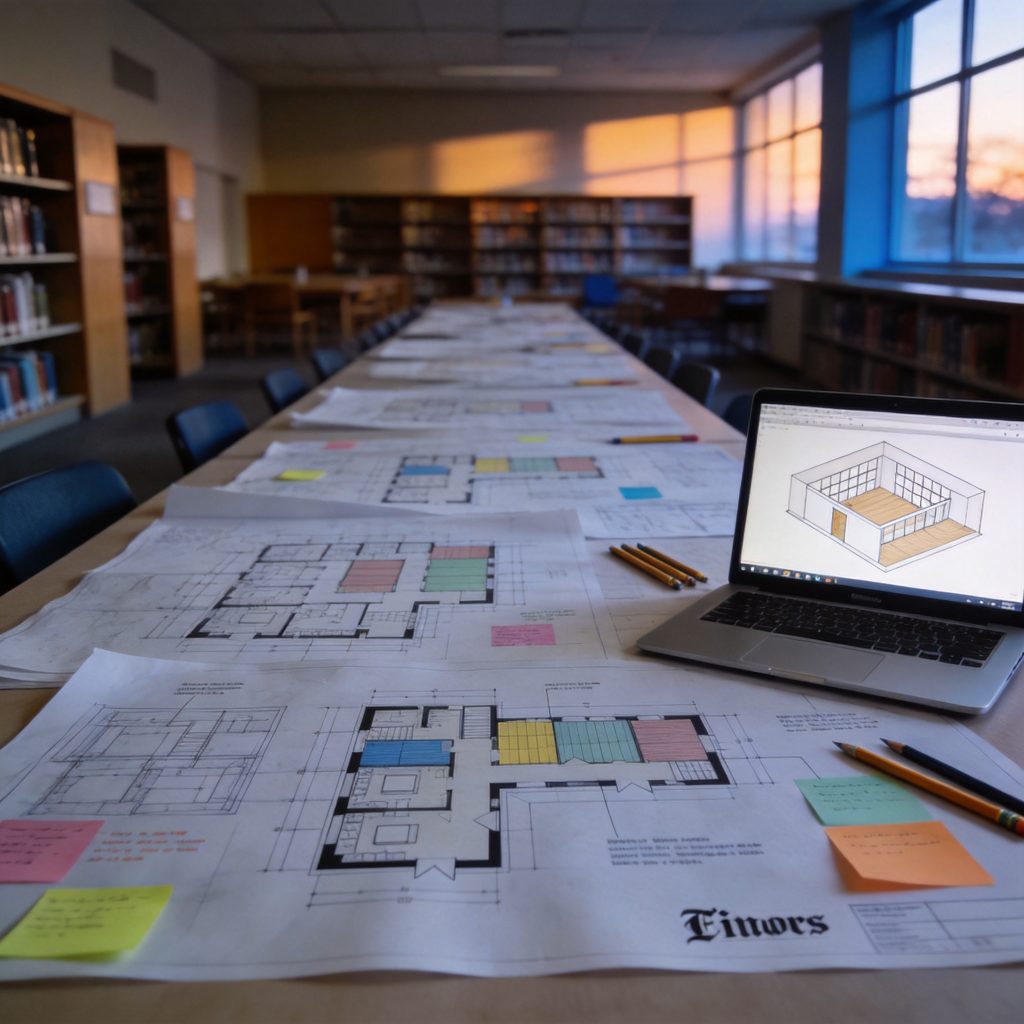
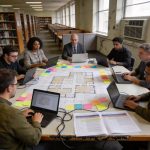
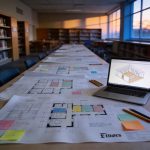
You can think of the Learning Commons as an incubator. It is an “I-Lab” – a multifunctional and fluid space for learning. The photo below is a visualization board that is at the Mathematics Museum in New York. It is an example of a physical environment that will support online learning technologies.
Library Learning Commons – People Tools
Posted by acohen in Library Planning Research on August 23rd, 2012
The library is a place that enables different types of learning opportunities. The idea that the learning environment is just about books or computers does not tell the complete story. There are many opportunities to gain knowledge in a library as well as in a formal learning space (classroom). However, the smart phones, laptops and e-book readers are changing the way we interact in our learning space. Our social environment is part of the digital continuum too, creating opportunities for library patrons to use “people tools” = applications + hardware + content.
The ability to communicate with smart boards is a strategy to improve the learning space. The future learning environment will include “people tools” to support the curriculum, formal or informal training programs and/or personal research. The opportunity to share with smart technology enables library patrons to experiment with technology, expanding the users ability to research the subject.
The Smart Technology Learning Commons is an example that gives librarians and libraries an advantage over a home or mobile connection. They provide “people tools” for the interactions to take place. They enhance the physical and virtual spaces with additional equipment.
If you are building a Khan Academy type learning environment or a library with e-content, you will need to know how to build the technology tools to communicate. There will be spaces where the public share; where people meet and collaborate on projects.
According to Today’s Public Libraries: Public Places of Excellence, Education and Innovation
“Despite the Internet, it seems, libraries persist—and even thrive. Given the wealth of information and reading material at our fingertips at all times, it’s fair to ask: why should that be? Why do people still want—and need—public libraries? There are many reasons, but the most important have to do with a couple of ideas that might sound archaic to modern ears, perhaps because in reality what they are is enduring.
Let’s improve library environments to make them more effective. The nine reasons for a library gives you some strategies to discuss, build and share.
the language of library space
Posted by acohen in Library Planning Research, Social Library Issues, Space Planning on December 20th, 2011
A recent article from Inside Higher Education focuses on the need to balance quiet and active spaces in the library. Project Information Literacy study found that students minimize technology use and try to unplug from their overly distracting social networks when working on projects or studying for exams.
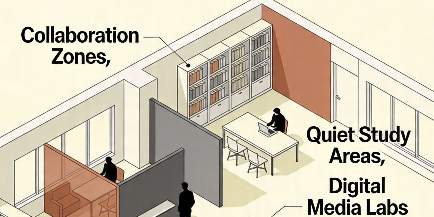
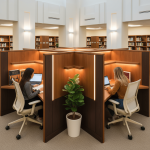
During our library planning studies, we have found that all libraries need environments that allow for social, group and individual study. The library plan should include:
According to “The Future of the Academic Library Symposium: Bridging the Gap, Libraries – “need to be in a state of perpetual beta to effect change.” We believe libraries need to experiment with both quiet and active space.
The University of North Carolina started a Journal of Learning Spaces that is a good place to start an analysis of library space needs. We recommend the journal as a starting point for discussion.
Innovation in Learning – Space Design for the Future
Posted by acohen in Library Planning Research on September 26th, 2011
In the quest to learn as much as we can about technology and learning, the Sydney Centre for Innovation in Learning (SCIL) is an example. We believe education is changing through the use of technology. We believe we need new and creative models for 21st century education. We believe that the library is a unique space-model for learning. It changes the focus from teacher-directed paradigms to self-directed engaged learning. The video link captures a number of the ‘spaces for learning’ – it is a good thought starter.
The Technology Sandbox at the D.H. Hill Library showcases new technologies for learning. NC State provides easy to use large-scale display’s and gesture-based computing tools. These tools have been installed, revolutionizing the visual display of data and the creation of digital media.
The two examples encourages peer-to-peer learning, experimentation, and collaboration. They highlight the key innovations such as a laboratory for faculty and staff to prototype virtual tools. We believe that libraries should experiment with new types of learning spaces, especially those that blend the virtual with the physical.
New Ways of Learning Effects Library Design
Posted by acohen in Library Planning Research, work in progress on July 12th, 2011
Technology has impacted the way we use library collections. It has impacted the way we interact in the library building. The landscape of learning has changed so much that we need to ask – “Is someone literate if they can not use digital technology?”
The library of the future needs to provide ways to build skills for creativity, socializing and collaboration. If you look around, you will find young people using mobile technology. According to Pew Internet – Smartphones – 35% of adults in the US own a smartphone and more people have cell phones than a degree. And “some 87% of smartphone owners access the internet or email on their handheld, including two-thirds (68%) who do so on a typical day. When asked what device they normally use to access the internet, 25% of smartphone owners say that they mostly go online using their phone, rather than with a computer.”
For young kids, the cell phone can be a distraction or it can be an effective productivity tool. To produce the New Learners for the 21st Century we need libraries that enable educators to use the digital media to shape their experience of the world.
Future Libraries and Learning Systems
Posted by acohen in Library Planning Research on November 16th, 2010
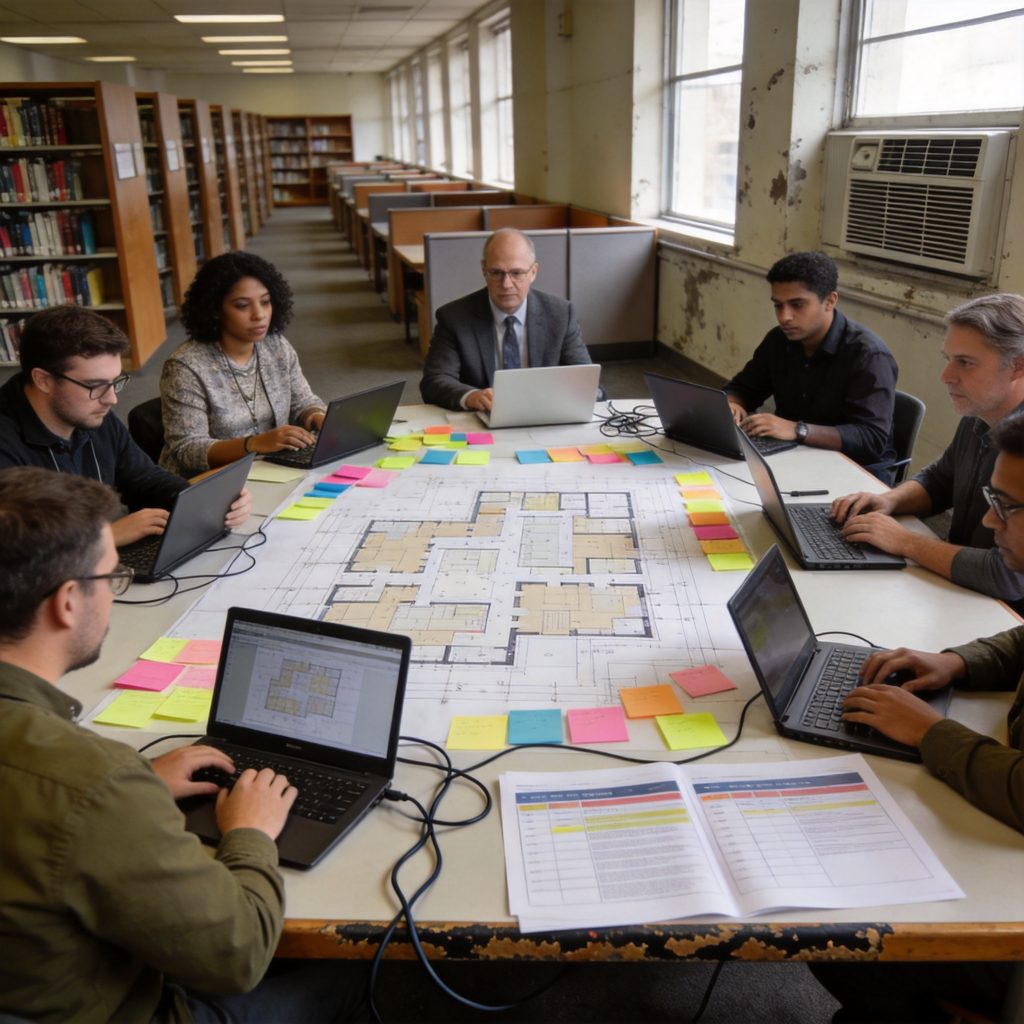
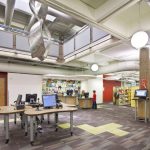
During our workshop at Steelcase on November 9, 2010, we researched different types of learning spaces. This picture is from the Steelcase worklife building in NYC. It is a good place to experience new types learning spaces to aid in the design of future orientated libraries.
Library ready for the post print world
Posted by acohen in Library Planning Research on November 8th, 2010
During our preparation for the Steelcase workshop on November 9th in NYC, we came across this link to a new type of library. Very interesting…click here
The web site states, “The defining decorative element of a library has always been the books themselves. But now that institutions ranging from the University of Texas at Austin to ultra-traditional Cushing Academy are tossing their stacks in favor of digital collections, the question arises: How do you design a library when print books are no longer its core business?”
At the University of Amsterdam, Dutch designers Studio Roelof Mulder and Bureau Ira Koers converted an existing 27,000-square-foot library into a massive study hall — without any visible books — to accommodate the 1,500 to 2,000 students who visit daily. Does this work?
Online Learning Spaces – Library Learning Spaces
Posted by acohen in Library Planning Research on November 8th, 2010
For better or for worse, libraries and archives need to be able to maintain collections, migrating them from one building to another, converting physical space into learning spaces. We know that the library must deliver a suite of complex services necessary to maintain the collection in well-established formats. An assumption of formats do not do justice to the challenges libraries face. The delivery of digital objects is by no means sufficient for successful learning. We must develop better learning spaces too.
The research shows that we do better when the academy provides shared learning space. The NY Times article:
“Learning in Dorm, Because Class Is on the Web” – outlines the new ways education is delivered and new technology that is having an impact on the need for good learning spaces. We know there is one way to improve student success and that is to provide real learning spaces. Places with productivity tools and professional staff (librarians) to support learning.
One web site that proves the point is – “Is it Live or is it Internet? Experimental Estimates of the Effects of Online Instruction on Student Learning.” In a NY Times article, “Live vs. Distance Learning: Measuring the Differences” – TRIP GABRIEL states: “An analysis of 99 studies by the federal Department of Education concluded last year that online instruction, on average, was more effective than face-to-face learning.”