

Posts Tagged library consultant
Library – Learning Commons TouchPoints
Posted by acohen in Library Planning Research on May 24th, 2013
Learning TouchPoints are an important part of the library – learning commons – physical program. The service desks, collaboration bars and hubs can be developed to include visualization TouchPoints; spaces where students, tutors, mentors and faculty can write on the walls. These spaces will help the library staff visualize discovery services; share spaces that will enable the community to work collaboratively with virtual content in the cloud.
According to Businessweek, interactive designer, Obscura Digital and office furniture manufacturer, Haworth are collaborating to develop a new touch screen, called Bluescape. The set up will cover an entire conference-room wall, displaying images on 15 linked 55-inch flat-screen monitor. It will enable reading hand movements using its 32 specialized sensors. The new learning space design will allow users to add digital sticky notes by uploading documents from other devices, making brainstorming sessions more productive. The visualization space will allow students to shape their discovery activities.
According to “plugging the innovation gap in our universities?” “Students are no longer sitting idle when it comes to the online experience, they are taking the experience online themselves and going onto Facebook groups, Google groups and setting up online forums.” The students are using online tools for social and educational discovery purposes at the same time. They are engaging with technology to succeed.
I-Library – What about the Learning Commons?
Posted by acohen in Library Planning Research, Social Library Issues, work in progress on May 22nd, 2013
The Bexar County library will open a prototype digital public library. According to “Paperless Libraries Switch to Digital” – It will have 100 e-readers on loan, and dozens of screens where the public will be able to browse, study, and learn digital skills. However, it’s likely most users will access BiblioTech’s initial holding of 10,000 digital titles anywhere.
The Learning Commons is a library space that the community can use for multipurpose / multi-functional activities. Conceptually, it is a public space that functions as a modern learning environment. A bookless library that offers just e-readers and desktop computers will find out that the “library as place” is the key their success; a motivating seating space that allows people to work collaboratively or individually.
According to Bexar County Judge Nelson Wolf in NPR’s “A New Chapter? A Launch Of The Bookless Library – The library is a chance to expand the scope of opportunities for people to learn technology. The world is changing.”
According to an NPR comment by Michael Hale – “For the past 15 years or so, the public library has become as much of a community center as a place to house a collection. It provides computers for those who cannot afford them, which allows them to construct resumes and do daily activities such as banking or renewing their driver’s license.”
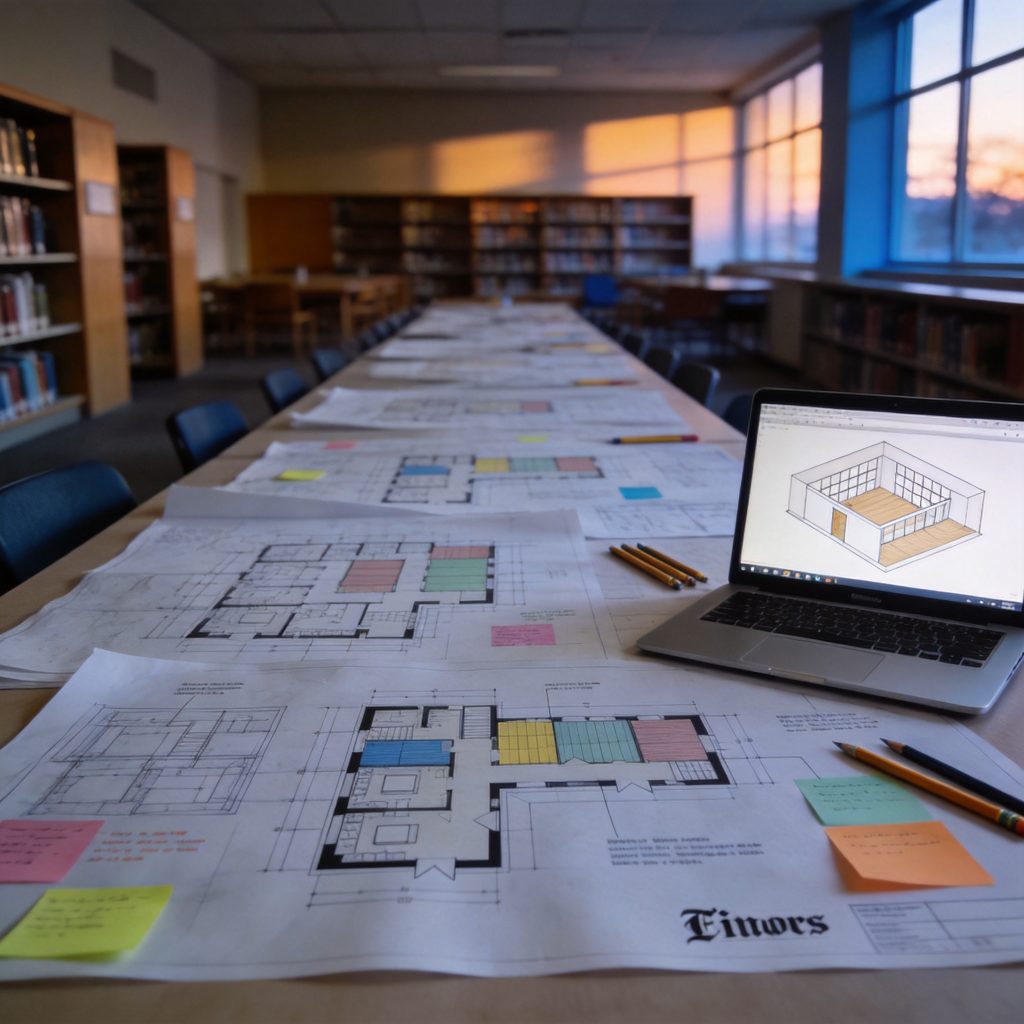
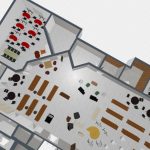
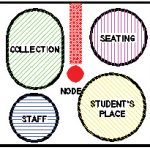
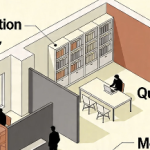
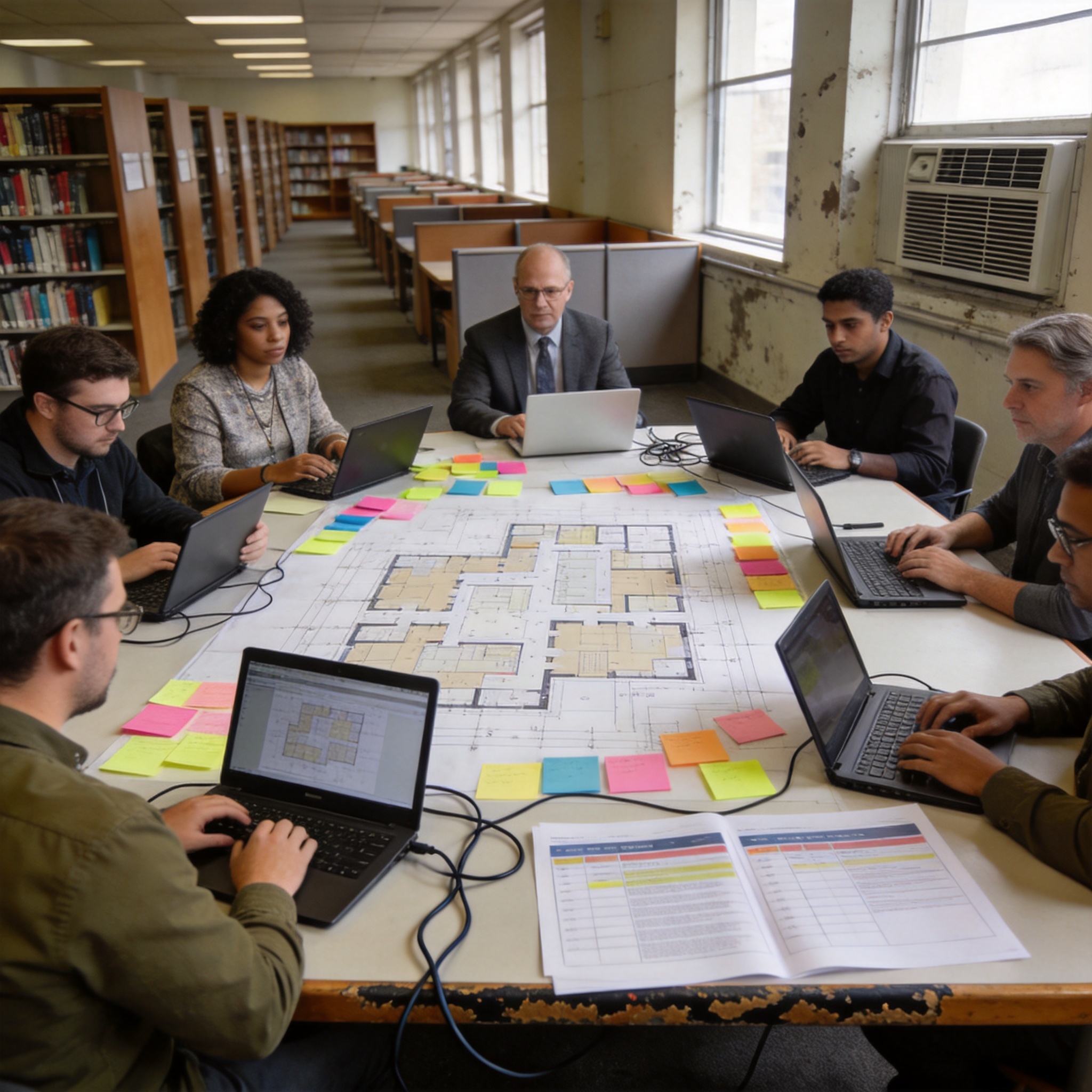
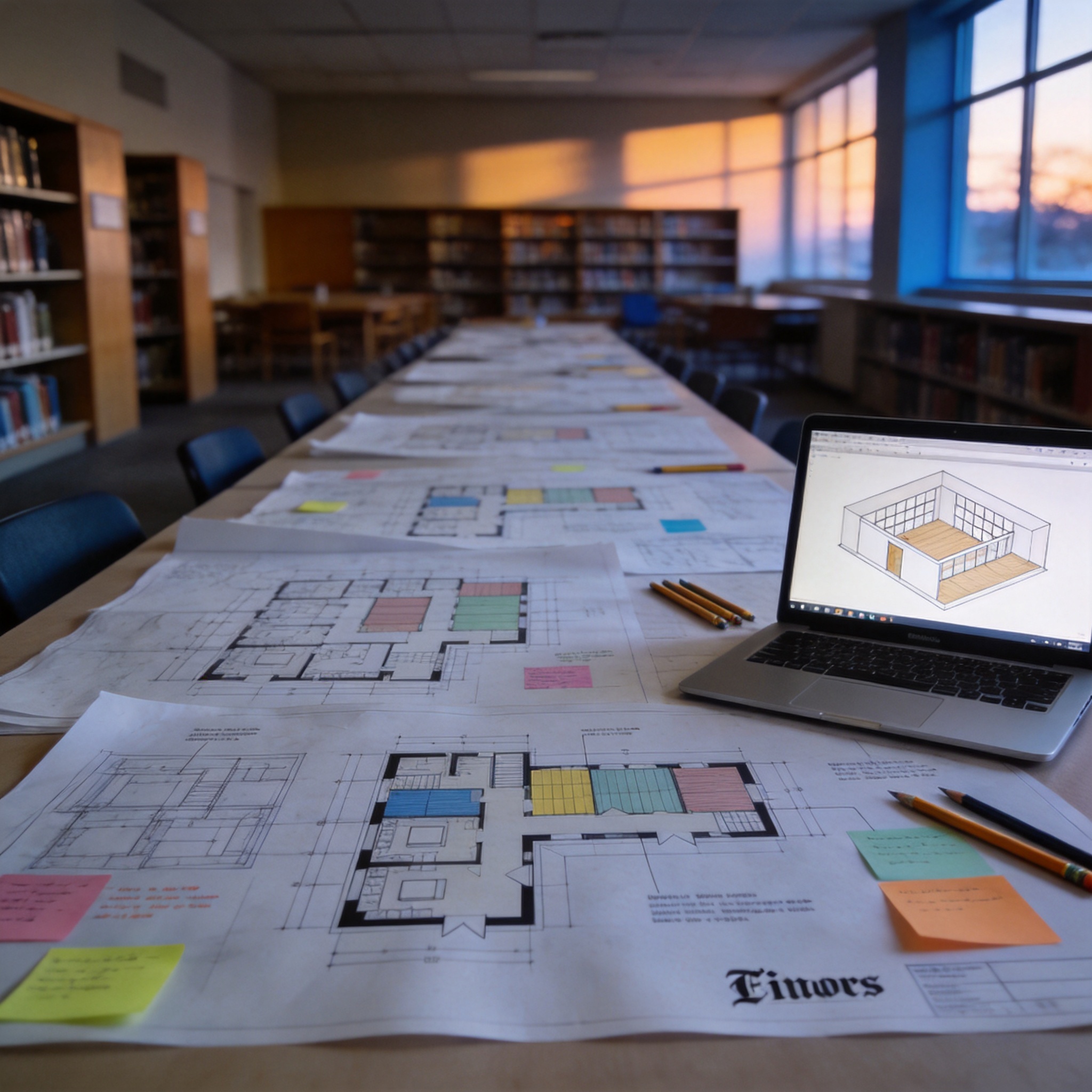
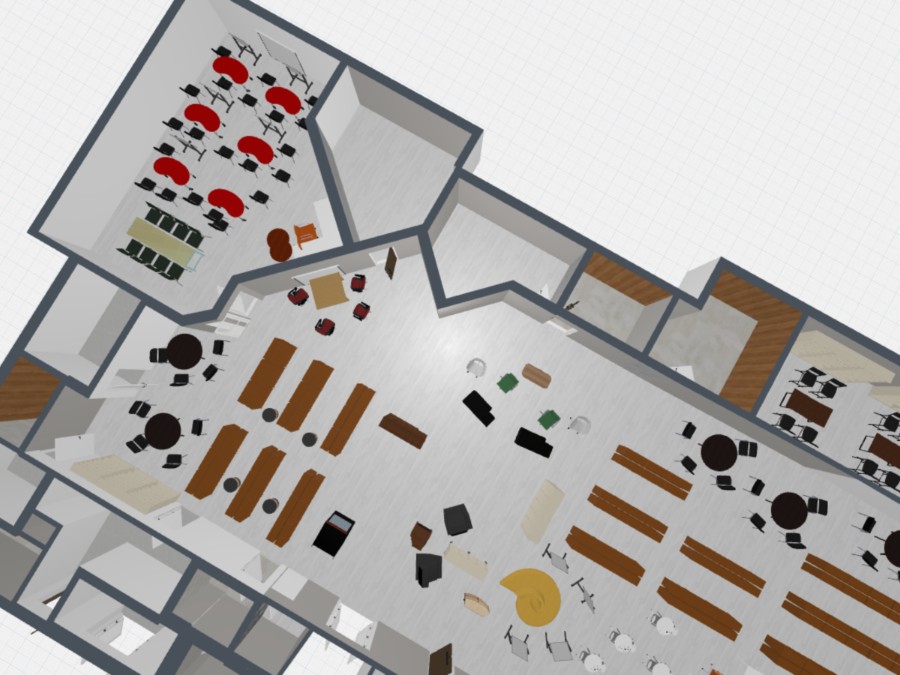
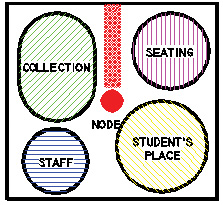
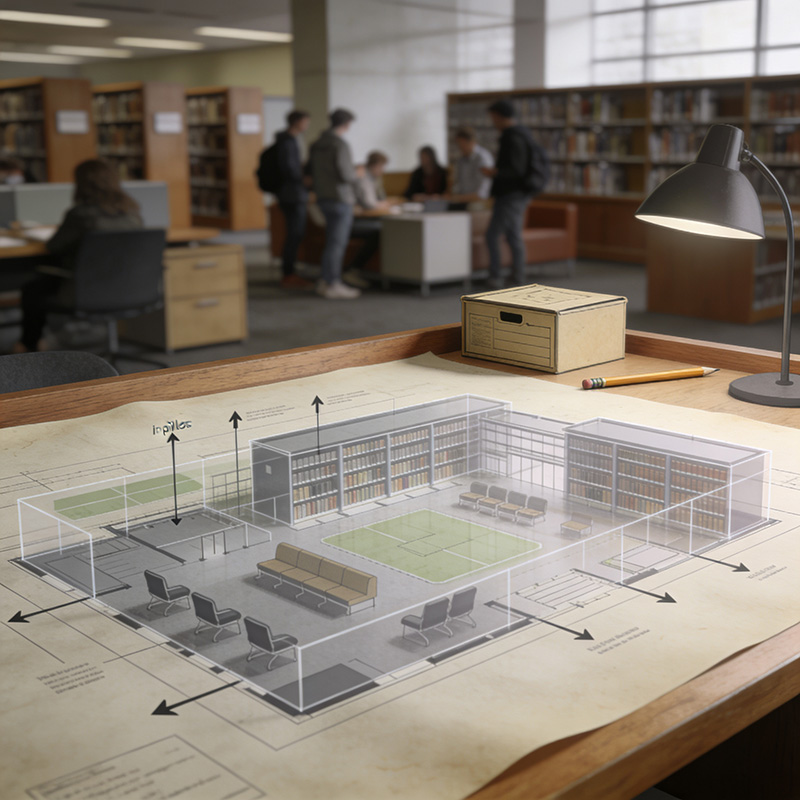
Below is a picture from our studio. We are working on understanding how spaces relate to each other in the new learning commons. It is a good example of our visualization process and something that is critical to the development of new types of learning spaces.
Visualizing the Library of the Future
Posted by acohen in Library Planning Research, Space Planning, work in progress on April 17th, 2013
NC State developed a wonderful video for their new library project. The video shows all of the different programmatic components required for a modern academic library including socializing, preservation and late night study.
Librarians can develop a proactive position when facing the future. Review this video to reflect and visualize the types of interactions and technology that can be in a library.
In a world of homogenized choices, the library can be the space where your community can feel truly fulfilled in their quest for knowledge, enlightenment, entertainment and connection to others.
The Library is an Incubator for Applied Design
Posted by acohen in Library Planning Research, Space Planning on March 6th, 2013
Paola Antonelli was on the Colbert Report to talk about Applied Design, an exhibition running at New York’s Museum of Modern Art. Paola is the senior curator of the Design and Architecture department, focusing on a new way to look at space.
Paola Antonelli has some great insights on the future of learning spaces, which really resonates with our library planning team. For example, Paola Antonelli stated – “The idea of having this research and development at a museum is about trying to figure out truly what kind of position the museum has to take on the inside and the outside for the future. My basic thought is that museums are, together with schools, the R&D of society. It’s about this chain of research and understanding.”
Our view is that the Library is an incubator for Applied Design. It is a place where the chain of research and understanding can be successfully implemented. The library is in a unique position to allow learning activities to exist. It serves the function of R&D in our society and should be encouraged.
Mentoring in the Library Incubator
Posted by acohen in Library Planning Research on February 28th, 2013
The library is a place where you can organize a form in an informal and relaxed atmosphere. It is a place where you can engage in discussions and catch up on current information. It is an incubator for students as they grow and mature.
Mentoring is when you take the time to hear about peoples experiences. It is when there is a common place to join in the discussion, start a new interest or relax. The social atmosphere allows participants to share experiences, reducing the confusion around doing research.
The incubator concept benefits educators and librarians, tapping into the reality that a place can be really helpful. The librarians facilitation; so much more than mentoring is happening. It is extremely important to start to visualize the paradigm shift. We can gather insight by sharing personal perspectives on how libraries provide information access. 
JOIN US ON MARCH 22, 2013 – TO DISCUSS — LIBRARY AS AN INCUBATOR FOR LEARNING
NYPL Library Planning – looking toward the future..
Posted by acohen in Library Planning Research, Space Planning, work in progress on February 4th, 2013
The NYPL is a unique library institution with a historical research component as well as a public center of culture in New York. Over the years, the public library has evolved into a “culture house” – a place for community gathering, electronic collaboration and cultural programming/events. However, digital projects live everywhere! This extreme decentralization of library and information services adversely affects the value of the library building i.e. when it looses touch with the strategy the building was designed to support.
In Renderings for a Library Landmark, Stacks of Questions, Norman Fosters design for the renovation of Manhattan’s 42nd Street branch of the New York Public Library is taking a bad rap. In this age of the Internet and e-books, libraries must change if they are to survive. No one wants to support an institution that does not offer collaborative space, research services and facilities to enhance culture – in this case New York City, the Big Apple and the Melting Pot.
Although they were once important aspects of New York Public Library’s organization, the time has passed for the Mid-Manhattan and Business Libraries. Library services and culture has changed; so the design strategy must change. We say this even though Aaron Cohen, AIA and Elaine Cohen, Ed were once authors of an architectural program for a major expansion of the Mid-Manhattan Library and on the team that evaluated the pros and cons of the storage facility under Bryant Park before it was constructed.
Below are examples of Norman Fosters work – the Boston Museum of Fine Arts. It is an example of the grand space Norman Foster will design to enhance the 42nd street library.
The library planning equation and the NYPL example – The library of the future is part Bookstore, MakerSpace and Culture House
Posted by acohen in Library Planning Research, Space Planning on December 27th, 2012
The Library is still defined as a place that holds knowledge. We noted today that books are still part of the library planning equation. According to Libraries See Opening as Bookstores Close – NY Times December 27th article by KAREN ANN CULLOTTA – “As librarians across the nation struggle with the task of redefining their roles and responsibilities in a digital age, many public libraries are seeing an opportunity to fill the void created by the loss of traditional bookstores.”
The library will always be a space with books, knowledge resources (librarians), training, programs and quiet reading spaces. However, the spaces being allocated to books are being redefined, which makes our work challenging.
Books are still and will always be a knowledge tool of choice for many people. We recognize this fact as we plan tomorrows library collections. We also plan that libraries will be MakerSpaces and Culture Houses and Bookstores of the future. These strategies will continue to be priorities in our planning for 2013.
The ‘library is a place’ that should offer culture, knowledge tools and space to use for digital bits and physical atoms. Indeed, it will need to support all options for research.
The new library plan for the NYPL is a very exciting concept with new space designed for learning activities. The big challenge for the NYPL is to create a blended learning environment, not just a vast open room full of computers, but also spaces with books, media and historical resources. Flexible areas with movable partitions and bookstacks with books to check out need to be integrated into Foster’s plan.
Click on the link below – it is an impressive flyover of the new library planned for NYPL by Norman Foster…
NYPL – Library Plan
Memorandum – Jay K Lucker – Library Consultant
Posted by acohen in Social Library Issues, Space Planning on September 7th, 2012
We are sorry to hear that Jay K. Lucker, former director of the MIT Libraries, and nationally known library building and planning consultant, passed away on Sept. 2, 2012. He was 82. Aaron Cohen and Jay Lucker were contemporaries. Many times they worked on the same project, checking the work of the other. They competed making the world better through libraries.
Lucker started his library career at the New York Public Library in 1954. He came to the MIT Libraries in 1975 from Princeton University, where he was associate university librarian. During his 40-year career as a library planner, he guided the Libraries through the beginning of the transition to many digital library resources and services.
Examples of Jay’s Plans
Falmouth Memorial Library
James Duke Library
Alabama State University – Levi Watkins Library and Learning Resources Center
Jay Lucker will be missed in the library community. His legacy extends far beyond MIT Libraries. His understanding of libraries and their uses will be felt by librarians for many years to come. He was an expert architectural library consultant that will be missed.
Library Fundraising
Posted by acohen in Library Planning Research, Social Library Issues, work in progress on June 5th, 2012
It is important to connect librarians with resources to be successful. One area that is important for any library project is the development of a program for the activities in the library. However, if the building or organizational program does not have sufficient funds to achieve a good return – the project might not get started at all. For this reason, every librarian should consider fundraising as an opportunity and a challenge.
A good place to learn about fundraising is from some experts.
Library Advocacy – Library Fundraising Resources
Value of Library: the Man in the Google glasses
Posted by acohen in Library Planning Research on April 16th, 2012
The Library provides more than just a books, media and computers. It provides a social space to gather, creating opportunities for people to network their skills and learn from each other. The library delivers opportunities to share in groups, learn from peers and connect with friends. The library is a place that allow for common activities and social connections in a physical environment.
In the future, work and study will be more electronic. Students will do most of their work in the “cloud;” most faculty will be teaching and testing 100% online. From a library technology point of view, mobile tools, multi-platform visualizations and 3D printing will be available for collaboration and high-speed communication.
Google Glasses are a good example of how the world will change 10 years in the future. In the future, we will be pulling up content from our glasses in new and different ways, reacting to our environment with library search technology. The OPAC or library catalog will be available on the go.
In the op-ed “the Man With the Google Glasses” by Ross Douthat, we realize that technology is not the only answer to a healthy learning environment. According to a Duke University study, Americans used to have more friends. In the 1980′s Americans reported having, on average, three people with whom they discussed important issues. In the mid-2000′s, Americans became more isolated with only two close friends to share important issues. Is this a result of our use of the internet?
Social Isolation is real. For example, Sociologist Eric Klinenberg, “Going Solo: the Extraordinary Rise and Surprising Appeal of Living Alone.” He states that more American’s are living alone today then ever before, begging the question: what about libraries? Is it the place for positive social interactions in a technological world?
The Library is critical to sharing information when connected virtually or not. It is a place for scholarly, social and cultural uses. It provides opportunities for the Man with the Google Glasses to interact with the community.
For a road map to begin research – go to: “Library start up” – physical and virtual space for social interaction, jobs communication and sharing. Physical or Virtual, it is a quiet and noisy space to grow ideas into a better future world.
Below is a link to a video from Google About their Glasses – note that the protagonists visit’s the Strand Bookstore. Google should have the person meet at the library. It is a better place to gather and share. See -Google Glasses