Posts Tagged LIBRARY DESIGN

Education is Changing – Libraries Enhance Learning Support

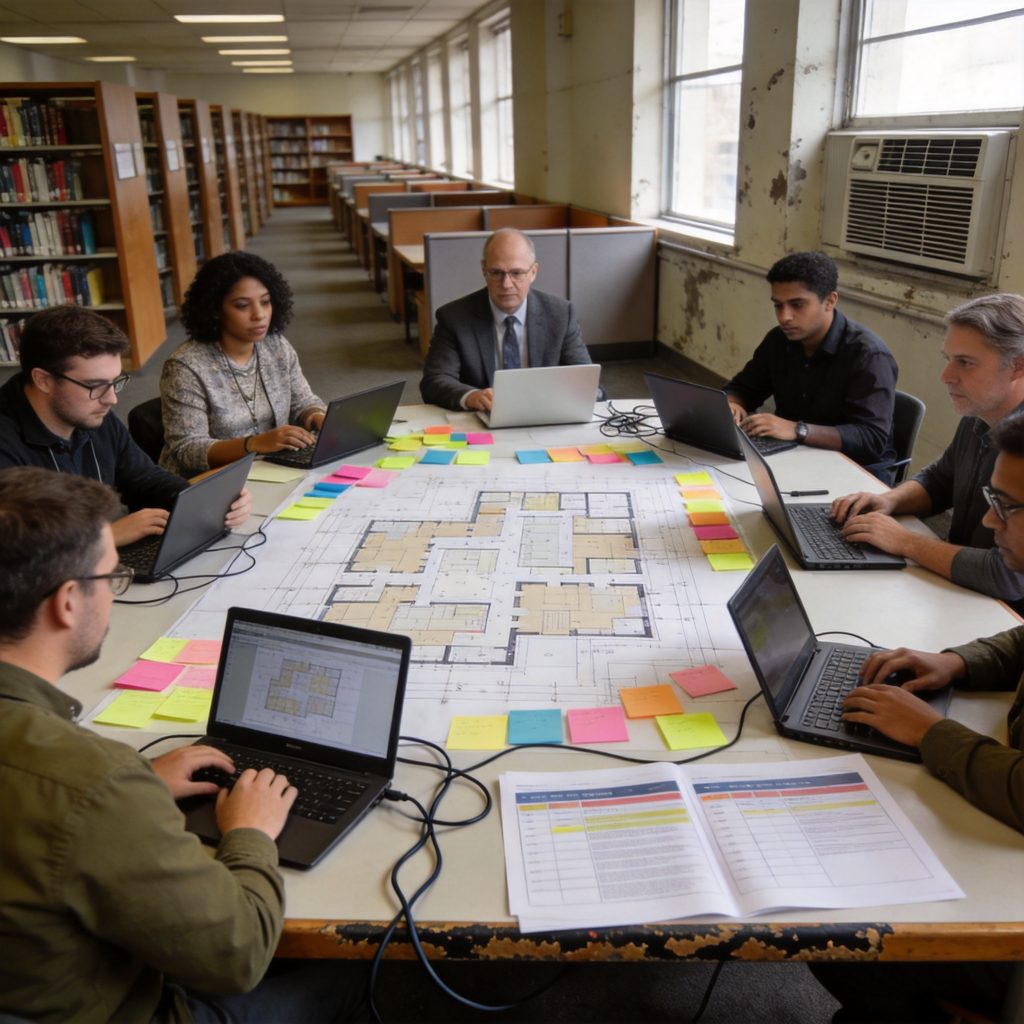
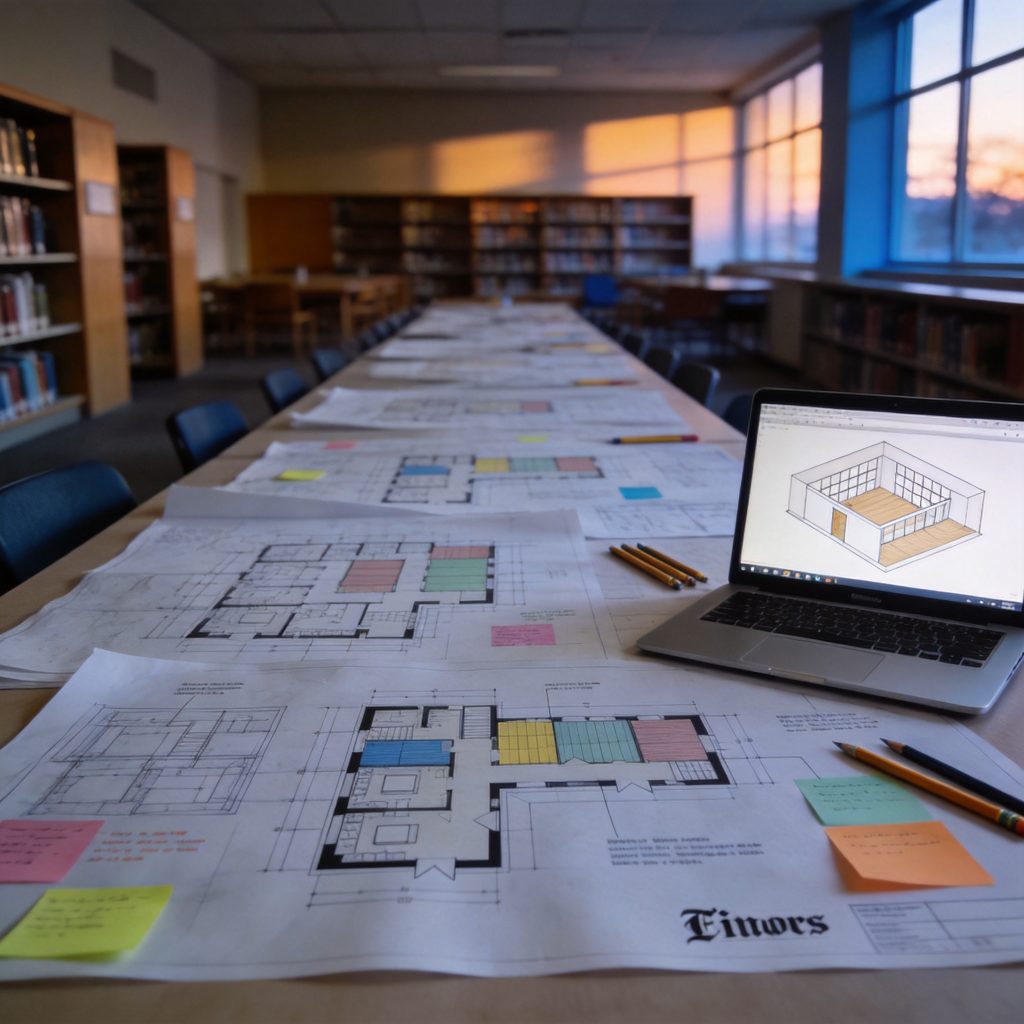
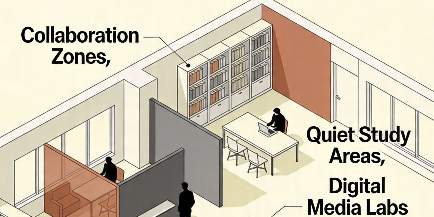
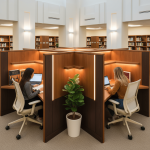
Library buildings can be designed to enhance learning support and research. Librarians can support the workflow of their researchers by directly supporting, managing and aggregating the content. These days there are plenty of librarians preaching community, but what about how we can design libraries to enhance the digital world?

Libraries are places where solutions are possible through access to knowledge and higher education. Planning learning environments requires us to be aware of new opportunities in education technology, open-source software or open-access publishing.

According to “Open Online Courses – an avalanche that might just get stopped“- In the US, the growing chorus for online education through massive open online courses, or moocs, has been deafening.” For example, the California legislature created a bill for the “New University of California” – one that offered no instruction but would issue credentials to people merely for passing exams. Does this model assure that our students are learning in the online world?

The New University of California bill did not pass, but California lawmakers detailed a plan on May 8, 2013 to require the state’s 145 public colleges and universities to grant credit for low-cost online courses offered by outside groups, including classes offered by for-profit companies.

The bottom line is that there really is no replacement for face-to-face interaction between teachers, professors, librarians and students. Digital and online methods can enrich those interactions, but it is no match for the community of services at our Universities and Colleges provide; the community of professors, tutors, peer mentors, librarians, IT help, libraries, computers labs, disability services and academic support.

It seems unlikely that libraries and learning spaces can be replaced by online learning without considerable investment in electronic resources. No wonder 72% of those who have taught moocs over the past three years believe students who took their classes had not done sufficient work to deserve credit from their institution.

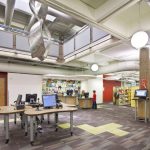
Libraries and Learning Commons can be created with clusters of valuable and distinctive services. Librarians can ensure that the learning environment, enhances the reputation of the community, faculty and the institution. Librarians will continue to ask – What services does the community need? How can their output be preserved, discovered and re-used?

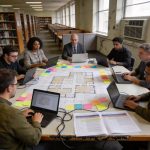
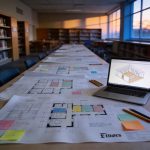
You can think of the Learning Commons as an incubator. It is an “I-Lab” – a multifunctional and fluid space for learning. The photo below is a visualization board that is at the Mathematics Museum in New York. It is an example of a physical environment that will support online learning technologies.

http://momath.org/

, , , , , , , , ,

No Comments

Visualizing the Library of the Future

NC State developed a wonderful video for their new library project. The video shows all of the different programmatic components required for a modern academic library including socializing, preservation and late night study.

Librarians can develop a proactive position when facing the future. Review this video to reflect and visualize the types of interactions and technology that can be in a library.

In a world of homogenized choices, the library can be the space where your community can feel truly fulfilled in their quest for knowledge, enlightenment, entertainment and connection to others.

, , , , , ,

No Comments

Creating a Culture House – Library Design the Teton County Way

In Libraries Open Doors, Data to Digital Art Displays, learned about LED light installations that use library data to create a cultural aesthetic. Back in 2007-2008, ACA worked with the Teton County Library to developed a plan to enhance the “library as place.” After an exhaustive building development project, the library added additional square footage and created a destination that is called the Filament Mind.

Filament Mind is a human information-driven installation by E/B Office which is designed to visualize the collective curiosities and questions of Wyoming’s Teton County Library visitors through a dynamic and interactive spatial sculpture.

The project was inspired by the concept that our civic spaces should be intelligent and responsive, communicating as much to us as we do to each other, enabling a form of intra-environmental social interaction between our thoughts and the material of our built environments. More images and architects’ description after the break.

This project is an example of the innovative use of space that can be employed in a public library project. Deb Adams, Dail Barbour and the entire Teton County Library Board showed great creativity in the development of the design for the library. The Library should be commended for making the “library a place” a priority for the community. The result shows why Teton County is one of the nicest places to live in the USA.

, , , , , , , ,

No Comments

Kickstarting “the library” as a hub of empowerment.

A low cost education system is critical to building up the youth in the 21st century knowledge economy. The ability to generate new ideas is critical for educational advancement. The social conditions are changing the way libraries are used. The economy is changing and libraries need to be able to do fundraising in the knowledge economy.

The invention of funding platforms is beginning. During our investigations into innovation we found Kickstarter, a micro funding web site that creates tools for the average person to start a building project. For example, Architect David Dewane – Gensler, started a project to create educational hubs that are creation, generation, dissemination and production zones for the youth of Africa. CLICK HERE TO SEE LIBRII: NEW MODEL LIBRARY IN AFRICA

In a “New Kind of Library” by Kira Gould – Dewane states – “This is a new kind of library. It will be the first that will actively engage users as content creators, the first that will operate on a sustainable business model, and the first designed to maximize the potential of high-speed information exchange in developing markets.” These strategies are helpful to include in the fundraising plan.

What if you could create a network of libraries in Africa to feed communities with knowledge, creativity conduits, and revenue?

What if you could create an innovative space in your library that will generate knowledge? Try Kickstarter to start the fundraising efforts.

, , , , ,

No Comments

International Library Development – Baghdad Youth and Sport City Development

Baghdad Library, Youth City, Baghdad Iraq
Dates: Awarded November 2011, scheduled to tender late 2013
Project size: 45,000 sqm
Client: Ministry of Sports and Youth
Services Provided: Library Planning / Architecture Support

Location
The new Library takes the shape of a drop-like peninsula, which projects out onto a lake. The 45,000 sqm structure will be the cultural center of Baghdad’s Youth and Sport City development.

AMBS Architects and ACA have revealed their ambitious design for the new Baghdad Library. The building brings together form, function, and cultural significance. The 45,000 sqm structure will be the central focus of a planned Youth City that has been designed to inspire Iraq’s younger generations.

The new Baghdad library scheduled to tender this year, will be a public space and cultural center designed to encourage intellectual, creative and social exchange. With this elegant, multipurpose building, AMBS Architects, who were commissioned by the Ministry of Youth and Sport in Iraq last year, hope to inspire a new model for libraries in Iraq and internationally.

Saad Eskander, Director of the National Library of Iraq said: “It is imperative for the new Iraq to consolidate its young democracy and good governance through knowledge. New libraries have a notable role to play by promoting unconditional access to information, freedom of expression, cultural diversity, and transparency. By responding to the needs of Iraq’s next generations, the new library, we hope, will play an important role in the future of our country.”

The project represents a crucial step in the rebuilding of Iraq, which has been underway since 2003. Over the past nine years AMBS founder Ali Mousawi has played a significant role in the country’s redevelopment. He said: “Before 2003 Iraq had almost collapsed after a thirteen year embargo and eight years of war. This kept the country isolated from the world and from modern technology. I had to leave Iraq myself in 1982 and returned in 2003 to assist with the rebuilding of the country, with the aim of revitalising Iraq and establishing a new vision for the future.

“What I saw when I returned and still see today is that the Iraqi youth are in many ways lost. They have been surrounded by violence, and for years there has been a lack of services and few opportunities for work or personal development. We hope that the library will help shape Iraq’s next generation of intellects and politicians, artists and writers, poets and musicians, doctors and lawyers, and change makers.”

AMBS Architects are partnering with New York based firm ACA Consultants, one of the world’s leading library consultants and planners, with the aim to build a collection of over three million books, including rare manuscripts and periodicals. The library will also house cutting edge technology, performance and event spaces. AMBS Director Amir Mousawi said: “This will be an accessible library for all ages. Our ambition is to create a space where people can run a serious and consolidated programme of public events; art exhibitions, book clubs, theatre events, educational conferences, film screenings and workshops.”

A spokesperson for the Ministry of Sport and Youth said: “Our vision is to bring hope back to the young people, to build them a new cultural centre where they can express their talent and ideas. The whole library will be modern; it won’t simply be a place to find books, but a freely accessible place of knowledge.”

The library is designed to engage and empower visitors, and to encourage open exchange. The building’s lightweight, single-span roof, creates a vast open plan space, allowing people to read and navigate the building logically. The practical and cultural importance of light is demonstrated through an encrypted message in the the design of the roof, which forms the word ‘read’ written in Arabic Kufic script. This is documented as the first word spoken by God to the Prophet (PBUH).

Functionality, intuitive organisation, and rational user-friendly design were all key concepts which shaped the building from the inside out. AMBS Co-Director Marcos De Andres said: “The Baghdad Library is more than simply a sleek and strikingly beautiful structure – what makes this building truly remarkable is the user interface. Our focus was the building’s behaviour, and our systematic approach started with a creative dialogue; thinking rationally, reasoning and discussing how the building should work. We have challenged the conventional library model, conceiving it as a modern, multi-functional public space. We identified core activities and paid special attention to the exchanges we wanted to engender through use. Thoughts and ideas gave shape to a set of unique spaces, and little by little an ideal model was formed.”

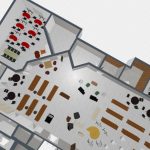
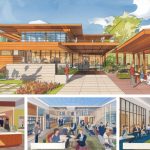
Images of New Innovative Library

, , , , , ,

No Comments

Learning with Technology

The most visible signs of our embrace of digital media belongs to the students – young and old. The way they learn using computers, iPads, e-readers and smartphones are different than the past. They are quick to embrace the “library in the cloud” as Sugata Mitra describes in Build a School in the Cloud. It is natural for them to work in groups to learn. With just a little support from a “grandma” or someone who is older that encourages them as Mitra points out, the students can learn anything from a device connected to the net.

The shift taking place in libraries is proving to be transformative in the ways we use information. It is not only Community Colleges and Universities that are being transformed, but as the Strategic Content Alliance stated in Sustaining Our Digital Future: Institutional Strategies for Digital Content – “The use of dynamic digital resources — websites, digital collections, databases of crowdsourced or born digital content pose opportunities and challenges that are all their own.”

Our universities are working to understand the impact of globalization on higher education in an increasingly transformed environment. This ranges from overseas universities offering cheaper undergraduate and graduate programs to the development of “massive open online courses”, or MOOC’s.”

It has become clear that a great deal of the content that libraries are holding today is expected to endure because of our natural embrace of technology. We need to start rethinking how libraries and learning centers can support this paradigm shift in the 21st century.

JOIN US FOR OUR LIBRARY PLANNING WORKSHOPS

, , , , , , ,

No Comments

The Library of Unborrowed Books and the Future of Learning Spaces

In the Art of Browsing by Claire Barliant we started to reflect about the book as a trend in our quest for knowledge. We learned about the “Library of Unborrowed Books” – an art installation developed by Meriç Algün Ringborg that manifests itself in the languages and titles of each book in the collection.

Meriç Algün Ringborg’s art installation looks at the library as a contemporary moment. The project presents hundreds of books that have never been borrowed from the Center for Fiction’s library. The framework hints at what has been disregarded, knowledge essentially unconsumed. It puts on display what eludes us.

Librarians know that the act of browsing for a book in a large collection is an idea generator. It provides the patron that is walking in the library with an awareness and openness to new ideas, stories, history and science. Claire Barliant reflects on the real changes occuring in our world. She stated, “But with every trend, however modest, you have to wonder, why now? Is it possible that book browsing is already strange and unusual enough to be considered material for art?”

“Everyone agrees that the future of publishing is electronic, with words beamed to us instantaneously. But in that case, what will happen to all of the books and the places that store them? When they’re gone, where will we randomly stumble on the knowledge we didn’t even know we wanted to know?”

We believe the library will continue to represent the gaps and cracks of history through book and media circulation. We believe in the digital catalog, providing a collection where access and ownership and subscription licenses are intermixed. Most importantly, the library will provide professional support through readers advisory and information literacy.

The library of the future will be where primary materials and extended access co-exist to create an experience that enhances our learning process and research outcomes.

Library of Unborrowed Books

, , , , , ,

No Comments

Mentoring in the Library Incubator

The library is a place where you can organize a form in an informal and relaxed atmosphere. It is a place where you can engage in discussions and catch up on current information. It is an incubator for students as they grow and mature.

Mentoring is when you take the time to hear about peoples experiences. It is when there is a common place to join in the discussion, start a new interest or relax. The social atmosphere allows participants to share experiences, reducing the confusion around doing research.

The incubator concept benefits educators and librarians, tapping into the reality that a place can be really helpful. The librarians facilitation; so much more than mentoring is happening. It is extremely important to start to visualize the paradigm shift. We can gather insight by sharing personal perspectives on how libraries provide information access. library_mentoring_example

JOIN US ON MARCH 22, 2013 – TO DISCUSS — LIBRARY AS AN INCUBATOR FOR LEARNING

, , , , , ,

No Comments

Learning Circle – Library as an Incubator for Online Learning

The library is no place to dream small. It is an incubator that when heated at the right tempature evolves into a place for education in the 21st century. The “Library as place” where a new concept for online learning is emerging; the barriers to education are being lowered. The library is a universal place that lets learning grow.

Libraries exist not just to lend books but to guarantee their continuous availability of access to information. In “Digital Education“- MIT technology Review January/February 2013 stated – “The highest ambition of any society is to educate its citizens.” Indeed, a simple group circle or shape speeds up our ability to perceive the learning space, and without realizing it, we are more productive.

In NYTimes Article “Why We Love Beautiful Things,” German Researchers’ found that just glancing at shades of green can boost creativity and motivation. However, we know people see things differently. To get it right, Professor Sanjay Sarma at MIT will serve as a convener and synthesizer to develop and integrate elements of online education into traditional MIT courses. It will be his job to create shades of green for students to get the most out of their education.

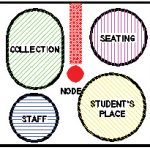
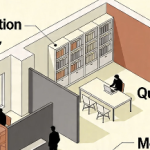
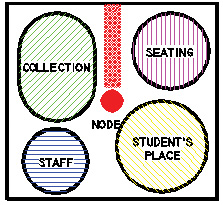
For example, the library of the future is an incubator: When you enter a flexible learning place—Enter—See—Access Services–Hi ceiling—Visibility–Stand-up-table–Tools—Screens—Screens on the edges.

The Consultation Bar is in the rear—Tutoring—Workshops—Mentoring–Peer Learning—-Touch points—One too one—-a place for flexible learning—Web browser—To view video—Questions to be
answered—Homework—Forums.

The model is a series of circles—each circle is a learning circle a place flexible learning—–start programming.

, , , , , , ,

No Comments

NYPL Library Planning – looking toward the future..

The NYPL is a unique library institution with a historical research component as well as a public center of culture in New York. Over the years, the public library has evolved into a “culture house” – a place for community gathering, electronic collaboration and cultural programming/events. However, digital projects live everywhere! This extreme decentralization of library and information services adversely affects the value of the library building i.e. when it looses touch with the strategy the building was designed to support.

In Renderings for a Library Landmark, Stacks of Questions, Norman Fosters design for the renovation of Manhattan’s 42nd Street branch of the New York Public Library is taking a bad rap. In this age of the Internet and e-books, libraries must change if they are to survive. No one wants to support an institution that does not offer collaborative space, research services and facilities to enhance culture – in this case New York City, the Big Apple and the Melting Pot.

Although they were once important aspects of New York Public Library’s organization, the time has passed for the Mid-Manhattan and Business Libraries. Library services and culture has changed; so the design strategy must change. We say this even though Aaron Cohen, AIA and Elaine Cohen, Ed were once authors of an architectural program for a major expansion of the Mid-Manhattan Library and on the team that evaluated the pros and cons of the storage facility under Bryant Park before it was constructed.

Below are examples of Norman Fosters work – the Boston Museum of Fine Arts. It is an example of the grand space Norman Foster will design to enhance the 42nd street library.

, , , , ,

No Comments