

Library Placemaking as Strategy
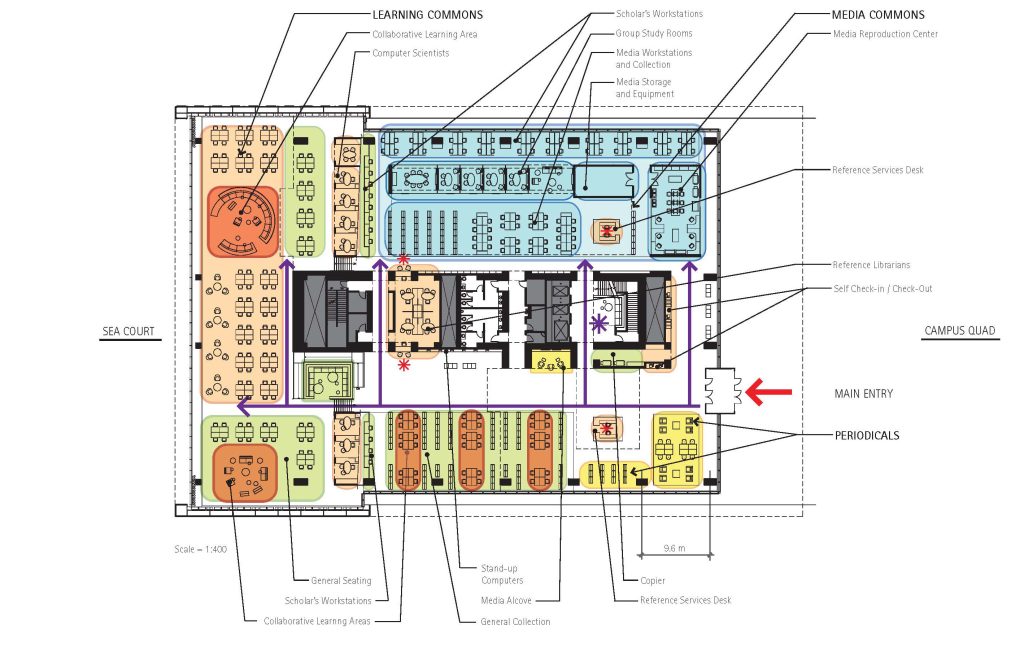
The library has never been just the building that holds books. It is a homework help center and space for students to learn. Adults need library place where the educational community shares what it values and where it intends to go. Library programming for functionality has grown more demanding, because libraries now confront a world with very few right and wrong answers. Developing a library program helps define where better and worse strategies can change overnight. Indeed, library placemaking is helping students with cyber risk and scam support. Basically, shifting community expectations is difficult. The accelerating pace of technological change has turned long-range planning into short term discipline and continuous adaptation. However, the building isn’t fixed and the prescription can change with new ideas.
The library environment is where placemaking earns its place as a strategic tool. Placemaking is the art and library science techniques for shaping the identify. This includes the campus, pedestrian streets around the library, the sidewalks, and the creation of plazas for placemaking. Basically, the library spaces inside and around library buildings can be designed to invite interaction and foster healthier, more social, and more economically viable academic communities. For the school library community, it is practical to engage in architectural design and pay attention to why the library is made to serve community purposes.
Building Resilient Libraries in the Age of Intelligence
Most discussions we have about strategic intelligence starts with listening. We provide library programming workshops that also keeps academic leadership informed. Developing strategies to solicit their input is also about managing community reactions. Normally, the work requires listening and reasoning with the powers that be. We help engage with stakeholders, enabling a new list of partners in strategy. Remember, if the research community is not satisfied after planning decisions have already been made you will loose trust in the library as a tool for academic excellence.
Strategic service planning matters because the library director always need to manage diverse groups and their needs. Academic leadership needs to be ahead of changing demands that can create conflict. Academic Provosts and Presidents, local student groups, government officials, community organizations, individual library users, student councils, and cultural associations are part of the puzzle. They have legitimate and often competing claims on the same finite library space and service budget. Reconciling academic space claims is not a matter of compromise alone. It is a matter of academic community building and/or shared knowledge of how things work, making sure that no single agenda takes over the process (testing, writing center, STEM center, student advising and support).
Placemaking provides the structure for library services and academic support planning. Its central concept is that the students who need to use library space possess knowledge that no professional survey can fully capture. As Betsy Rogers, who led the restoration of New York’s Central Park, observed, there is no one more valuable than the person who deeply loves the community, understands what a place means, and is connected to others who feel the same. Indeed, individuals should be encouraged to provide input. We provide a framework that will help you create a network radiating support from partners. This is the energy source that propels a project to success. The library’s leaderships task is to find the people who can help, and our process will give them a disciplined way to contribute.
Library-Learning Demands Psychological Safety
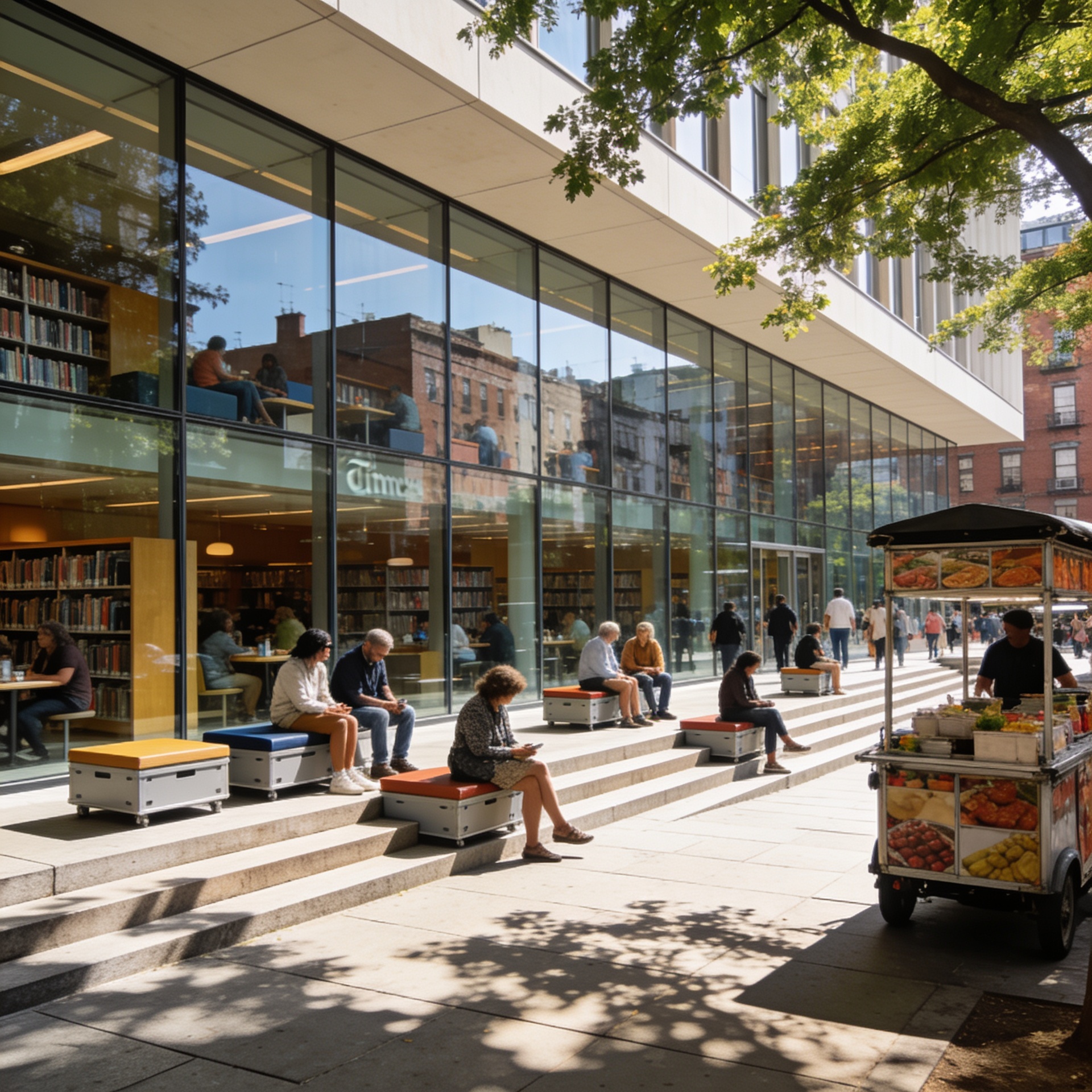
Strategy under uncertainty cannot be dictated from just one workshop. It must be learned collectively through academic planning methodology. Note, architecture requires a particular kind of environment for success. If the goal is to have research community members contribute fully, collaboratively, and in a positive and respectful way, then the library architecture team must first establish psychological safety. This is a workshop setting in which participants feel free to offer unfinished ideas, raise objections, and challenge assumptions without penalty.
Our placemaking workshops are purpose-built for library service planning. They are grounded in the power of observation; we draw on participants’ special knowledge, common sense, intuition, and firsthand input. We make it possible for academic professional to participate—faculty, researchers, graduate and undergraduate students, public patrons, professional admin and non-professional staff alike. The workshop is an exercise that typically lasts 1 to 2 hours.
During the brainstorming sessions, we review a wide range of service needs, from book displays to planning a new reading room. Here, library teams gatherings can be up to as many one hundred people. Its genius lies in the activities – schematization and roundtable listening exercises. During the visual scan we get mixed groups to observe the library site directly and report back. The workshop flattens hierarchy and provides openings for new ideas. The alumni or retiree, the student or graduate researcher, and the department head evaluate the same plaza against the same criteria and arrive with grades and comments that can be used.
The director who leads such library programming sessions are supporting the long term plan and their short term needs. The facilities review role is to orchestrate constructive planning. We help guide different points of view, generate ideas for productively, and we let the better strategy emerge from the exchange. This is what library cultures and learning looks like in practice. We provide expert guidance that supports consensus building. The program materials are developed and shared in advance, but judgment is formed through collaborative efforts.
The Four Qualities That Make Library Place
The culture of learning still needs library best practices against which to measure ideas. Placemaking supplies four.
- Successful place is accessible
- It hosts activities that give people a reason to come and return
- It is comfortable and projects a positive image
- It is sociable—a place where people choose to meet and to bring visitors.
These qualities are the vocabulary of the library planning workshop. They are a yardstick for investment proposals.
Library Placemaking Supports Architectural Design
Placemaking differs from traditional master planning and urban design in one decisive respect: its principal goal is to create experiences that serve and attract a wide variety of people throughout the day, week, and year. It begins with a service plan that outlines the intended use of each area in the library.
Indeed, placemaking can directly strengthens strategic architectural design efforts. Library buildings and their outdoor spaces should be designed so that they can be used in different ways. They need to be used by different patrons across the course of the day, week, and year. For that flexibility to exist, architectural form must support function (e.g. Louis Kahn).
Library Service Planning
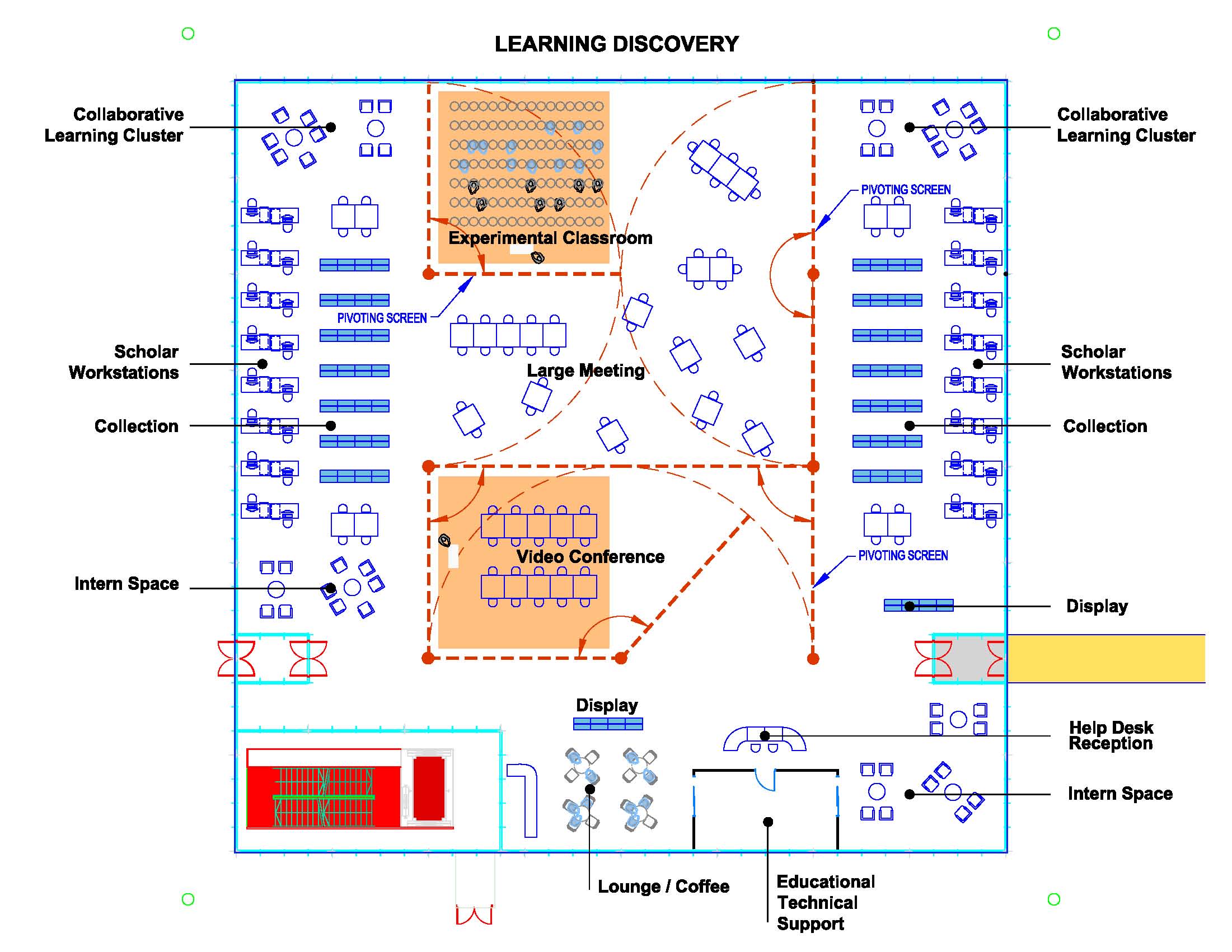
After the user engagement is started we also analyze the library’s infrastructure—power, seating, shade, clear sightlines. We help determine if the place is successful and if there are adequate seating and workspaces. These are architectural decisions. But they are also decisions best informed by the lived observation that our research supports. For example, we specialize in the development of quiet reading rooms. We also have experience developing the campus public square.
For the last 20 years, almost every academic library we have worked on has put in a café. We analyzed how the entrance can open onto sitting steps rather than a blank wall and a sea of parking. Each project provides a reference point that connects service requirements with the best practices. Yes, we look at the inner library of stacks and reading areas to the outer library of façade, plaza, and street to create new concepts for libraries. Creating an active, welcoming outer edge is essential to the well-being of the library as a whole.
Short-term, low-cost interventions are an outcome of our work. By testing library services and programs with, for example, movable seating, student market place ideas, or a lunchtime concert series stage, the library can grow and make more impact. This is progress – it keeps the future as possible, and the evidence helps leadership de-risk the eventual capital decision. Often when we complect our study, we help develop a temporary installation OR prototype for the permanent design.
Digital Services Belong in the Physical Plan
Resilience in the age of intelligence requires that placemaking extend beyond the physical edge of the building. The library’s service plan fuels a culture of digital learning. Increasingly, we note it arrives through a project website, dedicated Slack workspace, online surveys, and virtual programs. Engaging in library architecture gives you access to service planning tools that are not a substitute for strategic planning but an extension of it.
Digital services are themselves part of the placemaking menu. Wi-Fi optimizes public use only when the building also provides comfortable places to sit, inside and beneath shade outdoors. Game projections, laptop checkout areas, and streaming programs can activate library plazas as surely as a chess table or vendor cart. The distinction between the digital library and the physical one are communities of practice; needs for infrastructure for different strategic purposes.
Strategic Outcomes from Library Placemaking
When the ingredients are assembled through a library program, the result is the library institution whose influence extends well beyond its footprint. The best libraries anchor their communities in constant engagement. Because they are highly visible centers of education and life, they instill student confidence in their campuses and catalyze further investment from both the public and private sectors.
From Library Placemaking to Adaptation
The strategic case for placemaking starts with the need of the research organization. In a world where strategies can turn stale overnight, the library that has built the culture of learning can adapt to change more easily. One of the reasons we help library communities its to make sure collections are maintained. We also study the behavior to make sure there is psychological safety. We help architecture let form follow function. If you need to retains spaces or increase the capacity of study space. If you need to develop academic, research or a public library service plan we can help you adapt to the future. Placemaking is a dynamic process with infinite room for improvement. There are always new ideas to discover and new lessons to learn, and a resilient library planner is the one that keeps learning alongside the clients we serve.

