
Community Feedback is the Foundation of the Library Plan
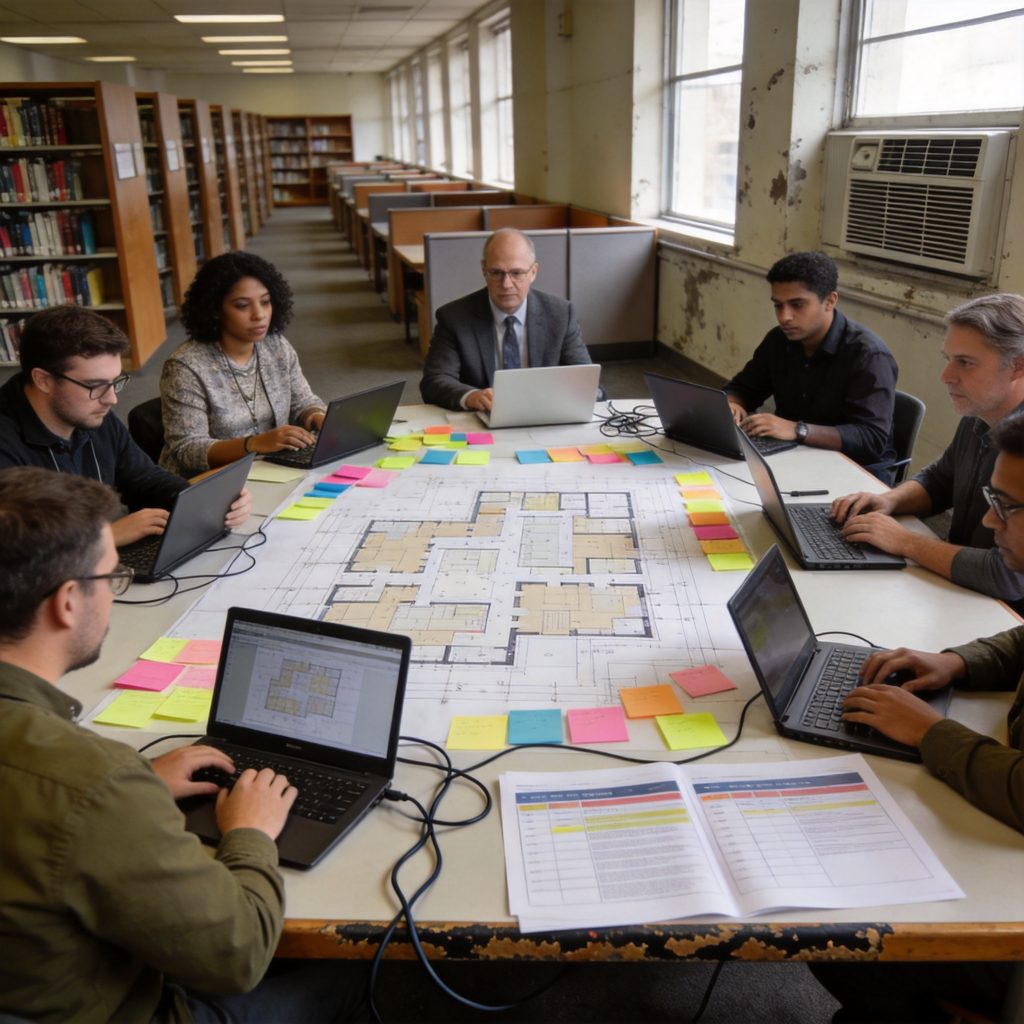
The library cannot be redesigned by architects alone. Nor can it be redesigned by leadership without understanding the preferences of the stakeholders. When we develop a library plan, it earns its authority when it gives the community real power: listening sessions, workshops, best practices, etc.. Indeed, the power to describe how the library works, where it fails, what it supports, and what is possible provides real opportunities for change. That is the value of a library workshop – feedback. It is gift of power – the platform for us to envision the future.
This is our work. It is part public relations and discover of funding strategies as well as providing stakeholders input into decision making. Library Planning Workshops are one of the principal instruments of library planning. It turns a capital projects into reality. It converts assumptions into evidence based practice.
The 2022 edition of Redesigning the Academic Library Building from Primary Research Group surveyed 59 academic libraries. Its findings showed libraries in need of ideas – strategies to modernize. Libraries need to realign study space, space for stacks and “library of things” collections. Recent workshops resulted in asks for more group workspace, user seating, electronic access, commons functions, and special collections logistics / space. When we engage in library workshops, we are giving a gift to our stakeholders. We are giving them power to participate in the development of the library. We have found that we get valuable input about the building too i.e. infrastructure problems: HVAC systems, power access, accessibility, and maintenance issues.
Library planning is no longer a question of adding space or subtracting space. It is a question of allocating purpose. Who are your partners? Get stakeholders to participate.

Library Workshops Generate Valuable Insights
The survey from Redesigning the Academic Library Building found that nearly 56% of libraries expected to reduce space allocated to book collections.
- About 61% expected to reduce serials space.
- Close to 56% expected to reduce stack space.
These percentages represent a significant rebalancing of the library. However, surveys only tell you what you ask for…
Redesigning the Academic Library Building found that more than 54% of the libraries surveyed planned to increase group workspace for patrons.
- Nearly 37% planned to increase overall seating.
- About 30.5% planned to increase space for electronic workstations.
- Roughly one quarter planned to increase special collections space.
Library space released from one function does not become “free space.” It becomes contested space without a library consultant.
Our workshops share best practices in library design. We have a wealth of group study space, quiet individual study space, a student success center, learning commons, digital scholarship lab, classroom, café, exhibit area, special collections, and traditional reading rooms examples to share.
Plan a library workshop and we will facilitate community feedback. We help leadership make decisions about mission, use, and service.
Library Workshops Help You Explore User Needs
Basically, physical library visits have rebounded sharply since Covid. Now, what is the next step? Workshops provide an opportunity to reflect on services today and visualize tomorrows needs. Today, even where online learning is part of the educational foundation, we note that students still needed a quiet place to work, attend online classes, use technology, and study outside the home or dormitory.
When you explore user needs it is an opportunity to support change. Indeed, gate counts measure entry, but they do not measure unmet need. They do not distinguish between a student or an adult who needs a reservable room for an online course, a commuter student who needs reliable Wi-Fi, a graduate student who needs sustained quiet, or a group that needs technology-enabled collaboration space.
Decisions to update the library must ask what change means.
User Know the Library Differently
Library staff know the access services systems and circulation statistics. Library staff know acquisitions workflow, collections, service points, and reference. However, user know where power is missing, where noise travels, where furniture fails, and where they feel permitted to stay. Leadership know how programs and research expectations shape library and building use. Administrators know institutional priorities and capital constraints. They need information to plan for the future.
Give the Gift of Power; engage in Library Workshops, gathers input and build knowledge. Engage with a library consultant and give each user a place at the decision-making table.
Feedback makes library service challenges visible.
Upgrades and Downgrades in Strategic Planning
Give the Gift of Power – Library Workshops provide a platform for planning conversations. It helps develop a library planning vocabulary. During our workshops we develop a strategic language and we develop an action plan that increases clarity, ownership, and participation.
Sample Questions
Sample questions when planning libraries:
- “Show us where the building prevents the work.”
- “What space do you avoid, and why?”
- “What activity has no proper home?”
- “What must remain quiet?”
- “What must be visible?”
- “Where does service break down?”
- “Which collections require proximity, security, or environmental control?”
- “What should the library stop storing in prime public space?”
- “What decision would make the building easier to use?”
Ideas to Think About
- “Users just want more seating.”
- “Print is dead.”
- “Students only come for the café.”
- “Staff can work anywhere.”
- “Special collections can go wherever there is leftover space.”
- “Remote learning means we need less library space.”
- “The architect will solve that.”
- “Facilities will handle HVAC later.”
Each downgrade hides a decision.
The issue is not politeness. The issue is accuracy. The strategic plan that listens to the community, actively gaining input produces a plan for the future.
Steps Toward a Feedback-Based Library Plan
Library Workshops help build structure to the future. Library Workshops provide feedback. This must be gathered, interpreted, and tied to strategy long and short term.
1. Begin with the planning question
Begin with best practices. Begin with conversations and listening to your users.
Ask what library needs to provide. Workshops help us define the strategies for improvement i.e. what to focus on over the next three to ten years. Our workshops provide examples of best practices in library design. During our workshops we test every space category against that purpose. We share pictures of other libraries collection configurations, stacks, seating, group rooms, classrooms, staff workspace, technology centers, information commons areas, special collections, storage, café space, outdoor space, and access.
2. Separate collection space from collection value
Realigning service strategies is part of the library planning workshop. It is not the same as reducing the size or value of collections. The survey shows broad interest in reducing book, serials, and stack space, while some institutions continue to need better access to print collections. A plan must distinguish active collections, low-use materials, special collections, archives, and materials suitable for outside storage.
Special collections require best practices in logistics, workflow, preservation, equipment and management. During the library planning workshops, we provide examples of secure access, security setups, appropriate environmental conditions, processing space, reader space, and staff workflow. Learning best practices will answer the most challenging questions. For example, should we provide open stacks, close stacks and/or logistics systems to reduce costs and safe guard our collections. Should we just plan the library with traditional shelving for do we need to make them more accessible.
3. Map activities to functions in the library
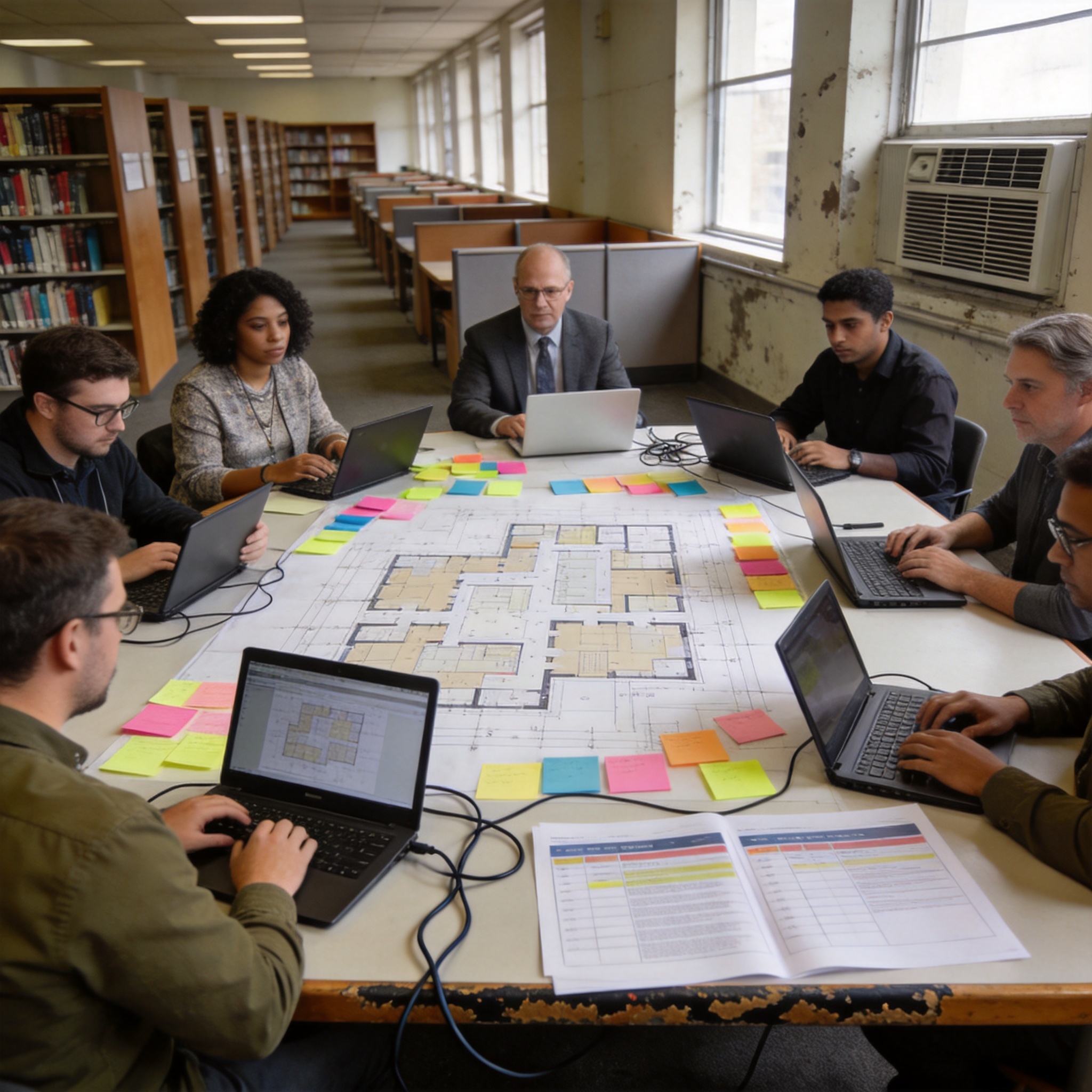
During our workshops, we ask for input. We ask the community what do they do in the library. We analyze uses in the library: online classes, group projects, quiet reading, tutoring, digital media production, consultation, printing, browsing, exhibits, and archival research place different demands on space.
One result of the library workshop is an activity map. It is functional analysis of the spaces in the library and it helps define adjacency planning. This includes noisy collaborative work spaces and quiet study areas. It includes ideas on how to improve public service points, reference, self check, and staff support. We provide best practices in the design of collections displays and technology touchscreens, computers, etc. Each space requires a clear boundary between IT access and best practices uses.
4. Treat infrastructure as part of library service
Power, Wi-Fi, lighting, acoustics, HVAC, accessibility, and furniture options need to be shared. They determine whether the library is modernized or not.
Note, survey’s done always tell you everything. Workshops help uncover real needs. For example, Redesigning the Academic Library Building found that 28.81% of respondents described their HVAC systems as problematic, while another 18.64% reported occasional problems. We also learned the expected time until air conditioning replacement or major overhaul was 7.76 years. Many librarians noted that HVAC decisions were outside their control. So, how do you fix these issues?
Library Planning Workshops help infrastructure issues including Environmental comfort, air handling, and power access. These open ended discussions help shape the future user experience and if there are any costly issues to update the library.
5. Long and short term planning outcomes
Every library plan results in future visions. However, library workshops help us dig deeper. We don’t just come back with more group rooms and fewer stacks. We learn from the users. We don’t rely on surveys and set questions alone. During library planning workshops, we share best practices in library designs and long term options that change the goal posts. For example, seating innovations and options to provide flexible spaces are shared.
Note, more study space options may mean less library-collections space. More special collections space may require tighter collection management. The community can accept trade-offs that are visible. Library workshops help us define the options and trade-offs disguised as inevitabilities. Workshops help us build long and short term scenarios that give us options instead of being boxed in.
Give the Gift of Power – Library Workshops – Build An Agreement
Over the years, our workshops helped libraries build future ideas including physical building and digital services. Today, we are changing the work of libraries. Today, library users are inventors and builders of knowledge. The library is becoming less of a passive container for materials and more of an active framework for study, collaboration, technology, service, collections stewardship, and academic support.
Start developing your future. Start with a library planning workshop that enables you to build a future for the library. This requires evidence and partners. It requires listening to the users and learning what is possible.
Feedback gives the community more than a voice. It gives the community a share in the future condition of the library. That is the gift of power. Start with a library workshop and you will begin to make the best future for the library. Library planning is built on that gift. Start with listening sessions and you will make better decisions. You will be able to defend them more clearly, and produce library that serves the community or institution rather than merely housing it.