
Library Planning Begins with Knowledge Management
Library planning is part architectural exercise and part strategic planning. It is a knowledge management methodology that enables you to build the next generation library.
Many public libraries and institutions of higher learning have handed responsibility for library planning to people who are not librarians. This shift has consequences and should be reconsidered when possible. Our planning process is connected to years of library planning knowledge. Basically, modernizing a library can fail to visualize the services, behaviors, collections, and communities it is meant to serve without library planning experience. Librarians must study new ways of access and strategies to bring their own knowledge, vocabulary, and planning methods to the table. Librarians must empower themselves with knowledge management techniques that make user needs visible, measurable, and actionable.
The library is part books, technology, staff, digital tools, and study seating. Indeed, it is also system of relationships and knowledge services. If you are thinking about how to modernize a library you need to start personal research and share your inquiry with experts. Basically, you need to engage in community learning, service transactions, quiet reflection, public presentation, and social exchanges. Certainly, when we get involved to create successful library plans we must account for new types of tools and relationships.
Knowledge management gives librarians methods to do that work.
The Library as a Learning Organization
The most important innovations in knowledge management come from the sharing of knowledge, building social capital and building of communities of practice. These principles apply directly to library modernization efforts.
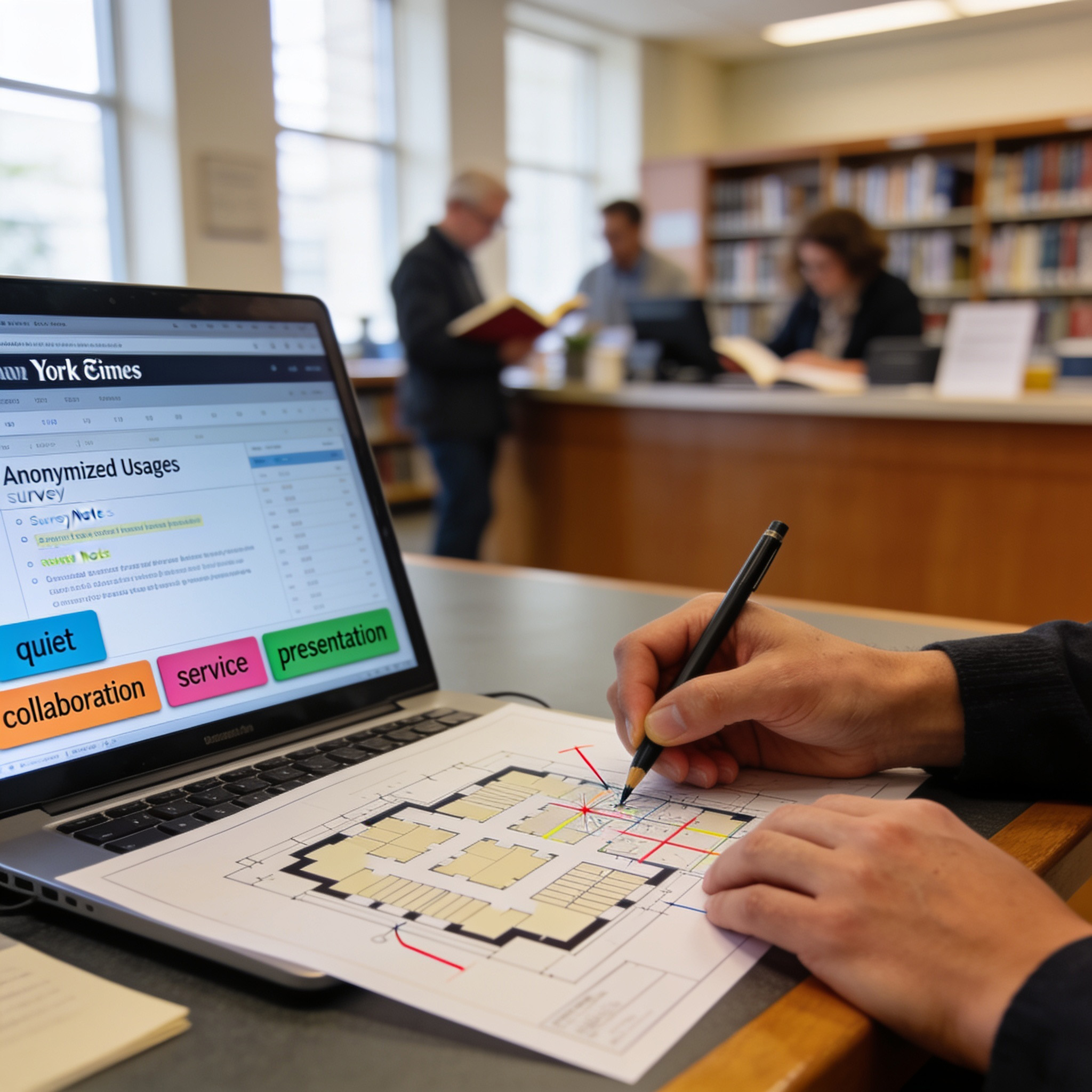
Basically, our library plans start by learning about the past. How did the library get established and what can we learn from it. Indeed, our studies analyze how people work, how they ask questions, how, for example, people move through the building, how they use technology, where they gather, where they withdraw books and media, and where service fails to meet expectations. We complete analysis of these observations to create an operational knowledge dashboard.
The dashboard is the foundation of a learning organization. Basically, it tells us the health of the system so library can enhance social capital by valuing interrelationships, encouraging dialogue, and making assessment part of its management culture. Certainly, staff and operational knowledge is key. The staff can offer institutional knowledge, user behavior antidotes and examples of weaknesses. This stakeholder input becomes planning evidence.
The result is not a static facility plan. It is modern library strategies that enable continuous improvement. Indeed, service aspirations need to be measurable. The library program attributes outline these measurements.
From Vision to Program Attributes
Library space planning starts with knowledge management questions i.e. How do you develop a clear vision? what is necessary? What is not sufficient? Indeed, accurate and insightful list of program functions or attributes is important to modernization work.
Every library holds a vision of what it wants to become. Every library also operates within a current reality. When the vision differs from reality, a gap exists and you need an expert. We study gaps even though it creates status-quo tensions. Expertly supported, and managed, the status-quo tension will block change. Poorly managed, it lowers ambition. The modernization project stops and the organization reduces its goals. Because the stakeholders cannot tolerate the emotional tension between present conditions and future needs they block the future vision and modernization stops.
This is why library programming and user assessment matters. Knowledge management methods give library a way to study user needs and behavior without surrendering its strategic vision. Here are some sample questions to ask your staff:
- How is the library currently configured?
- What user needs remain unaddressed?
- What services would enhance the user experience?
- What services can be phased out because they no longer reflect patron needs?
- What learning activities are most effective in the building?
- What spaces are missing from the learning environment?
Basically, the programming questions are a start and the president examples of other libraries help frame the questions. They help move the dial and conversation from opinion to evidence. They also protect library from planning from fear of change. Indeed, modernization of library does not need every possible space type. It needs the right services and spaces, in the right relationships, for its users and mission.
Measuring and Modernizing Library Communities of Practice
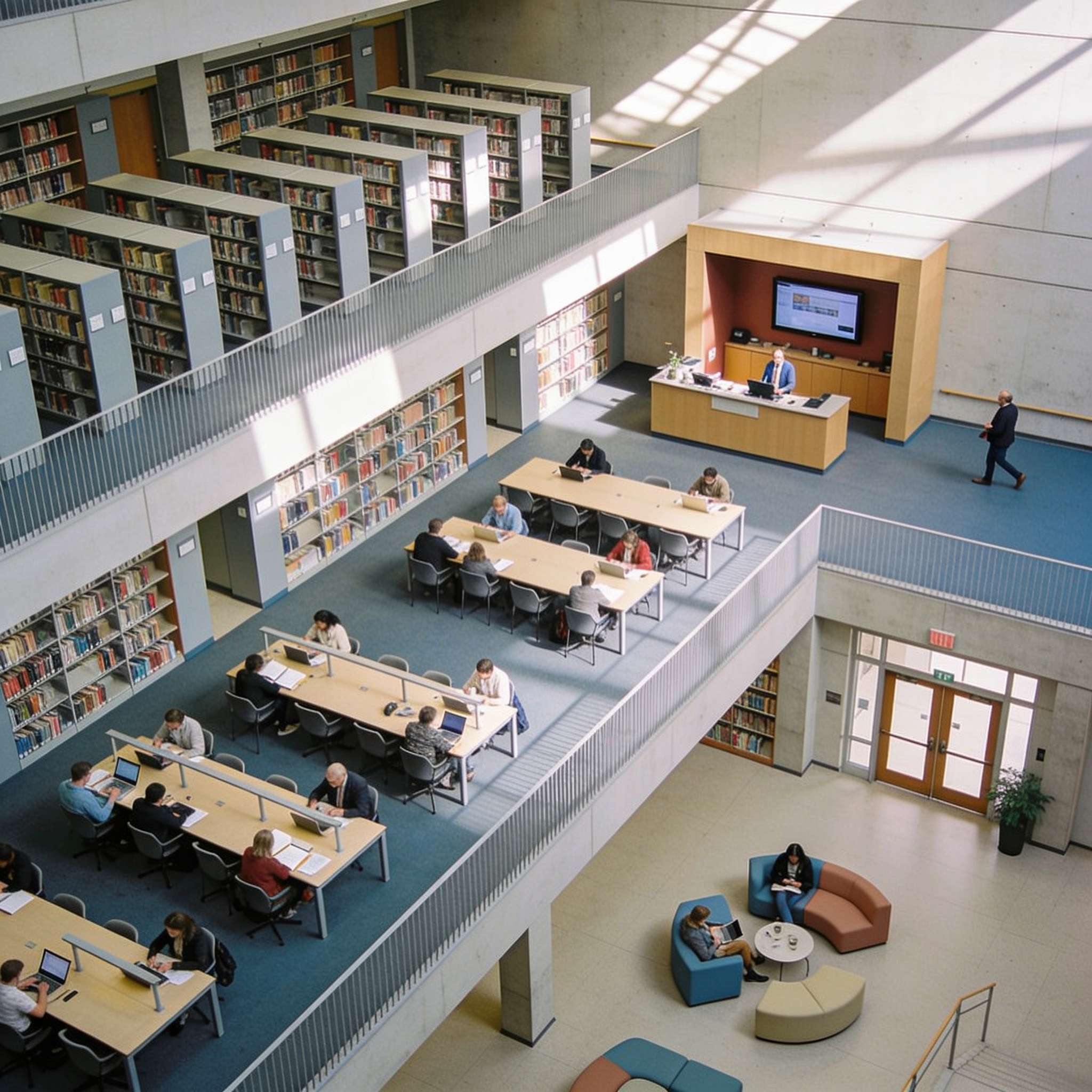
Library planning starts with knowledge management measuring. Note, useful library planning begins by outlining the communities of practice that use the library. These communities are defined by demographic category and institutional affiliation. They are also defined by use and behavior. Users come to the library to work in a hub, touch down, reflect, collaborate, and socialize. Each activity has different spatial, technological, acoustic, and human requirements.
Learn about knowledge management approaches and start to organize library modernization through the following five learning modes:
Touchpoint
The touchpoint is the point of service, orientation, and transaction. It includes the entrance, access service desk, security conditions, and library relationship between users and staff. It is where the library establishes confidence and builds trust. Yes, I said it – you need to think about building trust through out the process and the touch point is where it happens.
Basically, touchpoint planning needs to consider visibility, approachability, flexibility, and interactive behavior. For example, what is a flexible service desk? How do you create clear wayfinding? signage? When is the last time you studied the entrance sequence and flow. How does the library allow the user to understand the library service mix. What if they want something quickly?
The touchpoint is a public desk and part of the knowledge management platform. It is the first operational expression of the library’s service model and you need to consider experts when you design a modern one.
Reflective
Reflective space supports quiet work, reading, personal research, study needs and concentration. It requires attention to capacity of seating whether its a full enclosure with ample lighting, acoustics, and its defined by personal territory.
Reflective areas may be open, semi-enclosed, or enclosed. Each type supports a different degree of privacy when your using the library. The personal zone matters to everyone but it varies in different cultures and communities of practice. Lighting and HVAC controls, visual calm, and acoustic discipline shape the user’s ability to work.
The reflective mode is where comfort and concentration meet. It is where the reading room is memorable to the young and old.
Collaborative
Collaborative library and open collaboration space supports modern library use including group conversation, shared work, parallel activity, and technology-enabled exchange. It requires more than movable furniture. It requires adaptability and strategies to enhance the user tools.
Collaboration works when people can gather without disrupting those who need quiet. It may depends on whether users leverage mobile and computer access, group work, quiet seating, display capability, and environmental controls. Open collaborative modes are the secrete to planning a new and modern library. Is it part of the whole building or is it a part of the library?
Social
Social space gives the library a welcoming civic and institutional presence. Basically, it can include café-style seating, entrance relationships, informal conversation areas, and flexible environments for library use.
Social space requires a different management lens and functions. Indeed, social requires different security, cleaning, food policy, audio, video, and furniture setups. These are modern and flexible set ups that enhance the planning equation. Yes, the social mode is something to do with noise.
Social space planning for us is a recognition that learning also occurs through informal settings and natural environments that enhance community.
Presentation
Presentation and classroom spaces in the library support instruction, multimedia use, telepresence, lectures, group interaction, and public programming. We try to analyze open, semi-enclosed, or enclosed space needs. We analyze it depending on the level of control required.
Presentation and classroom planning must consider the location, and sightlines. We also define the technology, acoustics, and adjacency requirements. For example, if a presentation space is placed poorly it can disrupt the library.
If placed well, library classroom spaces become a platform for group learning, sharing and community engagement.
Seeing, Hearing, and Touching the Plan
Library space is experienced through the senses before it is understood intellectually. A knowledge management plan must therefore measure more than square footage.
Each learning mode has physical, communication, and human dimensions. These can be translated into sensory questions:
- What does the user see?
- What does the user hear?
- What does the user touch?
- Where does the user feel welcome?
- Where does the user feel exposed?
- Where does the user feel permitted to ask for help?
- Where does the user feel entitled to concentrate?
The physical dimension includes service points, seating types, entrances, work locations, space relationships, and visual openness. The communication dimension includes data, portals, mobile access, multimedia, telepresence, augmented or virtual interfaces, and the management network that connects the user to library resources. The human dimension includes behavior bubbles, transactions, group interaction, conversation, quiet, comfort, and security.
Our method turns space planning into a measurable practice. It allows librarians to discuss the building in terms of behavior and service, not simply furniture and finishes.
Technology Is Part of the Space Plan
Library spaces with technology are not separate from library service. Basically, technology shapes how users discover information, share knowledge, present work, and conduct research. The planning process must address both the physical library and the digital library.
Library modernization needs to analyze tech and adjust their reference tools to the digital world. They must build or buy their own digital library collections and manage them. We help libraries manage their collection decisions. We integrate them with space and modernization decisions, service decisions, and access decisions.
Indeed, users who enter the library with a laptop or mobile device is not outside the library’s planning responsibility. That user is part of the communication and information environment. The plan must account for mobile work, computer use, digital content, reference tools, and the relationship between in-person service and networked access.
The library as an incubator and it depends on this integration to enable modern learning. We develop technology solutions for new and traditional libraries; we have examples of how collections and digital reference can support discovery, experimentation, and shared work. Don’t think of modernization just as the physical space, you need to think about digital infrastructure and how it operates together to serve your community.
Benchmarking
Measurement requires context and it also requires experience. Our libraries customers ask use for trends and benchmarking. We use tools such as the National Center for Education Statistics for academic libraries and the Institute of Museum and Library Services for public libraries to get started. Basically, these resources are general comparison tools. They do help institutions understand their position within a broader field, which is a start.
Benchmarking and trend comparisons have limits. It is difficult to compare libraries so you need expertise to help. Each institution has its own mission and vision, user community and stakeholders, collections, special collections profiles, services, building conditions, and history. Benchmarking informs judgment, which is a valuable strategy during modernization processing.
Useful needs assessments combines external trends and comparisons with local experiences and knowledge. We study community of practices inside the library and outside in the community. We examine community behavior to understand how to create the best fit. Certainly, we value the expertise of library staff. We also ask users what they do, what they need, and what obstacles prevent better service.
Phased Planning and Change Management
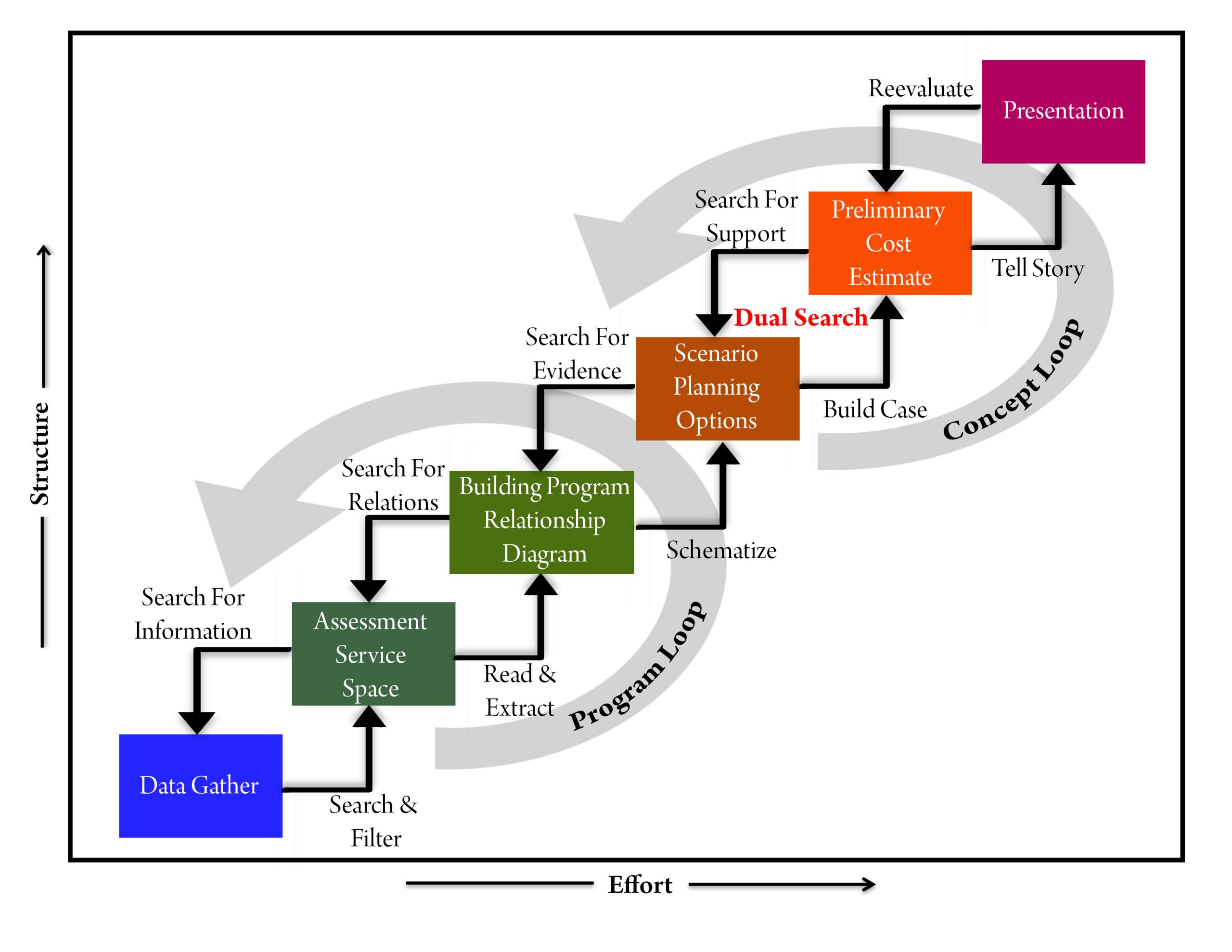
Good planning recognizes that change takes time. You need a team to help define this type of scheduling and project management. We can provide project management that supports phased planning approaches. Indeed, this allows the library to act on modernization efforts without trying to make every issue solved at once.
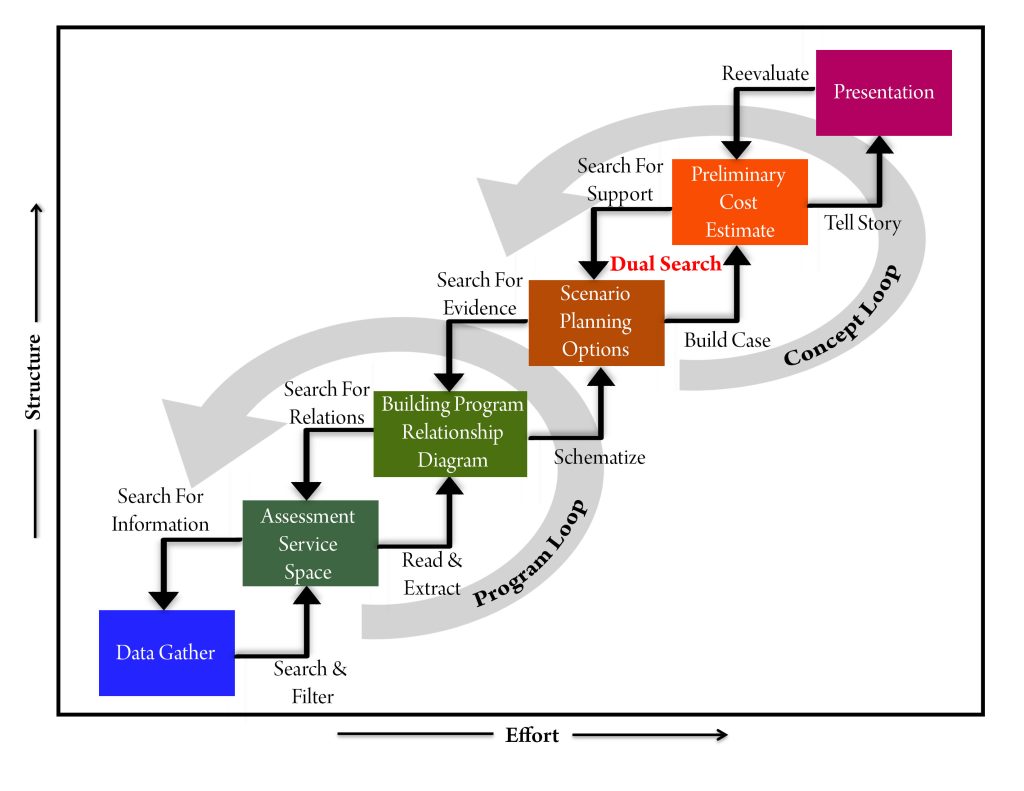
Library space planning starts with knowledge management phasing. For example, we start the process with characterization exercises, ontologies and user needs workshops. Library modernization studies include current configuration and existing conditions assessments. We identify existing user needs, and we tests service priorities. This work determines what can change now and what must wait. It then connects each phase to goals, objectives, and strategic vision.
Our library workshops supports leadership in transition. Leaders do not merely know everything. Especially, if they are new or interim. We help conduct strategy discussions. We hold dialogues with profession and non-professional staff. We commit our skills and experiences to the mastery of the project. We can help build a modern library organization where it is safe to create visions and where challenging the status quo is expected.
Appreciative inquiry belongs in this process. Our workshops help the organization value interrelationships and identify strengths without ignoring reality. The purpose is not to defend the present condition. The purpose is to understand it clearly enough to change it.
The Librarian’s Planning Responsibility
All of us are learning space experts when we pay attention to how learning actually occurs. All of us can add value to the process.
Librarians see the daily evidence of use. They see the crowded table, unused room, confused visitor, and successful program. When we tour the library with a visual scan, we will stop at the quiet corner and discuss how the service point produces friction. We workshop how technology that users have change the needs for the next generation learning environment. Yes, knowledge is planning capital.
Modern and future libraries are created by experience, engagement and drawings of the future. Together we create new strategies through disciplined observations, shared knowledge management workshops, measuring behavior, and building clear understandings of how people use space to learn. Knowledge management gives librarians opportunities for impact. Space planning gives that knowledge a physical format to build on.
Modern library planning succeeds when it translates community knowledge into service, service into space, and space into a better conditions for learning. Library space planning starts with knowledge management workshops and consultants.