

What Discovery Looks Like in Practice
Libraries are a Third Place. They are a showrooms for information, learning and knowledge. They prioritize space for new and recently acquired titles and provide spaces for discovery. How do you design them strategically? Placing librarians and informed staff where they can engage is the key. We design digital collection interfaces that mirror the pleasure of physical shelf browsing. Our space plans and interior designs communicate collection development decisions transparently, signaling that the modern library is curated for discovery.
Collection lifecycle management needs to be intentional. The spaces and services define patterns of use and mission alignment. Yes, library space planning helps with curation.
Gen Z and Millennials
Gen Z and millennials are not abandoning libraries. They are teaching libraries what they have always been: platforms for discovery, engines of equity, and spaces where community matters more than transaction. The question before library leadership is whether collections and spaces will be designed for the modern user.

The Library as Third Place
What does discovery look like for Gen Z? According to Kathi Inman Berens, Ph.D. and Rachel Noorda, Ph.D. Portland State University study, nearly half of Gen Z and millennials (43%) did not identify as readers. Of that group, 54% visited their local library in the past twelve months. Why? The answer reveals a fundamental misunderstanding in how libraries position themselves.
Libraries serve functions that are more then lending.
During ethnographic observation at public libraries near Boston, our consultants witnessed teens using library spaces to “vibe”—to hang out, to craft, to game, to socialize, to access technology they lack at home. Books lined the walls of teen lounges, but browsing shelves was incidental to an internet connection and a desktop computer. What mattered was the group dynamic. Space to share and be part of a community, permission to access, and the discovery resources (Wi-Fi, maker equipment, recording studios).
This is not a failure of libraries to serve readers. It is evidence that libraries need to modernize. Many have succeeded in positioning themselves as institutions of genuine public space. They are places where young people can exist without being sold to. The library differentiates from the commercial third places that dominate Gen Z’s world. It offers what the marketplace cannot: freedom from extraction.
What does discovery look like for teens? Operationalizing this insight requires investment in spaces designed for lingering: teen lounges, collaborative areas, equipment that enables creation rather than consumption alone. It requires library leadership that understands space planning not as secondary to collections but as central to mission.
Why Gen Z Reads Print While Living on Phones
Modernizing libraries is an important part of a growing community. What does discovery look like for Gen Z? For example, 92% of Gen Z check social media daily. Some check multiple times per hour. Yet print remains Gen Z’s preferred book format. More: younger Gen Zers buy and read more print books than their millennial counterparts. Age negatively correlates with print consumption—the younger the patron, the more likely they prefer physical pages.
This is not a throwback. It is a deliberate choice made within a media landscape saturated with digital friction.
- Print offers what digital cannot
- A space where consumption happens without algorithmic mediation
- A place without the attention economy’s constant bid for behavioral data
- A place without the interruption of notifications and feeds. F
For a generation immersed in curated environments since childhood, print books represent genuine autonomy.
The architectural implication is direct: libraries must remain committed to shelf space, to reading room design, and to the material conditions that make browsing legible and pleasurable. The assumption that digital collections would reduce demand for physical space has proven unfounded. Gen Z and millennials use both—but the physical library remains the primary site of discovery, particularly for print.

The Economics of Discovery
The American publishing industry spends approximately 2% of revenue on marketing—roughly $3,187 per title at major houses. This constraint is structural. Most books never reach the visibility they require to find readers. The friction is built into the system: authors and publishers must compete for algorithmic prominence, pay for advertising, or rely on the uncertain returns of reviews and word-of-mouth.
Libraries occupy a different position entirely.
- A book shelved in a public library reaches browsing eyes without commission, without algorithmic mediation, without the friction of payment.
- Libraries are not simply repositories. They function as curatorial marketing platforms—and they are the only ones that operate at scale without extracting revenue from readers.
- The economics here are consequential. Research demonstrates that one in three book engagers discovered a title at a library and later purchased it.
- In a media landscape dominated by subscription services—Netflix, Spotify, Xbox Game Pass—the library remains the sole risk-free sampling platform available for print books.
- For a generation of readers accustomed to trialing media before investment, this distinction matters profoundly. Libraries enable the discovery behavior that the publishing industry requires but cannot itself provide.
Yet many libraries have organized their collections around a premise that limits this potential. For this article we are focusing on – What does discovery look like for Gen Z? They like modernized libraries. These are places that serve as a free alternative to bookstore acquisition.

The evidence suggests a fundamentally different strategy.
Libraries that curate with browsability in mind, that refresh displays with intention, and that embrace high circulation rates as evidence of success will serve their communities more effectively. More counterintuitively, they will better support the publishing ecosystem itself.
The logic is straightforward.
- A book moved through a library’s collection reaches readers who might never have encountered it otherwise.
- High circulation is not a failure of collection development; it is proof of discovery.
- Each circulation represents an introduction—and each introduction creates the possibility of purchase.
- The library’s role is not to compete with booksellers. It is to expand the market by converting browsers into buyers.
Make a plan, Make a List
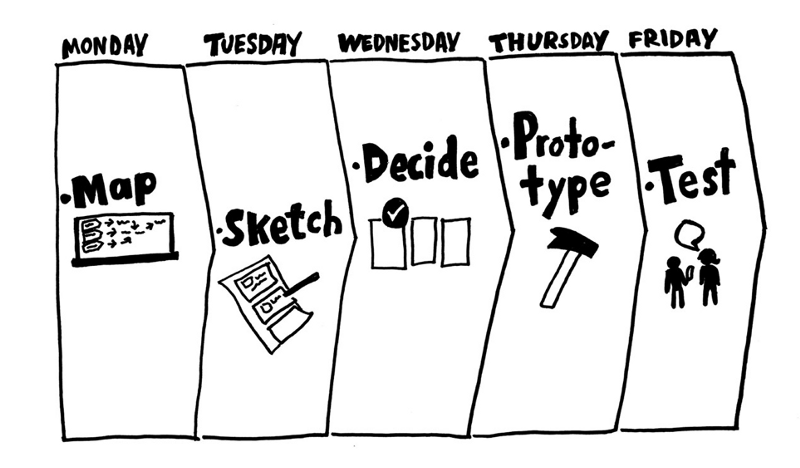 Start with a needs assessment and develop your user experience personas ranks each against others.
Traditional metrics:
- Holdings per capita.
- Collection depth.
- Circulation per title.
They do not account for the book that sat unread because it was shelved in the wrong location, or the reader who never found it because the display was static. This is another reason libraries need to be updated to support new kinds of learning activities.
Modernize the space plan / visibility of its collection, the intentionality of its curation, and the willingness of the community to return.
The operational implications are real. Display space becomes strategic real estate. Shelf rotation becomes an act of marketing. The selection of which titles appear at eye level, which are featured at the entrance, and which are refreshed seasonally determines the radius of their reach. A modernized library that treats these decisions as operational can improve. Libraries that engage in needs assessments as part of their strategic mission gain leverage.
The librarian is a trained professional with knowledge of the collection and the community it serves.
Libraries that embrace open collaboration become essential infrastructure in the publishing economy. They solve a problem that publishers and booksellers struggle to solve: they create discovery events at scale without extracting rent from readers. They do what libraries do: they add value that markets alone cannot create.
The path forward is neither complicated nor costly. It requires only a shift in philosophy: from libraries as substitutes for purchase to libraries as discovery platforms.
- Stack displays strategically.
- Rotate stock thoughtfully.
- Monitor which titles move and why.
- Create space for browsing rather than efficient retrieval.
- Track what your community discovers and make those discoveries visible.
The library’s scarcity is not books. It is attention—and attention, once earned, translates to readers, sales, and the survival of a diverse literary ecosystem.
