
Reinventing the Library as an Incubator for Literacy
What gets measured gets managed. What gets managed gets modeled. What gets modeled gets adapted.
Reinventing the Library as an Incubator for Literacy requires you to analyze existing conditions. Subsequently, your work will turns to options and people who have ideas for the future.
- Every library is different.
- Each has a different history.
- Different service model.
- Unique building condition assessment.
- Funding environment.
- Meeting community expectation.
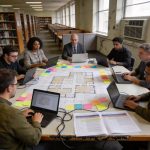
Our planning methods are structured, you can not be rigid during this process. Even though people want results and answers quick. Our methodology enables instant feedback. We examine existing conditions and discuss the options.
- We listen to community stakeholders and learn about their pain points.
- We define short-term and long-term planning options that are fundable.
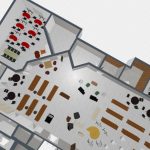
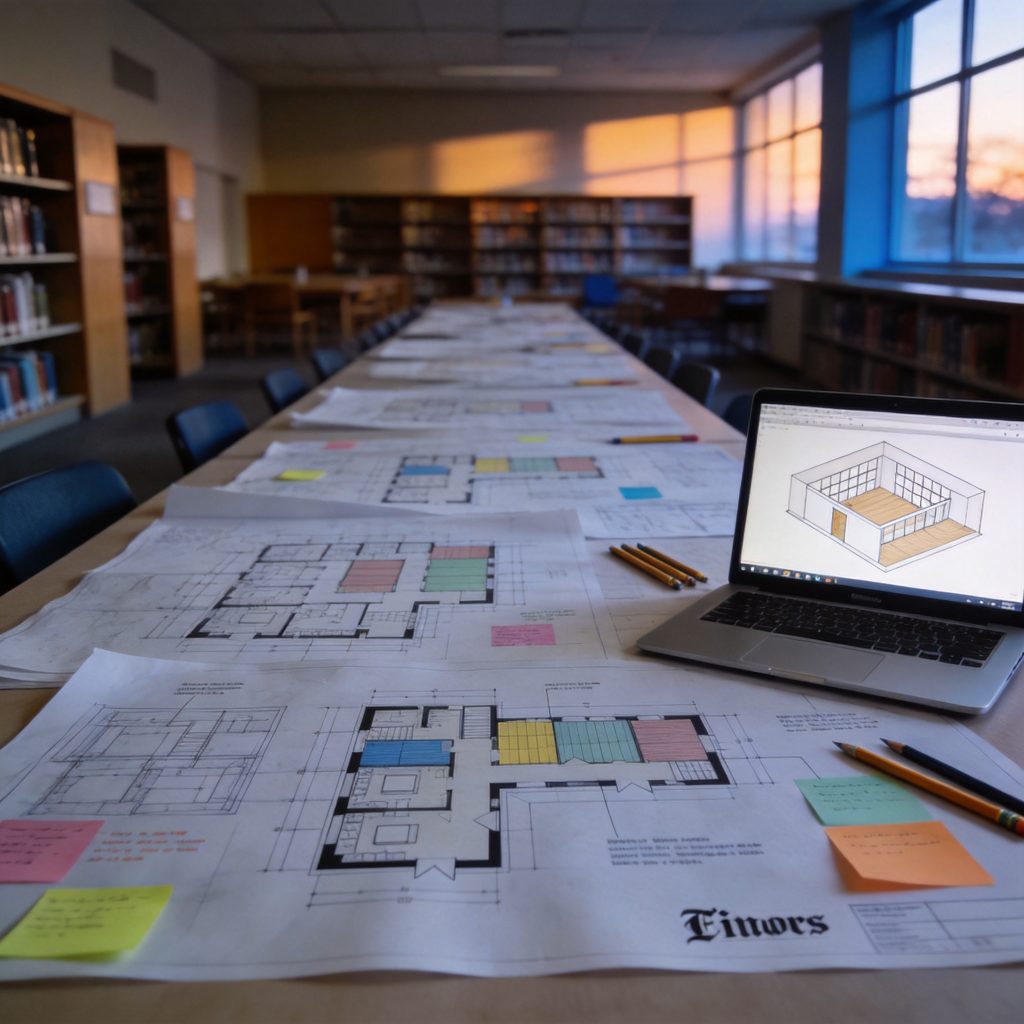
- We develop scenarios that show service choices and space implications.
- Scenario planning allows the library to build on past work rather than discard it.
Scenario planning with an experienced consultant is essential because they make decisions visible. They show what can be accomplished, what requires phasing, what costs more, what depends on funding, and what belongs in the long-range strategic planning cycle. Consultants know how to work with library boards and leaders. Furthermore, they understand the consequences of choice.
Reinvention Starts with Small Wins
Reinventing the library as an incubator succeeds when it begins with a vision about library.
- Analyzing the reading room.
- Develop a learning commons.
- Visualize children’s area.
- Create technology zone.
- Develop meeting suites.
Certainly, each functional element has different acoustical requirements, furniture needs, service expectations, staff implications, and utility requirements.
Modes of Learning Require Deliberate Methods
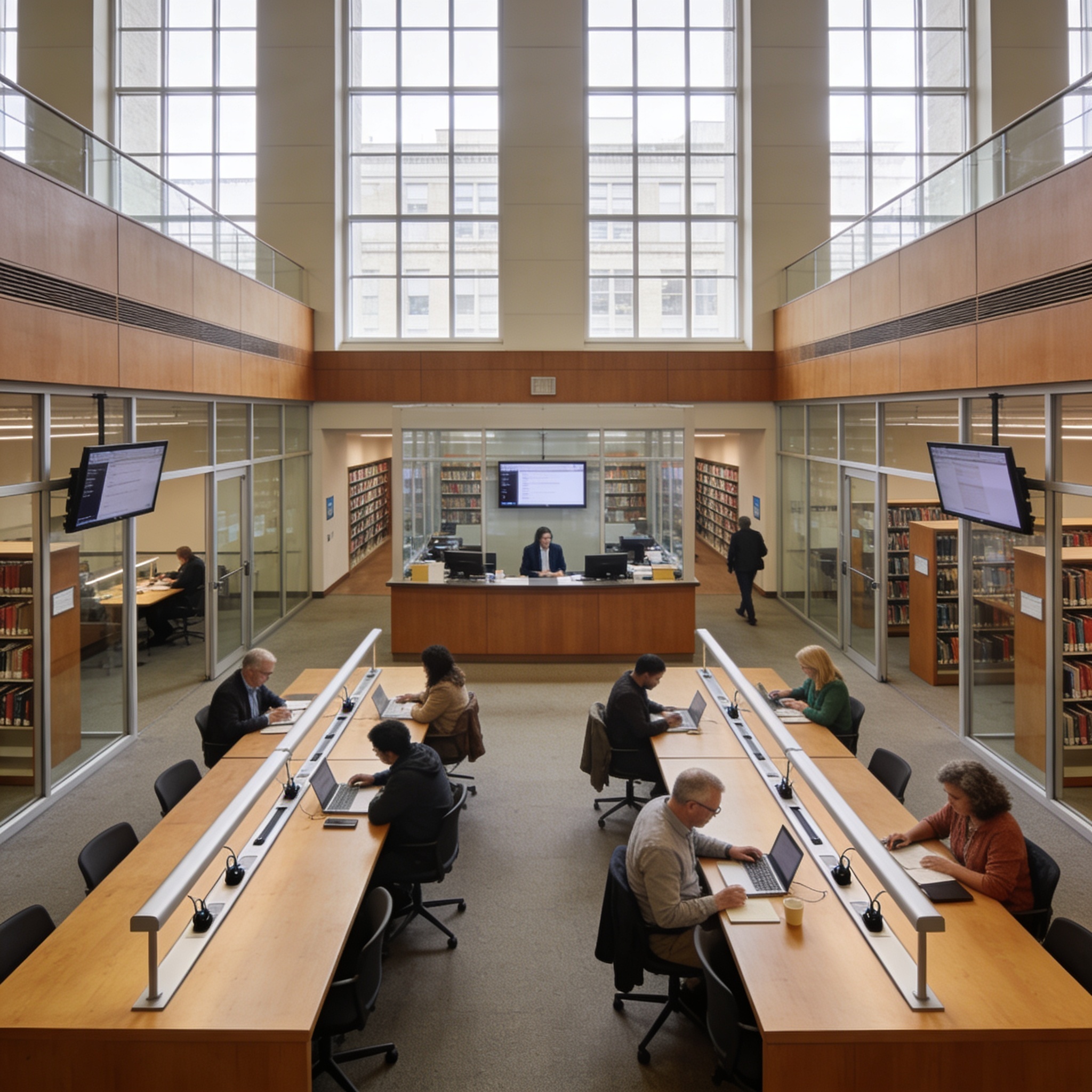
How do you modernize a library? Start with developing a functional list. For example, functions that describe library as an incubator for literacy is a good start. Here, you identify the modes of learning library intends to support and then design architecture around them. This includes the furniture, equipment, utilities, and digital service model(s) required for each type of user.
Library planning questions should be simple, “How much library is available to your users?”
Another question: “What forms of literacy must this library enable to make an impact on each user base?”
Our library facility program translates functional spaces and patterns into architectural requirements. It defines the type of library settings needed, the relationships among them, the level of flexibility or adaptability required, and the infrastructure necessary to support them. The result is modern library plan. It is working model of how literacy occurs in a specific community and how the facility must respond to improve the community.
Measurement Is the Beginning of Management
Measurement gives planning discipline. It prevents opinion from dominating the process and allows the library’s leadership to test its assumptions against observable conditions.
- Modernizing a Library supports changing learning patterns.
- Provides tables, stacks, and meeting rooms.
- Supports multiple modes of learning.
- Accommodates digital literacy.
- Supports print resources.
- Integrates interactive media.
- Provides access to power, sound, video, enabling literacy, usability or coherence.
Subsequently, library program measurements include study of core literacy services and resources, learning settings, staff and operations, content formats, digital resources, multimedia, and print collections. For example, the incubator for literacy includes the collection conditions that shape the user experience: searching, public services, behavioral patterns, user space, visibility, access to collections and tools, and the adjacencies between service areas.
Modeling Turns Vision Into a Facility Program
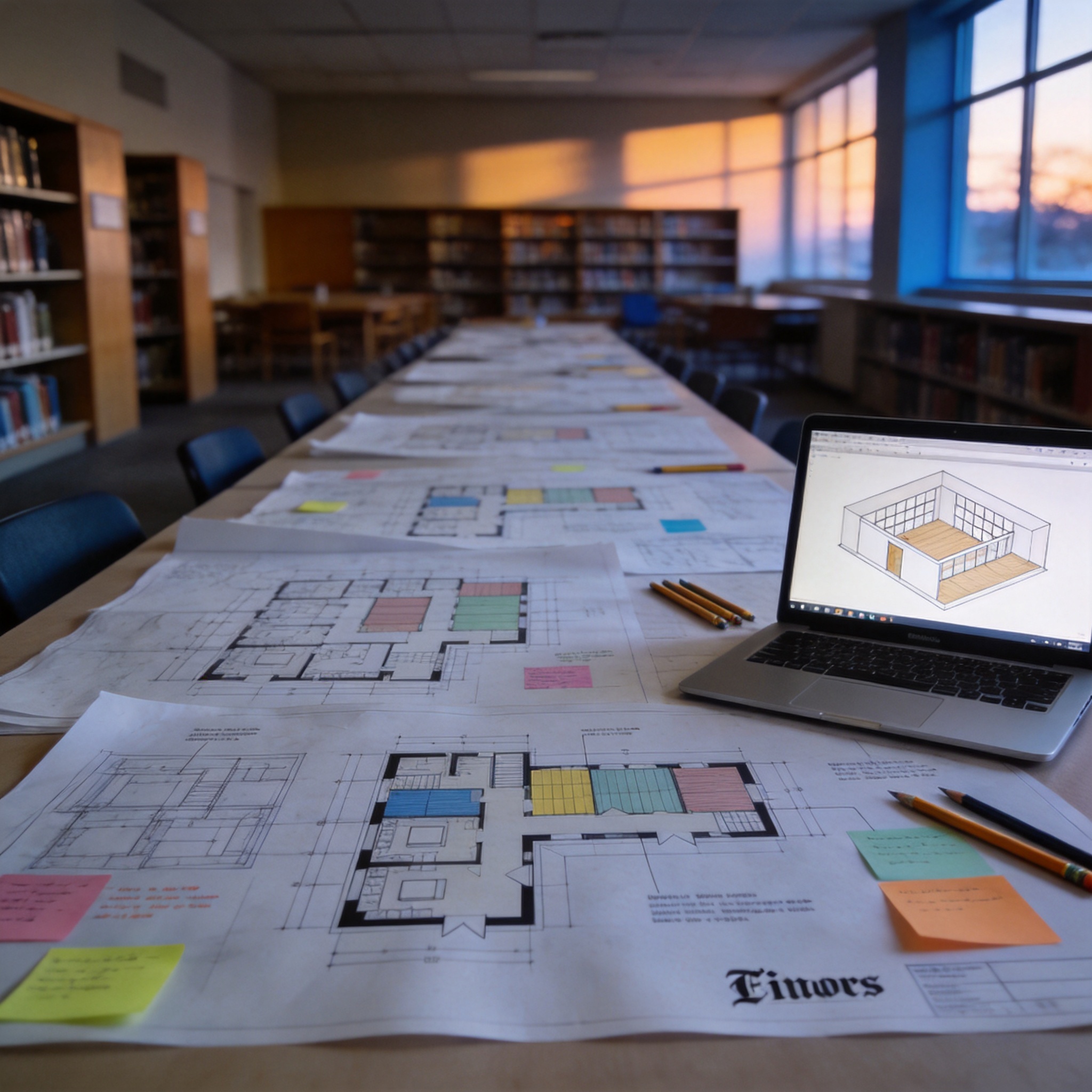
We develop Master Library Plans or 20-year vision reports. Basically, library building program is the bridge between institutional goals and physical space. It identifies the services to be supported, the spaces required, the relationships among those spaces, and the infrastructure needed to make them function. It gives architects, boards, staff, and funders a common framework to modernize the library.
For a library serving changing cultural literacy patterns, the library plan addresses flexibility and access. How does furniture and equipment support different modes of use? What interactive media devices and public services must be integrated into the community setting rather than treated as afterthoughts? How can literacy access to video, sound, power, and other utilities are part of the plan?
The program clarifies staff and operational needs. We never ignores the staff or operations. They live in the library and work to make it the best it can be. Service points, staff workflows, supervision, storage, and public access all shape the success of the library.
- Modeling enables library to test how space can adapt.
- Gives form to measured information.
- Turns community input and professional assessment into plan capable of implementation.
Adaptation Requires Phasing
Reinventing the Library as an Incubator for Literacy requires funding, governance, logistics, and service continuity. You need to make sure the plan meets community expectations, requiring phasing to gain steam. Traditional phased plans allows the library to act without losing sight of the long-term goal. Furthermore, sometimes traditions are OK. They are well worn roads that avoid mistakes.
Case Study: The Lancaster Public Library illustrated the phased approach to planning. The library needed new building that could respond to 21st-century library space needs. Funding challenges had the potential to limit strategic thinking and constrain the planning exercise. The planning process addressed this directly by helping library board define both long-term and short-term projects. The result was phased building program and sequence of library space improvements organized within a 20-year building cycle.
This is the value of master planning. It does not merely describe a future building. It establishes disciplined path from present conditions to long-term capacity. It allows library to make progress in stages while preserving coherence across decisions.
The Consultant’s Role Is Integration
Library planning, programming, and design requires long term know. It requires digital and physical collection integration knowledge. The work brings together librarians, educators, architects, civic leaders, and community stakeholders. Each sees different part of the problem that must be managed. Our planning process converts perspectives into shared direction.
- The consultant’s role starts with a well used formula and adapts to the project vision.
- We provide method, evidence, and structure.
- We help the institution understand its choices and translate those choices into a program that can be designed, funded, and built.
- Our experience enables cross-fertilization.
- Brings practical knowledge of how libraries function: how services change, how staff support users, how collections and content formats shape space, and how buildings either enable or frustrate adaptation.
The Library as a Learning Incubator
To reinvent the library you must build on its historic purpose. Determine your vision, purpose of operations and new funding conditions.
The library is a platform for literacy. It provides access that is place of knowledge. It is public setting where individuals and groups encounter resources, instruction, technology, and one another. Its physical form serves these purposes and more.
- Planning properly enables greater precision. The work begins measuring how the library is used. It is done managing priorities through ethnographic work and professional assessments.
- Modernize your library through analyzing existing models; translate learning patterns into physical settings.
- Phased, deliberate, and aligned – library that is measured can be managed.
- Developing a library model on the future not on the past.
The Library Consultants work is practical. It begins with measurement. It proceeds through management and modeling. It ends in adaptation.