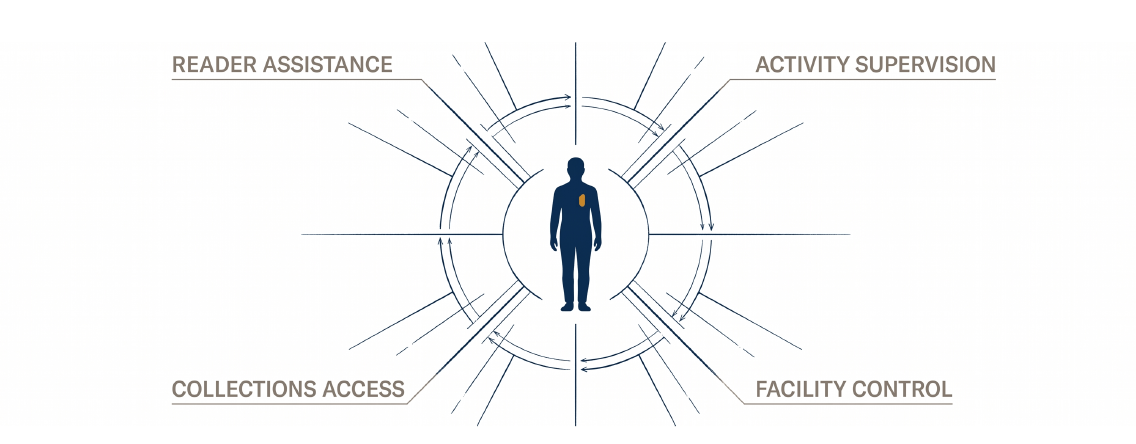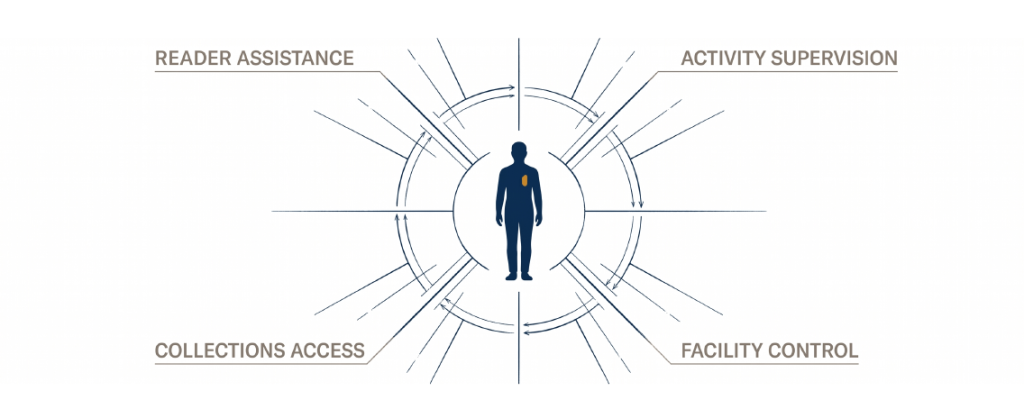

Layering operations infrastructure onto the library is an important aspect of modern special library design. Digital integration is part of the process, creating hybrid information ecosystems to serve in the ever-evolving world we live in. For us integrating physical, and digital assets, spaces and print services is the job. It is designing spaces for the community and solutions that are not sequential investments but co-designed into the library strategic plan.
Spatially coordinated, libraries need to function as a unified whole operation. We need to address the need for reading, literacy and the needs for digital access. How will you be layering library services in the future? Will enhancing access to books or using cloud-connected computers, automated book services, and large-format display screens be integrated into library?
Adjacency as Operational Logic
Interestingly, the integration of library spaces; print and digital can be difficult to support without an integration plan that is supported by a strategic plan. For example, we create plans to modernize provide patron interaction points. We provide this service to support the physical spatial plan. We have modeled the library service desk for years. We consider all of the desk and service aspects including the establishment of electronic screens or panels, and space for staff support. For example, we have developed zoning frameworks to support different learning pathways.
Think about the library as a learning stage where elements and services are coordinated. Where the librarian or staff must constantly be aware; these are spaces to be considering when designing a library.
Certainly, active zones are entry points and opportunities to control the user or patron flow. Modern libraries have tested terminals for self-checkout, catalog lookup, and directional wayfinding systems for years. However, there have been many mistakes. Overall, the goal were to reduce transactional load on staff during peak-load periods, but these systems also turned into replacing staff when we really need the human touch and support. We need to find a balance.
Often, we design the desk space into a semi-active learning zone or open collaboration area. This can be a computer space with reading tables and carrels, and large-format reference display screens positioned for shared consultation without acoustic disruption.
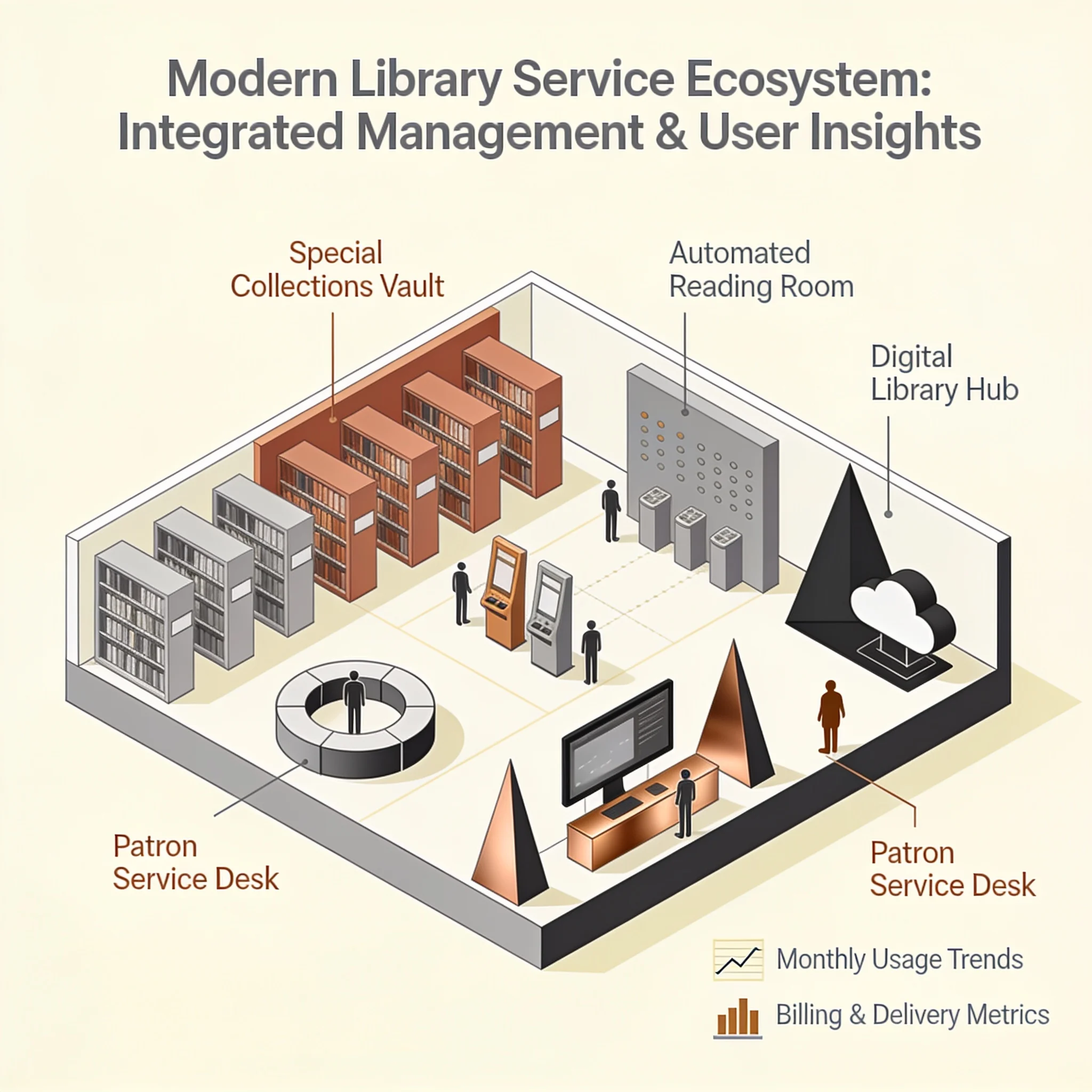
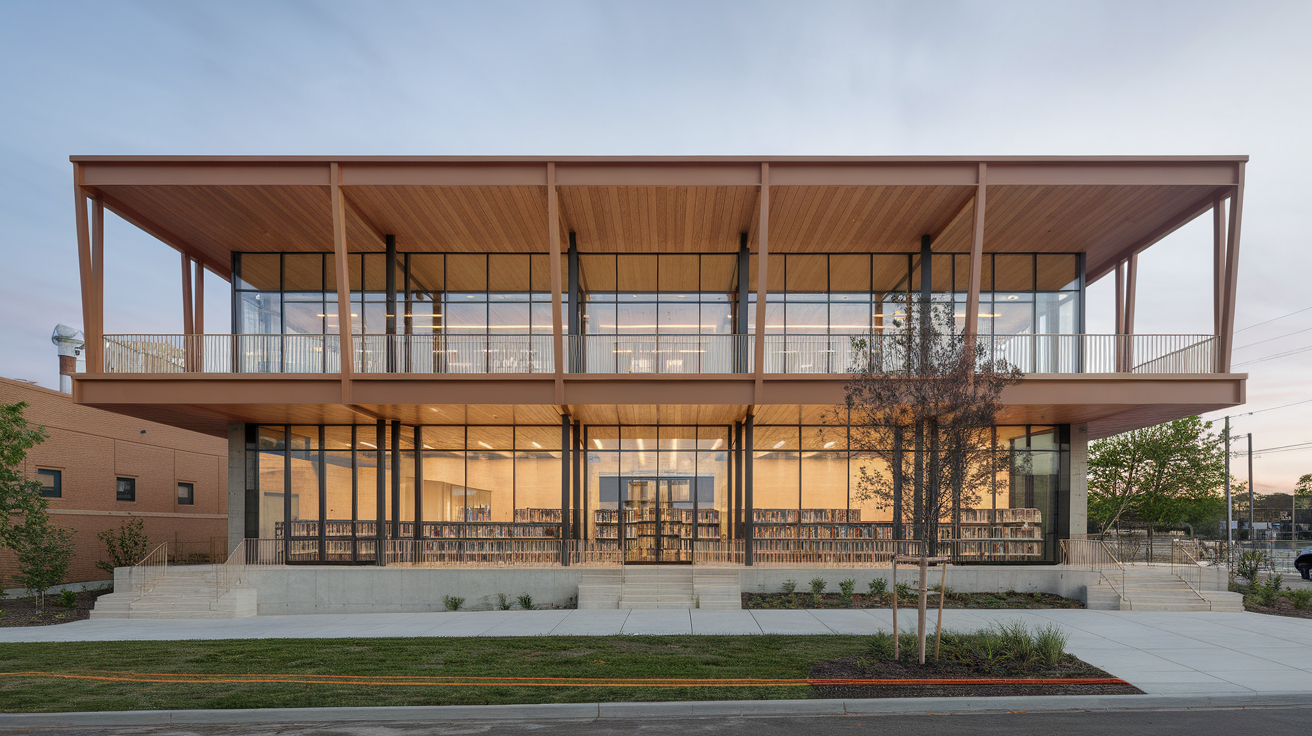
Below is an AI generated image of the library. It is an interesting image of the functions, elements and service requirements to consider.
Comfort, Supervision, and Light Orientation
Indeed, the reference area needs to be reconsidered in any modern library design. Think about the learning stage, and how it provides computers and bookshelf access. Testing designs for libraries with the librarian’s desk in mind is critical. We need to start by serving patrons with a primary node for digital reference, and access service delivery. There are program elements that you need to consider. For example, forward-compatible desk design that is integrated with a panel that is activated to support library info and space for private conversations to protect the patron or maybe hubs for small groups to get together to work on a design or research problem.
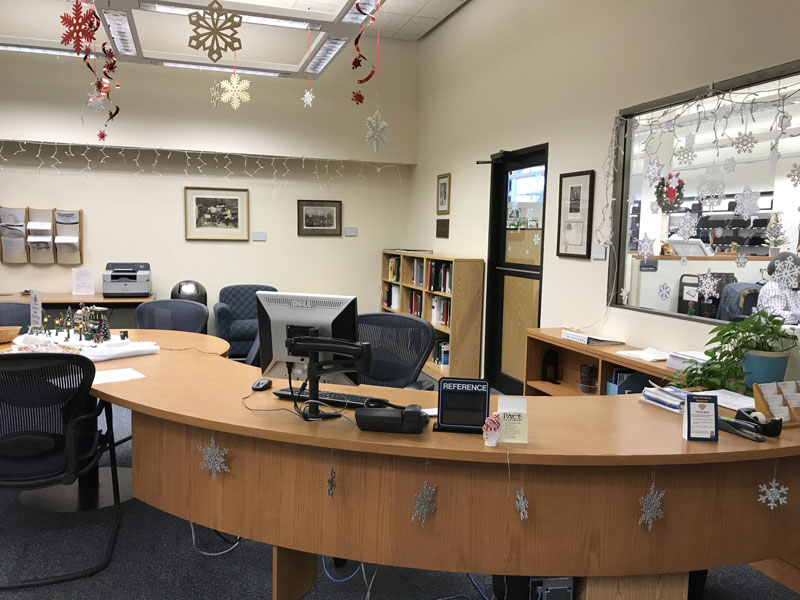
The library planning principle is that digital and print infrastructure should be considered, but not overdone. Books can be embedded into the spatial logic from the outset, with behavioral zoning, power, and user pathways to support literacy. These are structural design decisions that help us define the partition placement such as walls or semi transparent wall systems.
During library design work, we collaborate with the team to define how integrated physical-digital environment could perform. We test scenarios to understand the user flow, particularly possible peak-time conditions and the needs for flexible adaptable furnishings. Basically, we stress-test every library design assumption to create an intuitive library plan or design.
Future-Readiness
The modern library needs to be designed for ideal conditions is not library designed for chronic conditions. Think about the school surge, and the end-of-quarter research spike, the simultaneous arrival of new, and older patrons newly joining the community. Libraries have multiple patrons or clients and each one of them has a preferred pathway.
During integration, think about how peak-events and library programming can be accommodated. They are not anomalies to be managed around; they are the operational reality that the facility must be built to absorb. We want to make sure the quiet spaces are most protected zone and we want to make sure we enhance our goals and objectives during integration.
As part of the library design and programming process, you need to address user flow, and try to optimize services. This can be a design thinking or dynamic systems problem that can be solved.
Here are some typical design questions you can use: How does the spatial plan, the digital infrastructure, and the staffing model work together? What issues need to be avoided to support demand across the facility in a way that keeps the reference area functional under pressure?
The active zones in a library can be social and collaborative, project spaces that enhance communication to spark research. We demonstrate need the design to support their strategic value. We need to absorb the current library and routine; transactional queries at the access services desk and, strategies to highlight librarian’s desk not as a bottleneck during high-demand periods, but as a starting point for student success.
Preserving human and professional capacities in a library
Preserving human and professional capacities in a library is required and, reference consultations are an important factor. Here, is the secret. Start with wayfinding logic workshop; visual, digital, and spatial interactions. Discuss how to channel browsing users into the semi-active book and learning zones. Design spaces that create serendipity; ones that hold the user there, preventing drift into the quiet research area. Scheduling software, where applicable, can help with study room access.
Building Capacity for Services Not Yet Deployed
Basically, there are digital tools that support the evolving landscape of library design. We have been researching them and adding them to the design process. It is an evolving process to uncover tools that support the future. Our goals is a library that performs consistently across demand cycles of the institution or community.
Assessing Library Operations
By assessing current library functions including operational, and stakeholder-ready systems, you can define the future and modern library communities requirements. Designing modern library services that are built to adapt and not just for today’s community is important. In our business, we think about the evolving information needs of tomorrow and work to support library science over the long term.
Configuration and Integration of Library Services
Research libraries planned for yesterdays service profile is a library that will require rethinking. Waiting can be costly often doubling the costs every 5 to 10 years. Today’s costs are hard to define without precision library service programming, return on investment analysis, and updated library planning standards. This precisely why new libraries must be researched through a collaborative process so that we deliver offer more flexible and adaptable learning solutions. The designs must be capable of fitting to the changing needs of the community it serves.
The design team must treat future-readiness not as an aspirational or add-on but as a programming requirement. Note, it is far cheaper to build flexibility into the current plan than to change walls so that services can be updated. Fixed spaces are costly to change when they are finished.