

Embrace a User-Centered Approach
Design the library space for how people actually behave, not how you think they should behave. This means incorporating principles of accessibility and universal design into your library space plan. Ensure that quiet study areas, collaborative zones, technology hubs, and flexible spaces can accommodate diverse learning styles with improved seating and lighting. Every user wants a comfortable space. If they are a graduate researcher, an undergraduate cramming for finals, or a faculty member preparing a lecture they need a space that serves their needs. This is the most important issue with libraries. They need more diverse comfortable seating spaces.
Six Steps for Change
The modernization of libraries will require new efforts, difficult decisions, and genuine collaboration among people with different perspectives and interests. Indeed, the work is worth it. Libraries that are thoughtfully planned, leverage user-centered in design, and build flexible spaces are anchors for literacy. They are places where students develop as thinkers, researchers discover new knowledge, and communities gather around shared intellectual purpose.
- Begin with listening.
- Build your case on data.
- Engage stakeholders authentically.
- Design for how people actually work and learn.
- Plan for change.
- Modernize the library for the learners and researchers it serves.
Design the library space for how people actually behave, not how you think they should behave.
Prioritize Flexibility and Adaptability
The future is uncertain so you need to think of your library as dynamic. Your library must be designed to evolve and change. This means incorporating movable ideas: furniture, modular walls, and open floor plans. These are plans that define how a space can be reconfigured without major renovation.
One area to start with is the infrastructure. This is the electrical, network, HVAC systems. Old buildings from the 1960’s to 80’s were not planned with future technological change in mind. Today, library spaces are designed for one purpose. Tomorrow, we need to design spaces that can become another without structural upheaval.
Flexible Concepts
The flexible library design is one possible answer. It includes designs that enhance human experience, acknowledging that the location of need is no longer fixed. It can be a computer, wi-fi, a video call or a good book.
- We must allow libraries to remain responsive institutions, modernizing new models of knowledge access.
- The library that is able to moves and change is not a retreat from service but an adaptation of it.
- It is time to recognize that the relationship between expertise and inquiry has become mobile, situational, and context-dependent.
What remains to be tested is whether flexibility alone is sufficient, or whether it must be paired with a more fundamental re-conception of what library service means.
Fixed Services
How do you improve your service point and serendipity of experience in a library? Think about how the library staff and also students, faculty, administrators, and facilities managers experience the library. We use the Visual Scan planning process. We use appreciative inquiry methods that build on strengths. When your community has provides input into the design of the library service point you learn what they see, what they need and how they approach the desk. This is an opportunity to build services that enhance the library’s staff and purpose.
The fixed services design usually includes a desk that can be monumental, immovable, and positioned to command across a reading room. Normally, this design protects the staff and their spaces. However, they can also be a hinderance to the library’s welcoming environment.
- The architecture needs to enhance the libraries relationship with the patron.
- Staff provide expertise and materials; patrons came to them.
- A fixed location provides a mediated workflow.
Is that model changing? Do we need to update our approach to customer service? Do we need to protect our employees?
Self-service technologies
Self-service technologies now allow patrons to place holds, retrieve materials, and complete transactions without staff intervention. This raises an interesting question for space planners. How are we accommodating new digital books/journal/etc. technologies? Indeed, Design the library space for how people actually behave, not how you think they should behave.
Our practice has learned that self service environments can make you feel abandoned or they are impersonal. The risk is real for a community organization. Think about how the library is optimize for humans. This space is not purely made for efficiency and its not warehouse of books with computer terminals. When we strip the human presence from our libraries we create a void that inspires no one. I believe that book walls adjacent to the self check enhances the library collection. Placing the self service tech in a space with just returns and latest materials and programs create a learning experience in the library.
Ideas to Explore
The answer emerging from our current practice is the flexible library: a mobile study space, a reconfigurable desk or computer space that can be repositioned as needs shift. In a library that hosts repair shop workshops one week and cultural community programming the next, a systems of stackable tables and chairs and space for storage is not a convenience. It is a planning solution that is explored through library planning. It allows the library to maintain a human space at the point of need, wherever that space happens to be on a given day.
This flexibility carries conceptual weight.
- The fixed design implies that patrons must come for one reason.
- The mobile study space can be inside or outside, leveraging wi-fi, the learning campus, etc.
- The spatial layout of the library shifts from centripetal to distributed, from hierarchical to responsive.
- Staff can become embedded in the activities they support by understanding threshold patrons must cross to use the library.

Collections and Artifacts
As museum institutions that once held a monopoly on artifact access, they now compete with libraries. Modernizing a library can include new solutions such as high-resolution digital surrogates and augmented reality overlays. Indeed, the physical museum space just like the library space must justify its existence. The answer, increasingly, is diversity, flexibility and new learning experiences.
Think about the requirements for interactive kiosks, immersive projection rooms, and digital interfaces that allow visitors to engage with collections too vast or too fragile for direct physical display.
Building Becomes a Platform
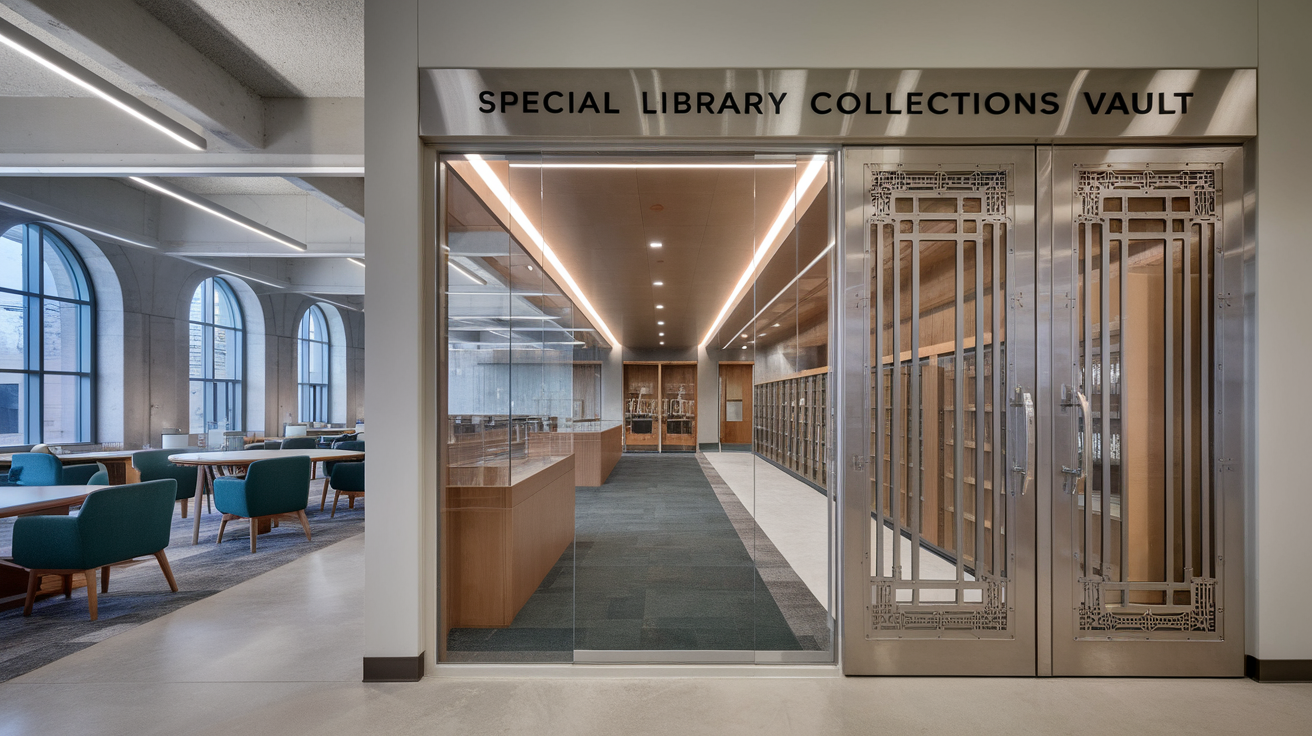
The modern library is a platform for encounters rather than a vault for books or preservation. This reframing requires us to rethink the collection, because it is increasingly accessible remotely. Indeed, the physical library must offer something that cannot be replicated digitally: spaces that are unique, pathways with the potential for serendipitous encounters, and learning activities that physical space can cultivate.
Balance Aesthetics with Function
Certainly, a library need not have to choose between just beauty and efficiency. A modernized library will include well-designed spaces with natural light, thoughtful color, and inspiring proportions enhance both user experience and learning outcomes. This is how you modernize a library. You recognize that learning environments shapes behavior and mood. You can be successful building on these models.

