Don’t Forget the Quiet
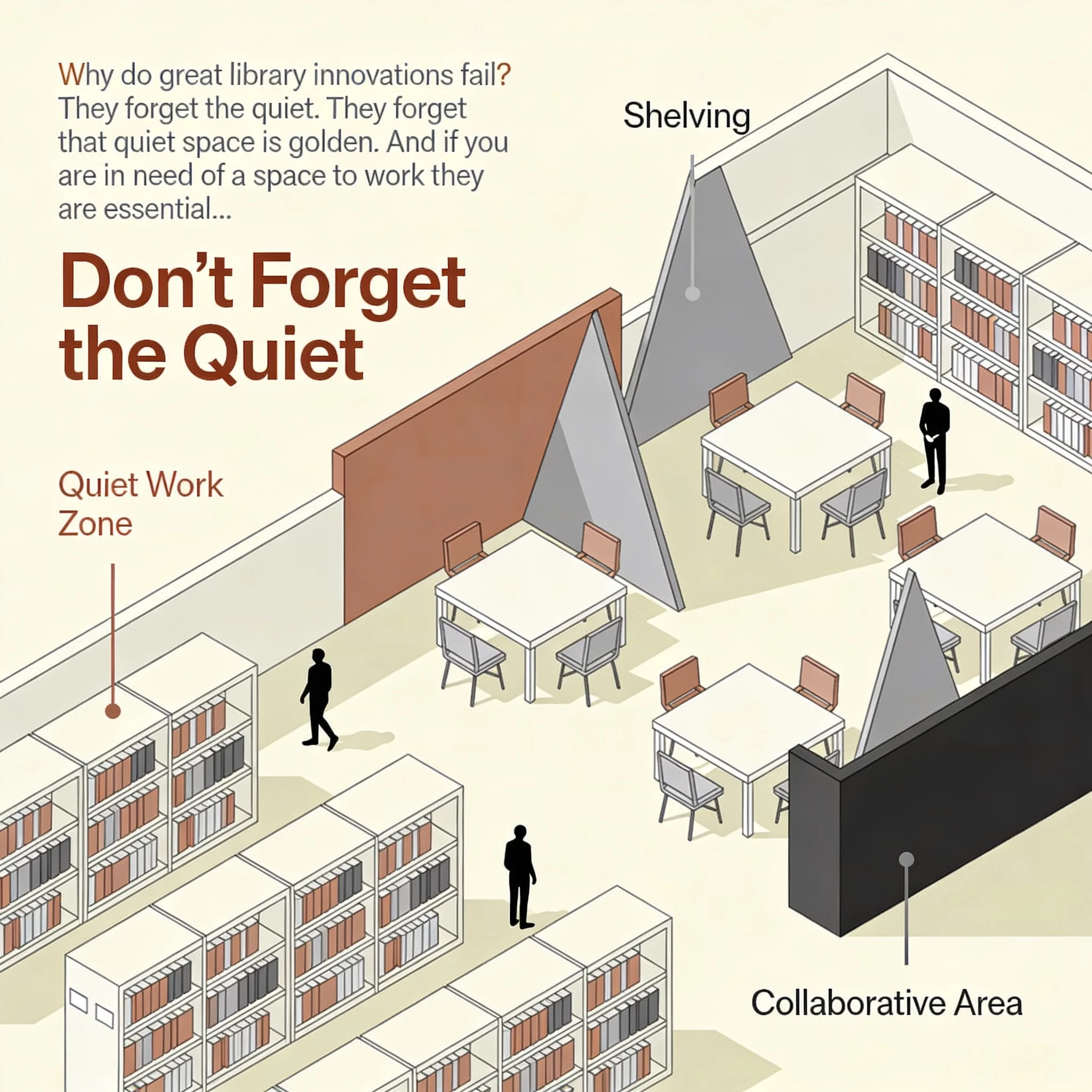
Why do great library innovations fail? They forget the quiet. They forget that quiet space is golden. And if you are in need of a space to work they are essential…
From our perspective, Clarivate’s Pulse of the Library 2025 report captured the need for humans to adapt to a new working and learning environment. Libraries and the professionals who use them are working under rapid technological change. Basically, we need to focus on the long-term purpose of a library – ENGAGEMENT – What is engagement to you? To me, it is the provision of quiet space. Engagement in learning happens when we share and when we reflect on what we have learned. When we read and take notes and when we can digest what we have learned so that its a long term memory and strength.
The Pulse in 2025:
Academic libraries prioritize student engagement (40%)
Public libraries center community engagement (50%)
National libraries emphasize collection and preservation (42%).
Quiet Space Matters. What any library “innovation” project must ultimately provide: engagement spaces, learning, attention, and the conditions that make serious reading and study possible.
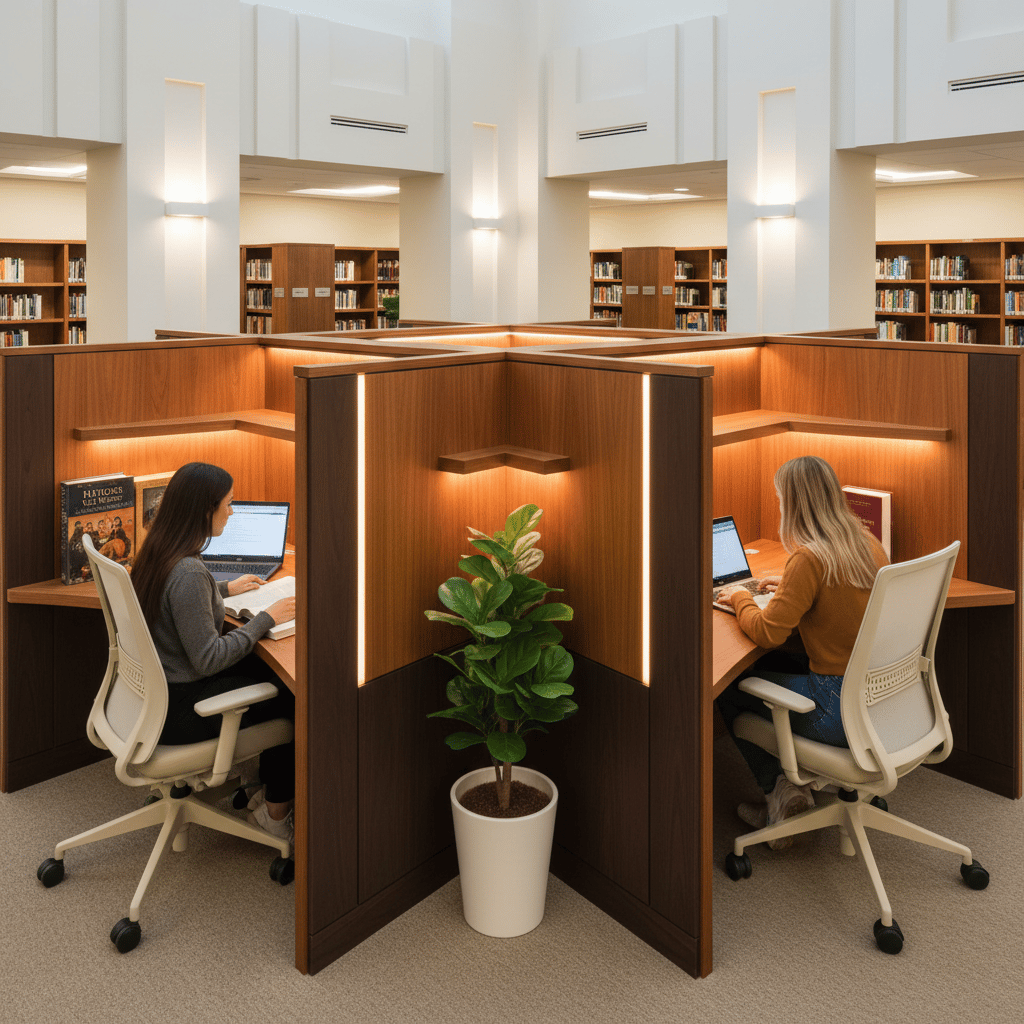
Quiet is a really important part of the library environment. Indeed, the library needs to provide spaces with real quiet that are designed and managed as an institutional asset. This is one of those areas where libraries underprovide during modernization efforts. Basically, we help design reflective study space and make sure that there are carrels and tables for quiet study.
Quiet is not a new service, but it makes the library rather more effective. Indeed, the library’s role in learning is because there are quiet spaces. Quiet is not nostalgia. Quiet is infrastructure.
Quiet is a learning system
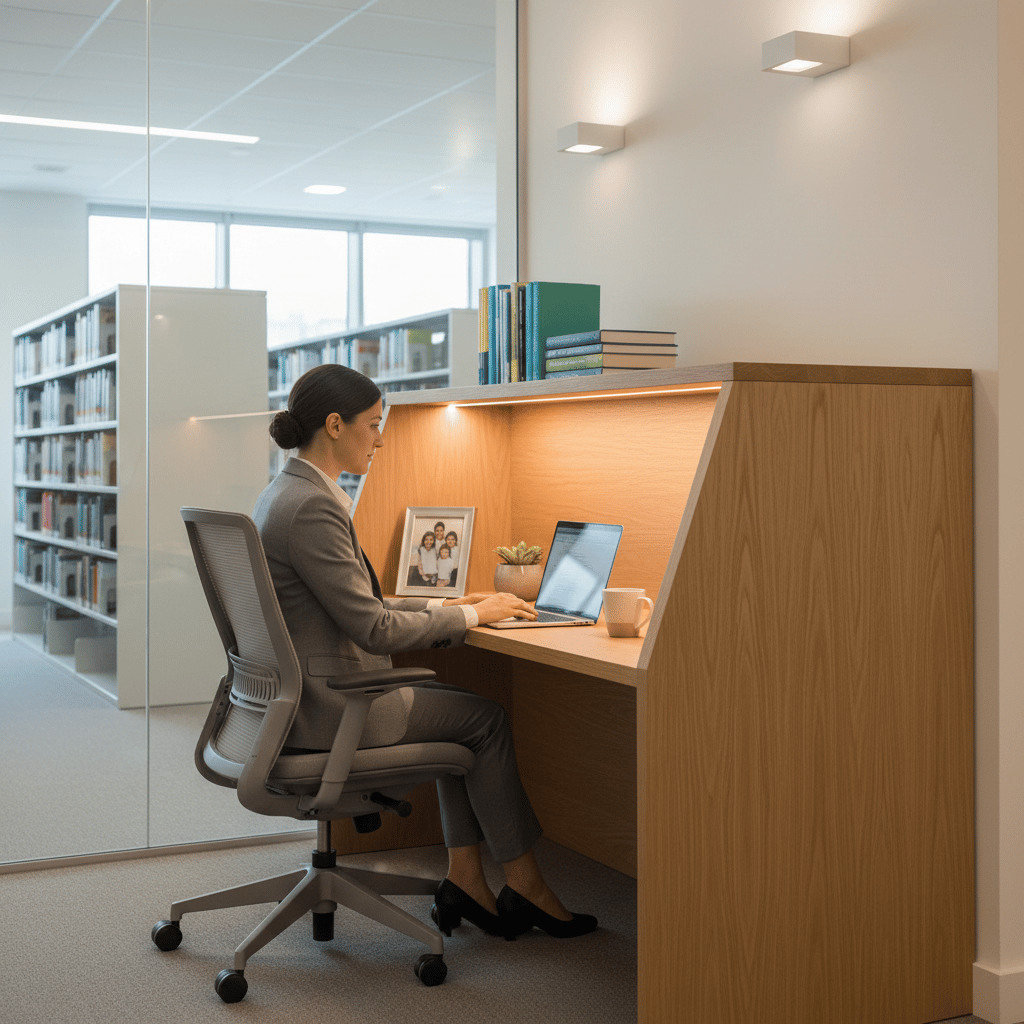
Learning requires more than access to focused spaces. It requires sustained attention spaces and spaces that enable comprehension. We test new carrel-making ideas in library design, providing spaces for privacy without interruption. From our perspective, the library environment contributes to learning when it supplies a variety of spaces. For most, quiet environments makes focused work productive so we need to make sure we are providing them.
Quiet space does three things that no technology rollout, service redesign, or branding refresh can substitute for:
- It protects engagement. The student who can read continuously for an hour in a predictable setting makes measurable progress. The student who must constantly re-start does not, because there is no space for them. Quiet is the physical equivalent of a stable network connection: without it, every other service degrades.
- It signals engagement with reading and study. Libraries teach reading behavior without instruction. The engagement or quiet room communicates—immediately—what the institution values: focus, respect, reflection. That signal shapes how people use the building and how they evaluate the library’s relevance to their academic work.
- It lowers the cost of student retention. The hardest part of study is often engagement. Quiet space reduces friction. It offers a ready-made context in which a student can open a book, a laptop, or notes and begin. In the economy of learning, lowering the start-up cost changes outcomes.
Library modernization projects can deliver access to discovery and engagement, and literacy support. Basically, we make sure you can deliver quiet space in the design. It is part of our baseline program; conditions that enable reflective work and literacy engagement activities.
The common failure too much noise
The Clarivate’s Pulse of the Library 2025 report underscores that libraries need to be focused on environmental priorities. Precisely why quiet space deserves explicit attention in library development and planning is part of the puzzle. We make sure it is easy to develop both collaborative and quiet spaces in our designs.
The most common failure points in library modernization are:
- The library environment expands collaborative functions, and multipurpose programming but it doesn’t prioritize engagement and quiet reading spaces.
- As seating counts rise, the furnishings become more flexible and traffic increases creating too much noise.
- Noise becomes ambient creating distractions.
- Quiet becomes an exception.
- The student must hunt for, negotiate for, or create with headphones if there is no quiet space.
In the modern library environment, even excellent designs disappoint. Students may use the library, but not for the focused work they are required to do. Here, the institution needs the engagement with reading and library can support productivity. Indeed, sustained study that translates into retention, performance, and intellectual confidence.
Quiet cannot be treated as leftover space. Quiet must be planned as a primary program element with its own standards, adjacencies, and management practices.
Quiet has to be designed: three decisions that determine outcomes
Modernization of library space succeeds when it is intentionally designed across different behavior patterns. So, whether a library’s has quiet areas is a function of the program. And a reliable learning environments or a well-intention spaces needs to provide choices.
1) Zoning: understand the sound levels
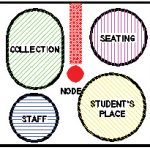
Libraries perform best when they provide a clear access to active and quiet spaces. We help create “sound maps” that help use define the architectural behavior. Here are a few ideas:
- Active zones belong near entries, service points, and high-turnover functions.
- Group and collaborative zones are part of the opportunity zone – program spaces that have clear boundaries.
- Quiet zones are separated, not just with signage.
- Silent or deeply reflective rooms require the greatest acoustical protection and the least through-traffic.
When libraries are modernized for literacy engagement they make every space serve every purpose. For example, the loudest activity is managed and behavioral adjacencies are defined. This creates trust; patrons learn that if they need quiet, the library will offer a space.
2) Adjacencies: protect quiet from the “noise issues”
Noise is rarely caused by individuals. Sometimes its created from the staff talking nearby. The student wants to be alone and focused. In most libraries it is produced by predictable issues: entry doors, circulation paths, service next to quiet spaces, people in queues, café activity and informal gathering.
Quiet space must be protected spaces. By understanding the distance between active and quiet spaces, and integrating sound-buffering elements the library planning project will be successful. It should not be “Do we have quiet seats?” The question is “Are quiet seats located where quiet is structurally easy to maintain?”
Quiet reading rooms are an opportunity. We design quiet areas and determine high-demand services and if the quiet test fails we analyze the circulation and traffic in the building.
3) Make quiet legible and easy to understand
Quiet is maintained by defining the library’s zones. The most effective quiet spaces communicate expectations through design:
- Clear entry points that feel like entrances, not openings in a furniture layout.
- Transition zones that reduce noise carryover—small lobbies, vestibules, or buffer aisles.
- Visibility that support behavioral norms.
- Removing maze-like issues and updating wayfinding that directs you to the right zone before frustration sets in.
Quiet space is not one space: it is part of library modernization efforts
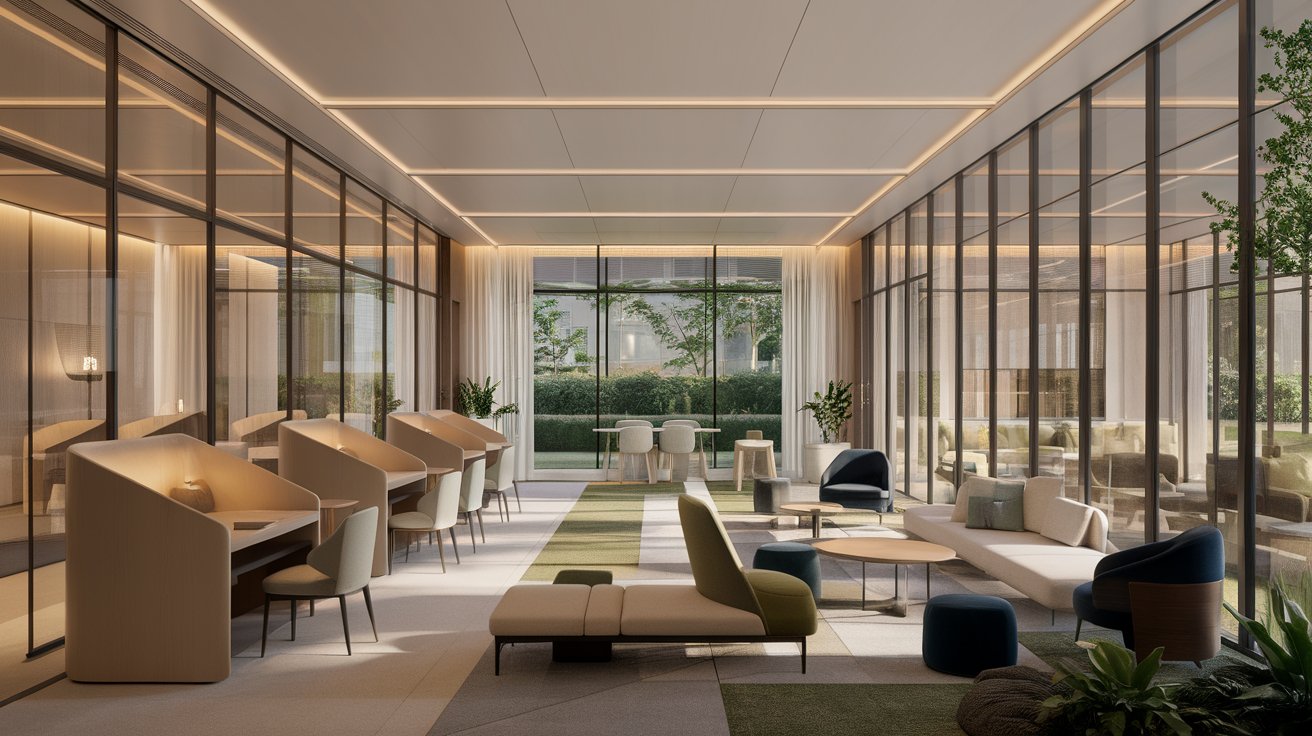
Libraries need to serve multiple study and use behaviors; they have to prioritize engagement with literature. Quiet spaces need to be integrated into the modernization efforts:
- Large quiet reading rooms for communal seriousness and extended focus.
- Individual carrels for privacy and reduced distraction.
- Small quiet rooms for reflective work that still benefits from enclosure.
- Quiet stacks-adjacent seating for patrons working in proximity to physical collections.
- Low-stimulation corners for patrons who need reduced sensory load to study effectively.
The planning mistake is to treat quiet as a quantity problem i.e. more seats and more tables are required. Reflective space or quiet spaces are part of the program.
Quiet is a service to be included in modernization efforts
Libraries already manage the hours, access, collections, instruction, and support. Here, we think that quiet deserves the same clarity during design.
Developing reflective space into your modernization program only happens when leadership treats quiet as a defined service outcome:
- Naming rights for the quiet zones. Here, you can raise funds for “Quiet Study” and “Silent Reading Room” spaces with a persons name. This reduces the ambiguity and adds respect to the library environment.
- Align engagement efforts with the physical plan. If collaborative study is encouraged, it must be housed where it will not bother someone who is trying to work quietly. During modernization efforts, we designate call-friendly zones.
- Measure what patrons experience. The relevant metric here is engagement and whether patrons can predictably find a seat that is function. It is where they can do sustained work without interruption.
Modernizing a library requires you to deliver quiet as part of the plan. It helps serious learners engage with their work and offers a third place for success. Modernization can also integrate empty classrooms, program spaces, or outside spaces.
The modernization of a library requires you to think about the behavior of the user and their needs.