Seven Secrets of a Successful Library Project
1. Begin with the Institutional Strategies, Not the Floor Plan
The modern library is not a warehouse for books. It is not a lounge. It is not a technology lab or only a maker space. It is a “third space” that supports access to resources and support, teaching, learning, collaboration, and community sharing.
CASE STUDY: Lessons from the TCNJ Gitenstein Library Study
- The 2025 study of The College of New Jersey’s R. Barbara Gitenstein Library offers a useful case study.
- From February through October 2025, Aaron Cohen Associates worked alongside library leadership, faculty, staff, campus planning, and administration to assess the library’s current condition and define a strategy for its future.
- The work addressed space allocation, seating, collections, staff workflows, instructional needs, special collections, and the role of the library as the intellectual center of campus.
The library has served TCNJ for two decades. The campus has grown. Student work patterns have changed. Digital resources have expanded. Project-based learning, informal collaboration, quiet study, accessible technology, and inclusive environments now require a more deliberate spatial response. The building does not need to become larger to become more effective. It needs to become more intelligent.
For example, our 2025 Gitenstein Library study began with a visual scan of the library seating, collections and staff spaces. The facility was evaluated in relation to TCNJ’s academic mission and the daily experience of students and faculty. The question was not, “Why can’t we change?” The question was, “How should this building advance student success, research capability, instructional effectiveness, student retention and campus identity?”
That distinction matters. The library program and floor plan describes space allocation. Basically, the library program defines purpose, success factors and outcomes. Once the outcomes are clear, the plan gains traction. Certainly, we want the collections, service points, classrooms, staff offices, study rooms, and social spaces to be competing. They are parts of one academic system that supports access, learning engagement and support.
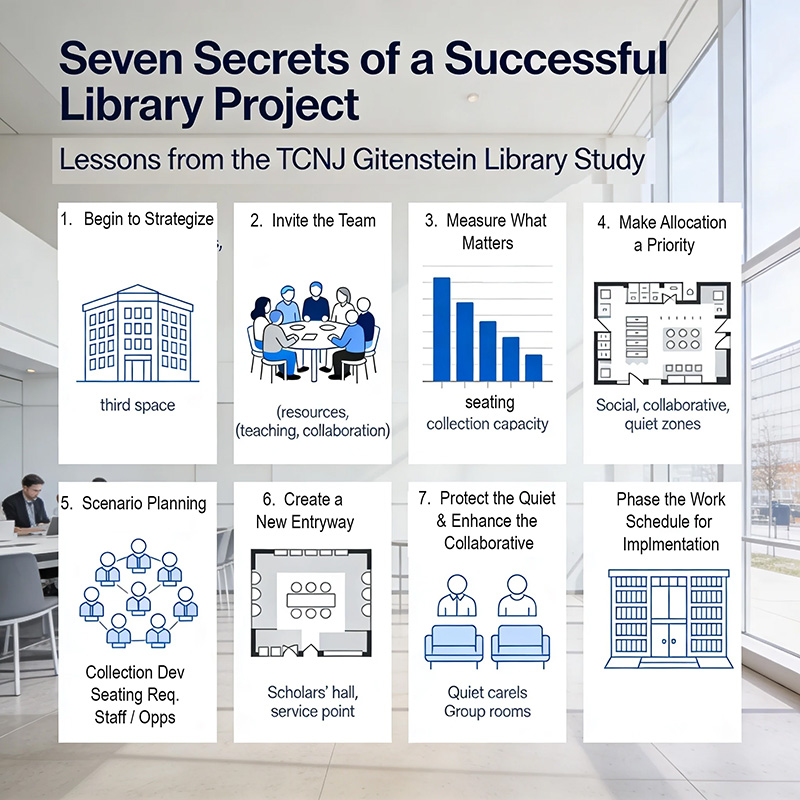 Examples of the strategies defined: this made the TCNJ study productive and what makes any library planning effort succeed.
2. Invite the Team to Share Input
Strong library projects require a “super-team.” This is not a large committee. It is a diverse group that shares knowledge and evaluates the scenarios or options.
At TCNJ, the planning process included library leadership, library faculty and staff, the campus architect, administration, President and Provost. The work included meetings, tours, interviews, collection analysis, staff priority review, and program testing. This shared process created a practical understanding of how the library works and where it fails.
The team examined service adjacencies, student behavior and needs, upper-floor access, reference desk and support that equates to visibility, access services workflow, print and design operations, archives needs, and collection distribution. Basically, this is a long list. These details cannot be discovered from a drawing alone. They are revealed by people or campus partners who use the building every day and those who don’t.
Our library projects succeed when the super-team has data to modernize the library. It fails when ideas are not shared or considered.
3. Measure What Matters
Library programming and planning requires use to measure the library’s activities. These numbers don’t always have provide value. Some functions are passive and others are part of active learning. The useful measurements connect directly to decisions that will make the most impact – No brainers…
The TCNJ study identified a clear study and seating problem. The library currently has 821 functional chairs. Our conservative estimate indicated a need for at least 1,246 seats. That gap is not cosmetic; it is an outcome we knew will make the greatest impact. We observed students struggling to find places to study, and many did not understand or easily understand how to access the third and fourth floors. So, the architecture limited the use of the building because the elevators were the only way to get to the third and fourth floors. Basically, seating is therefore not only a furniture issue. It can also be wayfinding issue, which turns into a student success issue, and a campus space allocation issue.
Our library program and planning study examined collection capacity. The existing shelving capacity is over 750,000 volumes, while current holdings are approximately 471,000 items across general collections, government documents, K–12 collections, and related materials. Our program option provided capacity for 376,043 volumes through a 15 percent reduction in shelving. The alternative options reduced shelving more substantially.
These figures made the conversation concrete and real. The central question became how to balance print collections, digital access, instructional space, quiet study, and collaborative work. The answer was not to remove books for the sake of removing books. The answer was to align collections with student needs, modern digital / physical study use, mission, access, and long-term management of knowledge resources.
4. Make Space Allocation a Strategy
Every library has these challenges. The arrangement of the library and its location provides opportunities for learning and engagement.
In the current Gitenstein Library, valuable space was tied up in book shelving configurations that no longer fully support student study needs or behavior. Government documents, periodicals, legacy reference materials, and portions of the stack areas created passive spaces that were underutilized. Indeed, students occupy spaces in the shelving that can be rebalanced to create more study environments, diverse instructional opportunities and collaborative hubs for learning.
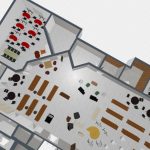
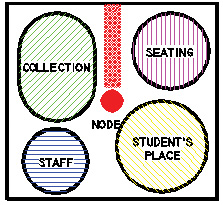
After 5 months of study, we recommended a tiered approach to our learning modes (social, collaborative, reflective/quiet, touch point/staff public desk and presentation/programming spaces). Social and informal study, collaborative work, quiet study, staff touchpoints, writing support, collections, and compact shelving were mapped as distinct but related library functions. This allowed the team to identify where the library should remain quiet, where it should become active and engaging, and where services need stronger visibility to enhance learning activities.
For example, the library’s second floor emerged as a major engagement opportunity. Reconfiguring curriculum collections for education students and opening the floor to study groups made the library more accessible. Indeed, carefully designed study seating can strengthen the student experience. In addition, the third and fourth floors provided opportunities for quiet study, focused research, and individual study rooms/spaces. The lower level was modernized to support new immersive instruction, media, collections, and after-hours use. The first floor became a stronger point of welcome, orientation, and service.
Space allocation is strategy because it directs behavior. Basically, a well-planned library helps the learner know where to go, what to do, and how to succeed without too much friction that deprives them of valuable time and effort.
5. Make the Entry Became an Experience
The entrance to a library is more than a just part of the cafe. It is the first act of service and potential opportunity for engagement, sharing unique heritage and building the campus brand.
The TCNJ study recommended a renewed lobby, scholars’ hall, service point, and book store. It reinvented the library with more social cafe and open seating areas. The design strengthened identity, wayfinding, public service support and engagement. It also made the library more legible.
Basically, we analyzed how to create a dynamic entry space. For parents visiting with their kids, it communicated uniqueness of the campus and a welcome and purposeful demeaner. It was programmed to connect students to research assistance, access services, displays, café seating, exhibitions, and to build pathways to upper-floor study areas. The proposed scholars’ hall would be integrated with a new bookstore, building on the institutions a deep academic roots. TCNJ: a place that recognizes faculty research and publications, new research projects, student achievement, alumni history, institutional memory, and campus culture.
Our study examined the relationship between access services and reference. The existing reference area was effective but outdated. Access services was not optimally located within sight of reference support and the layout was outdated. We modern configuration places student support where students can find it and where professional librarians and staff can support student work more efficiently. Reference transactions often require seated consultation, shared screen viewing, and privacy. The service model must support that reality.
Note, our library designs and programming experience suggests that the entrance succeeds when it reduces confusion, increases the awe-factor, building student confidence, and makes academic support visible and accessible.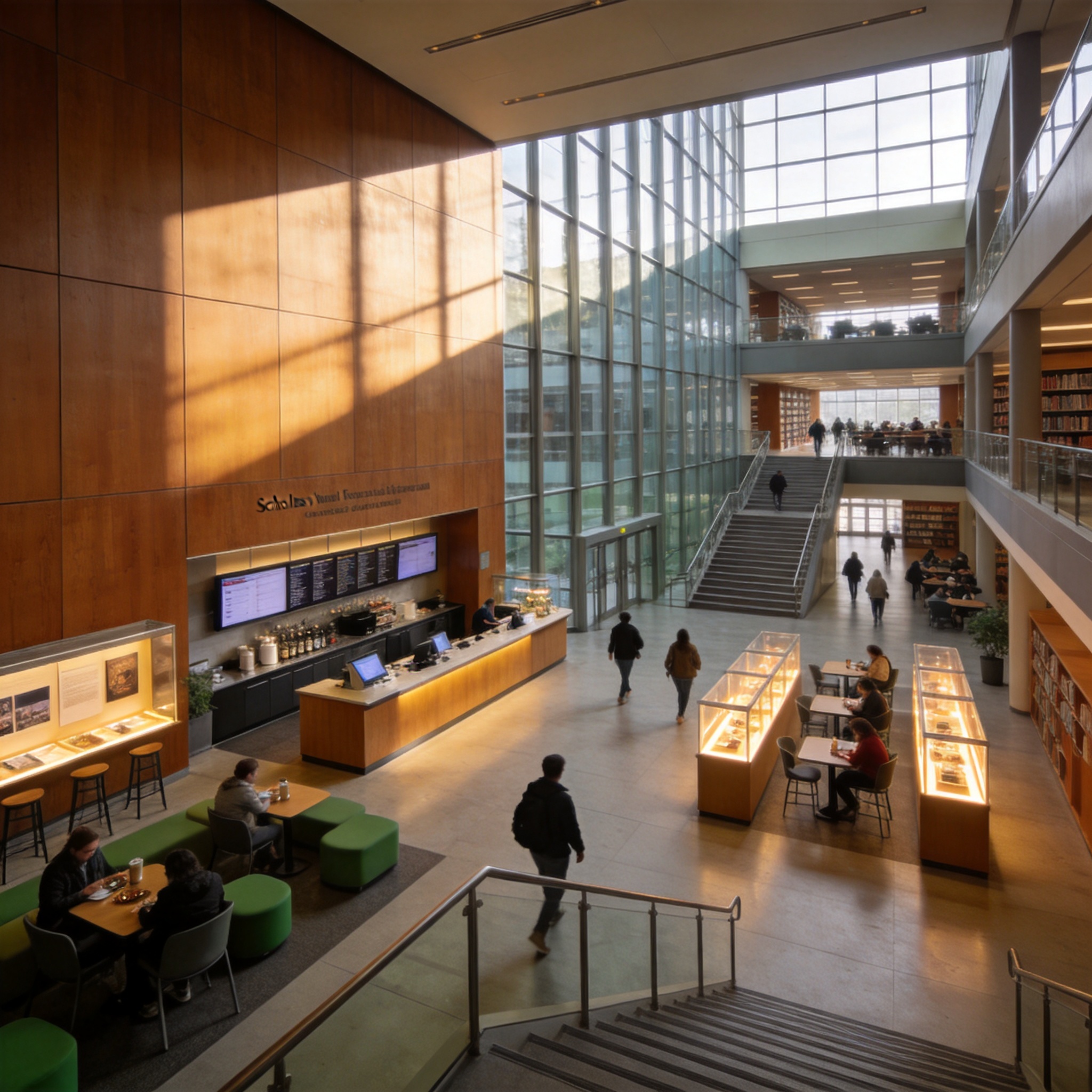
6. Protect Both Quiet Work and Collaborative Spaces
Modern academic libraries need active spaces. They also need silence.
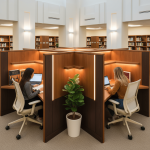
The TCNJ study identified a continuing need for more quiet reading and study areas, group study rooms, individual workspaces, carrels with better work surfaces, task lighting, adjustable furniture, and acoustically separated study zones with signage. Basically, students work in different modes. Some need collaboration. Some need parallel study. Some need a home base without distraction. Some need sensory spaces designed with attention to lighting, sound, and tactile experience.
Our library programming and strategic planning efforts focused on serving all of types of students without forcing one mode to dominate the library and building.
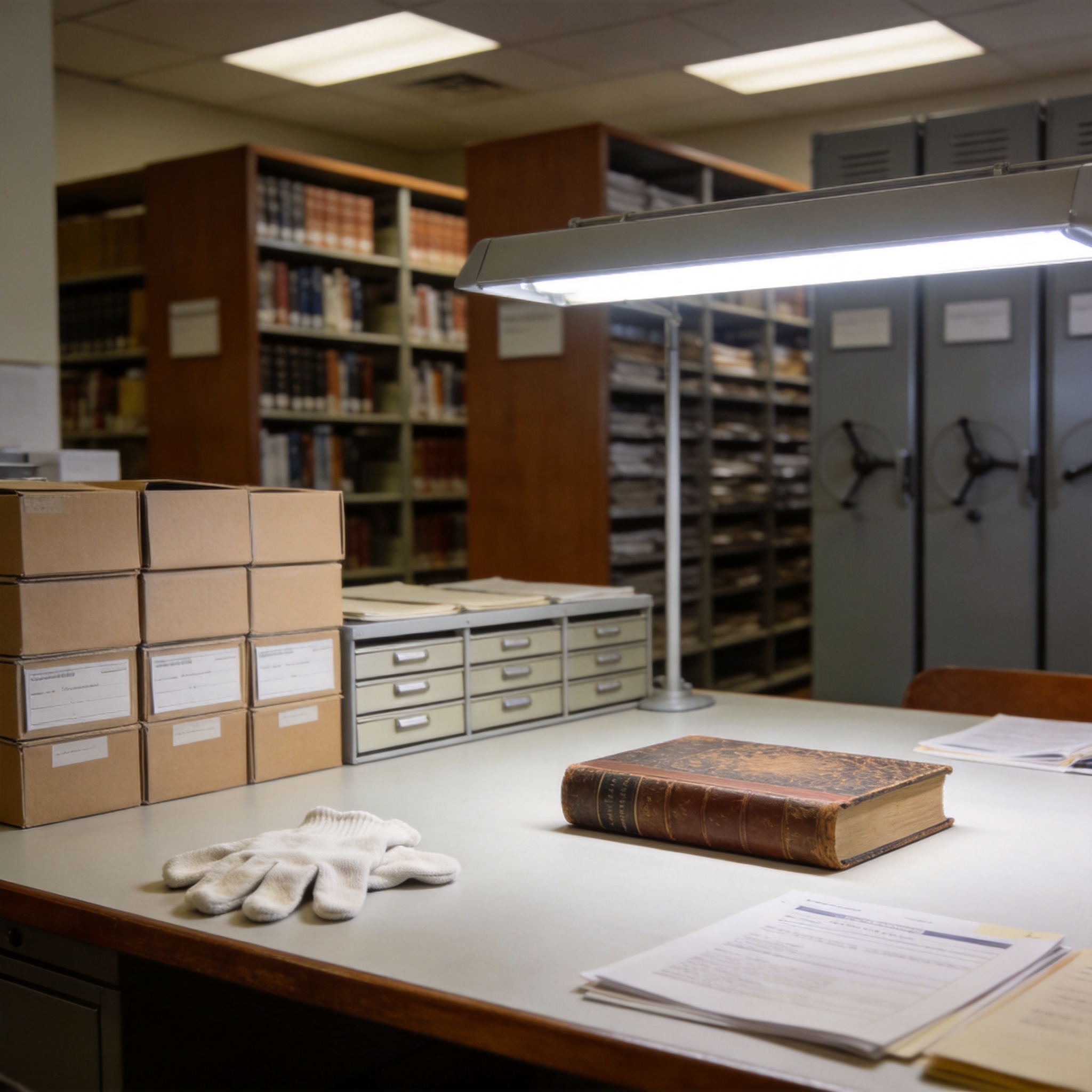
The same principle applied to the university archives and special collections. The study identified that the archives needed more space. It is a preservation issue and also a collaboration issue. Even though the current HVAC and shelving meet archival standards, they still needed to be better integrated into the campus as a destination.
Note, archival materials require secure storage, appropriate temperature and humidity control. They also need collaboration spaces to enhance research. Yes, the shelving sized for archival boxes and flat files needed to be updated, and they needed quarantine space for new accessions, but what about digitization support? What about donor consultation space and spaces that enhance primary research spaces. Note, valuable materials should not be placed on inadequate shelves or in locations vulnerable to leaks or mishandling.
Special collections require both intellectual access and physical protection. Our library program worked to enhance access to unique materials.
Our plans included requirements for security, environmental control, processing space, and long-term preservation. These are not optional refinements. They are core responsibilities.
7. Phase the Work So the Library Can Keep Serving
Ambition without phasing is not a plan. It is a wish.
The Gitenstein Library study recommended a three-phase renovation strategy over a ten-year period. This approach allowed the library to continue functioning while major improvements and investments were defined.
- Phase I focused on the scholars’ hall, service point, lobby, and open seating areas. It created a visible first step and establishes the new direction of the building.
- Phase II incorporated new instructional spaces and quiet study spaces on the second and third floors. It aligned the building with information literacy instruction, academic partnerships, and flexible learning.
- Phase III created additional study spaces, individual workspaces, and quiet reading rooms. It also addressed media relocation and the development of quiet sensory study environments.
A library program can provide a phased plan that turns a large institutional challenge into a sequence of decisions.
The Real Outcome
Modernize the Library
The TCNJ study demonstrates that library planning is not a matter of choosing between books and students, or between tradition and technology. The real task is integration.
Print collections remain valuable for browsing, discovery, disciplinary depth, and long-term scholarship. Digital resources continue to expand. Instructional spaces are essential. Staff workflows must support service. Special collections require stewardship. Students need quiet rooms, group rooms, open tables, accessible technology, and places that feel like they belong to them.
The successful library project brings these requirements into one coherent program.
A great academic library is not defined by how much space it occupies. It is defined by how well its space works. The Gitenstein Library has the opportunity to become more welcoming, more legible, more flexible, and more closely aligned with the way TCNJ students learn. That is the work of planning. That is the work of a strong team. That is how a library prepares itself for the next generation.