
The Library as a Thinking System: Teaching Creativity in the Age of AI
2026
The library has always been a technology of thought.
Long before the reading room, the discovery layer, the digital repository, or the artificial intelligence interface, the library organized collections so that knowledge could be found, used, tested, and transmitted. Its instruments and formats have changed. Its purpose has not. Clay tablets, books, card catalogs, online public access catalogs, institutional repositories, all types of library of things collections, and AI-supported research environments all belong to the same long history: the discipline of making knowledge available for use by the community.
The current wave of library technology requires more than adoption. It requires interpretation and innovation. The question here is whether libraries will use building collections and architectural intelligence to support automation, cloud systems, digital platforms, and new modes of access. We already do. The question is now whether mord libraries will invest in the library’s enduring service model - access or whether they are left as disconnected buildings; community assets without institutional growth.
- Modern Library that treats technology as equipment will continue to add systems.
- Modern Library that treats technology as service infrastructure will redesign work, space, access, and instruction around the act of learning itself.
Think, Make, Share
The creative process is not ornamental to library service. It is how we modernize our services to achieve greater outcomes.
When a student enters the library with a question, an assignment, a research problem, a design challenge, a community need, a genealogical thread, a business idea, a legal concern, a historical curiosity, or a manuscript to interpret, they need access to the library.
The first task is thinking. The user needs orientation, context, sources, language, and a method of inquiry.
The second task is making. Thinking becomes notes, models, papers, exhibits, code, recordings, lesson plans, finding aids, maps, grant proposals, digital stories, datasets, and publications. The library that supports this activity or movement from inquiry to artifact will be impactfull.
The third task is sharing. Knowledge that remains private has limited civic value. Libraries have always provided mechanisms for shared use: collections, catalogs, reading rooms, lectures, exhibitions, archives, community programs, and publications. Digital resources and tools extend this function. No, they do not replace it.
“Think, make, share” gives libraries a governing logic. It prevents the technology plan from becoming a shopping list for collections acquisition. When we analyze a library we look for ways it connects to discovery tools, AI systems, makerspaces, digital collections, learning platforms, and public programming spaces. Yes its part technology and part service architecture.
From Ancient Practice to Intelligent Systems
Library service development is not new. It is ancient. The work has always involved selection, description, preservation, access, interpretation, and instruction. What is new is the ability to integrate that ancient discipline with new types of building systems and digital tools. Indeed, libraries assist with search, synthesis, drafting, classification, pattern recognition, collections and knowledge management.
The danger is to assume that new systems abolish old responsibilities. They do not. They intensify them.
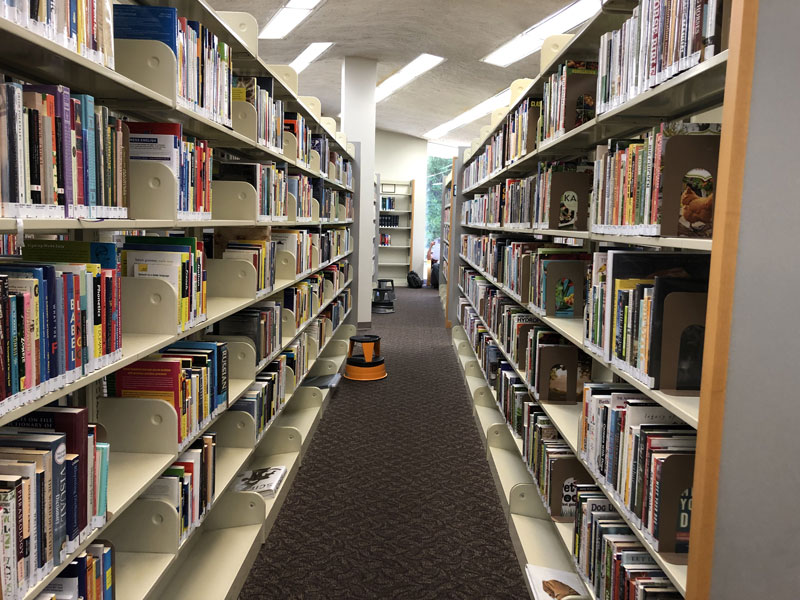
Special or rare books still requires provenance research, condition assessment, security, environmental control, and responsible access policy. Library local history collection still requires intellectual organization and preservation planning. Library reading rooms still requires a calibrated relationship between openness and supervision. Research and public libraries still requires adjacency planning that recognizes how people move from browsing to study, from children’s services to family engagement, from technology access to staff conferening and collaboration.
Artificial intelligence does not remove these obligations. It changes the context in which they are performed.
When Modern Library introduces AI-supported tools, it must strengthen the structures that make knowledge trustworthy: metadata, collection policy, staff judgment, instructional design, documentation, privacy practice, and clear service boundaries. The more powerful the tool, the more important the library’s professional discipline becomes.
The New Library Workstation
The ordinary computer is being reorganized.
Workstations were once a terminal: a device for accessing a catalog, a database, a word processor, or the internet. It is now becoming a working environment composed of multiple knowledge systems. Tools such as Gbrain, Hermes, Obsidian, Claude, and the computer itself point toward a new kind of integrated research and production space.
The user doesn't work in a straight line from search to document. The user moves among memory, retrieval, drafting, annotation, comparison, and publication. Notes become structured knowledge. Search becomes dialogue. Drafting becomes iterative. Personal research environments begin to interact with institutional resources.
FOR LIBRARIES, WE ARE WITNESSING A SHIFT IN SERVICE DYANAMICS
First, instruction is changing. Digital literacy can't be limited to basic navigation, password access, database selection, and citation export. Users need to learn how to frame questions, evaluate outputs, preserve their own notes, distinguish source evidence from machine-generated synthesis, and move responsibly from idea to finished work.
Second, spaces must change. The AI-supported computer, cell phone or whatever type of interface/workstation requires zones for concentration, consultation, experimentation, and collaboration. Modern Library that supports “think, make, share” needs quiet rooms, flexible tables, presentation capacity, staff consultation points, digital production areas, and clear pathways between collections and creation.
Third, staff roles are changing. Librarians remain proponents of access, but they also become helpers in method. They teach users how to gain access to systems without surrendering judgment to systems.
Technology as a Service Pattern
IT and Learning Technology trends become meaningful only when translated into service patterns.
Self-service tools, mobile access, cloud platforms, digital borrowing, automated workflows, analytics, and AI interfaces all alter the relationship between the user and the institution. They reduce friction in some places and create new complexity in others. They move work away from certain desks and toward new points of need. They change how staff time is spent. They change what users expect from the building.
Modern Library master plan must therefore treat technology as part of the physical and operational plan, not as a separate appendix.
The location of computers affects access services. The design of study rooms affects digital collaboration. The placement of scanning equipment affects special collections access. The configuration of service desks affects staff visibility and user confidence. The preservation environment affects whether rare and unique materials can be digitized, exhibited, or consulted without damage. The network, the furniture, the electrical plan, and the acoustic strategy are all part of the technology plan./
Technology also affects capacity. Library reading room designed only for individual consultation will not support new modes of digital scholarship. Library makerspace without collection relationships becomes a workshop detached from inquiry. Library digital lab without preservation policy becomes a production room without stewardship. A self-service environment without visible staff support becomes efficient and impersonal.
Reinvention suggests challenges. Strategizing suggests continuity with discipline. Modern Library rewrites itself when it takes its enduring purpose and expresses it in forms suited to present use.
This distinction matters. The library is part technology showroom and part knowledge brand. It is a co-working and partnership brand. It is not a generic community center, but it can be a flexible service that reaches out to seniors. Modern Library is a knowledge institution with civic, educational, cultural, digital and archival responsibilities. Its future depends on developing strategies for those who can use the library.
For a public library, this means aligning digital access, community learning, children’s services, local history, workforce support, and civic space into a coherent service model. For an academic library, it means connecting research support, special collections, data services, digital scholarship, teaching, and study environments. For independent research library, museum library, or archive, it means balancing access with preservation, scholarship with security, and interpretation with collection integrity.
IT is creating this sitution, requiring new knowledge management conversations. Because AI changes how users encounter knowledge and it exposes weaknesses that libraries can no longer ignore. Indeed, libraries often have fragmented metadata, unclear policies, obsolete access points, underdesigned staff workflows, inaccessible collections, and buildings planned for older patterns of use. How will they use AI?
Modern Library becomes modern by adding thinking systems. It becomes modern by clarifying what these systems are allowed to do, where community expertise remains decisive, and how the user moves from access to question to knowledge to confidence.
The Consultant’s Test: Does the Library Serve the Community? Is it to small? Can it grow?
Every library technology decision should meet a simple test: does the system serve the community?
The community is part user experience, trust builidng and clarity of source. Basically, private inquiry and shared knowledge is a library function. The communities work is also institutional: preserving collections, stewarding fundraising, donor intent, managing growth, protecting rare materials, planning capacity, and aligning space with mission.
Libraries strengthens communities and support their work. A functional library creates new forms of participation without abandoning the collections that give the institution its authority.
The next library will not be defined by a single platform or device. It will be defined by the quality of its integrations: between primary research collections to new tools, between public access to making things, from protected materials to open sharing, between digital systems and physical space, between staff expertise and user creativity.
Modern Library begins as an organized collection of memories. It is becoming, with a proper planning, an organized intelligence asset. Our task remains constant: to Libraries think, make, and share with greater discipline, greater confidence, and greater consequence.