
Service Point
Planner
Positioning Staff, Technology & Patron Flow
Contact Us
TL;DR
The Three Principles That Drive Every Service Point Decision
Where you place a service desk shapes patron behavior more reliably than any policy or program you layer on top of it. Observed patron movement, not staff assumptions, should determine how many desks a library needs, where they sit, and how they are staffed. A disciplined service point audit translates behavioral evidence into configurations that reduce friction, raise staff efficiency, and project institutional authority.
These are not abstract planning preferences. They are conclusions drawn from hundreds of facility assessments conducted across academic, public, law, medical, and special library environments over more than five decades of practice. Every service point recommendation Aaron Cohen Associates makes begins with what patrons actually do, not what staff believe they do.
The Fortress Nobody Approached
A Placement Problem, Not a Staffing Problem
Consider a director of library services at a mid-sized state university, standing just inside the main entry of her building during the first week of a fall semester. She is not reviewing a report. She is watching. The scene has bothered her for three years without resolving itself into a clear diagnosis.
The reference desk is a large, solid, L-shaped structure positioned roughly twenty feet from the entry vestibule. It was custom-built for a renovation completed years earlier and cost considerably more than anyone now wants to recall. It is staffed all day by a rotating pair of librarians and a student assistant. It is almost never approached.
Meanwhile, students pour in through the entry, hang a quick left toward a cluster of lounge chairs near the new laptop lending cabinet, or walk straight back toward the stairwell. A graduate student stops a passing librarian in the aisle to ask where the government documents section went. Two undergraduates hover near the self-checkout station, visibly unsure whether they are allowed to use it without first talking to someone. The question at the reference desk waits at zero.
What the director is watching is not a staffing problem. It is not a marketing problem. It is a placement problem, compounded by a configuration problem, made worse by a signage gap. The desk reads, in the nonverbal language of built space, as a barrier rather than an invitation. Its height communicates authority and separation. Its distance from the natural entry sightline means that patrons who have already committed to a direction of travel never pass within range of it. And because two separate functions — reference and circulation — have always been housed at two separate points, patrons who are uncertain which kind of help they need simply avoid both.
This is a scenario we recognize in some form at nearly every library we have assessed over the past five decades. The service point is the single most consequential piece of real estate in any library building. And it is also, in our experience, the element most frequently positioned on the basis of organizational habit rather than behavioral evidence.
The physical location of a service desk relative to dominant patron entry routes is the single most consequential configuration variable. A desk outside the natural sightline is functionally invisible regardless of staffing quality or hours of operation.
The person assigned to the first-contact point is the most powerful service ambassador in the building, regardless of title. Assigning the highest-skill, most welcoming staff to this position is a spatial and institutional priority, not a scheduling convenience.
Whether a library operates a distributed, consolidated, or hybrid service model determines how patrons self-sort before they receive any help. Each model carries distinct behavioral consequences that must be understood before any desk is moved or merged.
Self-service automation frees staff time for judgment-intensive interactions only when those freed hours are redirected toward visible, patron-side engagement. Technology handles the transaction; people handle the relationship.

What Patron Movement Tells You Before Any Survey Does
Behavioral Evidence Over Staff Assumption
The literature on library patron behavior is consistent on a point that many planners treat as intuition but rarely act on with rigor: people move through libraries along predictable corridors, and those corridors determine what they encounter, what they use, and what they ignore. Research by Lauren Mandel published in Library and Information Science Research documented that in a medium-sized public library, more than 75 percent of observed patrons entered through fewer than a quarter of the possible entry routes. The implication for any service point planner is direct: a desk placed outside those dominant pathways will be functionally invisible regardless of its hours or staffing quality.
This is not a matter of patron inattention. It is how human beings navigate unfamiliar or semi-familiar environments. We follow sightlines. We trend toward openings in the visual field. We respond to the architecture of invitation: an open counter at a legible location reads as approachable; an imposing structure behind a visual or physical barrier reads as a checkpoint. Research conducted across four Chicago-area libraries by the Metropolitan Library System, using tracked observation of 424 patron groups and over 750 hours of video footage, found that one-third of patrons chose a desk as their first destination upon entering. That figure only holds when the desk is positioned in or near the entry path. When it is not, patrons default to self-navigation, which is slower, more frustrating, and far more likely to result in a missed service opportunity.
The same study found that the desk closest to the door is where the most questions are asked and where a patron's service impression of the entire institution is formed. This is a spatial fact, not a staffing preference. It means that the person assigned to the first-contact point — whether a circulation assistant, a student worker, or a professional librarian — is effectively the most powerful service ambassador in the building, regardless of title. It also means that every configuration decision ripples outward from that first threshold.
At Aaron Cohen Associates, we use the Visual Scan methodology to read these movement patterns before any desk configuration is proposed. Facilitated walkthroughs with actual community members reveal where people go first, where they stall, where they look for guidance, and where they give up. That behavioral map is the foundation on which every service point recommendation we make is built. Numbers from gate counts and reference transaction logs come after, to confirm what observation already established.
Five Findings That Shape Every Configuration
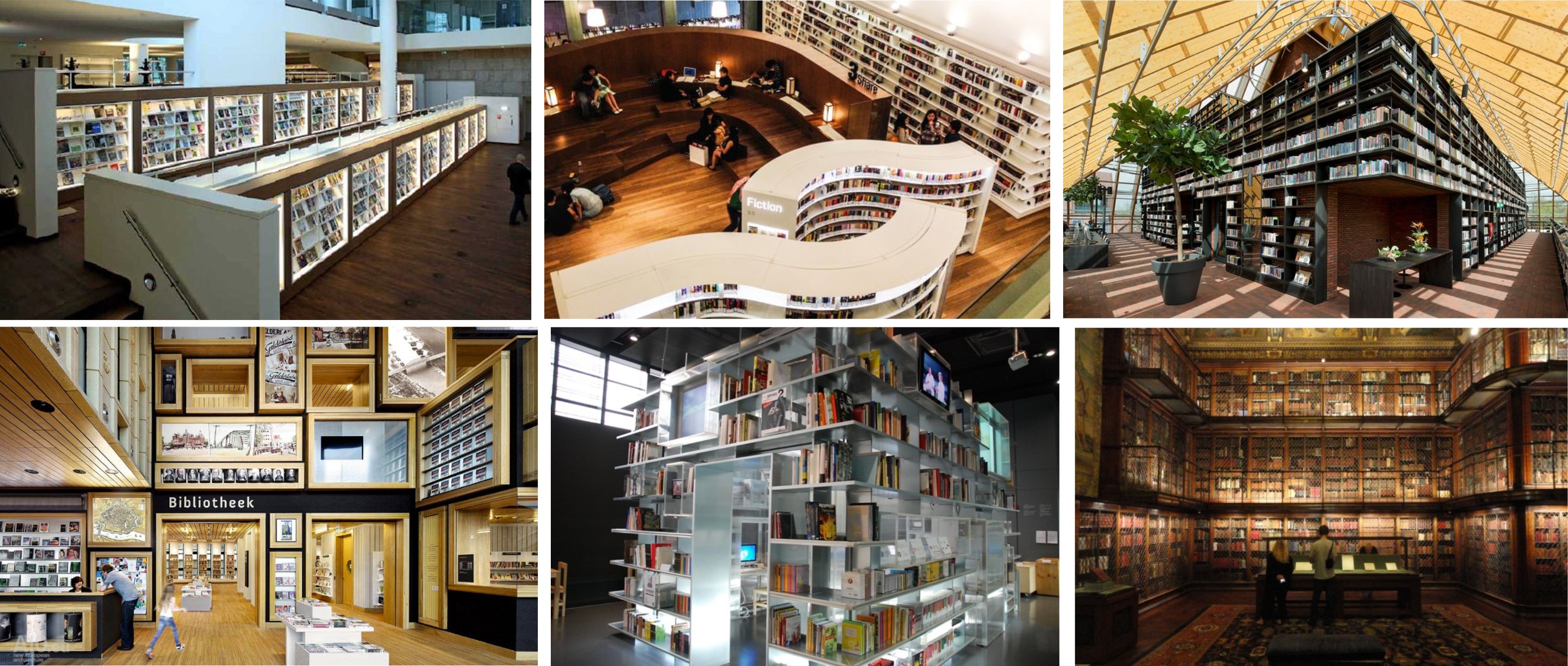
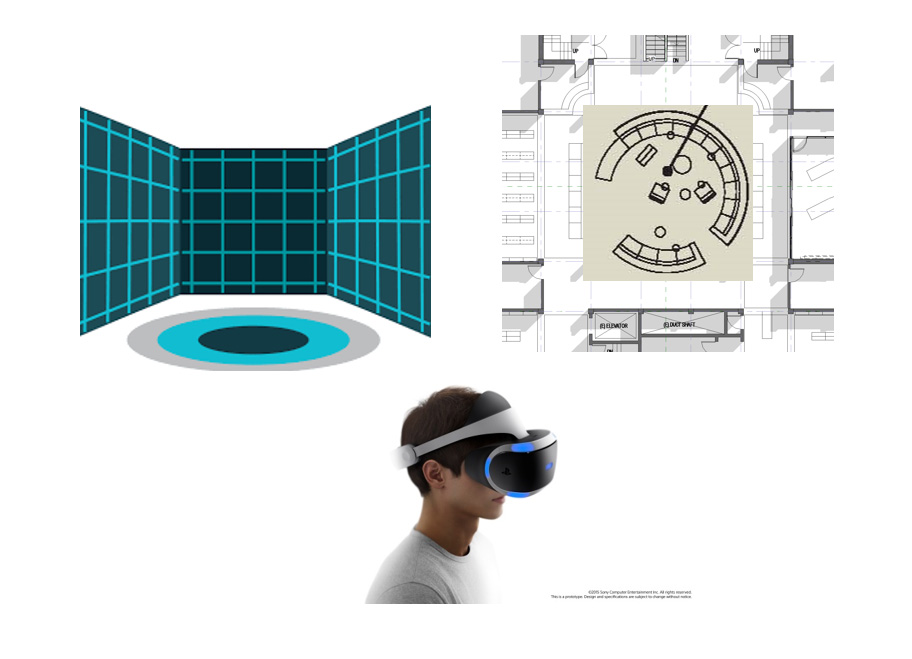
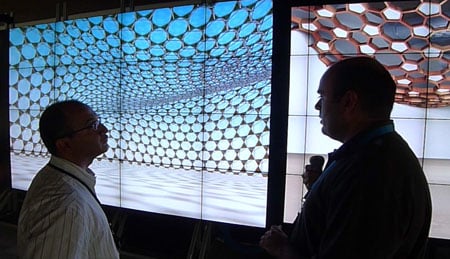

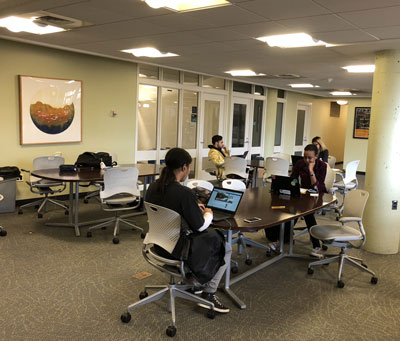
Three Configuration Models and Their Behavioral Consequences
Understanding What Each Model Produces
In practice, most libraries operate under one of three configuration models, each with a distinct behavioral profile. Understanding what each model produces in patron behavior and staff efficiency is the starting point for any serious service point planning engagement.
The distributed model places multiple specialized desks across the floor plan: a circulation desk near the entry, a reference desk deeper in the building, perhaps a technology or media services point on a secondary floor. This model aligns logically with organizational structure and allows staff to develop deep expertise in a narrow range of transactions. Its behavioral consequence is that patrons who are uncertain which type of help they need — which describes the majority of first-time and returning patrons alike — face an invisible triage before they can receive any assistance at all. The Metropolitan Library System study confirmed that over half of all observed patrons received some form of assistance during their visit, but that rate is undermined when receiving help requires the patron to identify in advance which category their question falls into. Scholarly review confirms that since the 1990s, many academic libraries have consolidated distributed desks precisely because patrons could not reliably self-sort between reference and circulation functions.
The consolidated single service point eliminates that patron-side triage. By merging circulation, reference, and sometimes technology support into one staffed location near the entry, it creates the clarity of a single address for all help. The tradeoff is staff breadth. A librarian who handles advanced database instruction on Monday and lost library cards on Tuesday develops wide situational awareness but may feel less specialized authority in either domain. The resolution, demonstrated at institutions that have implemented tiered service models, is to staff the unified desk in layers: student workers at the front surface for high-volume transactional work, professional staff stepping in for escalated questions, and subject specialists available on appointment rather than permanent desk assignment. As the planning and engineering consultants at Buro Happold have noted, service desks tend to become more specialized the farther they are located from the entry. That principle should govern layout logic, not accident.
The distributed-with-triage hybrid combines a staffed entry point that handles all first contact and routes patrons to specialized services farther in the building. When the entry point is designed, located, and staffed as a genuine welcome and orientation station, this model works well in larger buildings where the specialized needs of different user populations genuinely diverge by floor or zone. It requires that entry staff know the entire building deeply and can redirect with warmth rather than passing the problem along. Without that investment in entry-staff breadth, the hybrid devolves into the worst qualities of the distributed model while claiming the efficiency of consolidation.
One element all three models share is the problem of counter height and desk mass. The library profession has been slow to abandon the fortress desk — that high, solid, often monumental counter that communicates institutional permanence while physically separating staff from patrons. Retail environments, banking, and hospitality have all rethought their service furniture to reduce the vertical and lateral barriers between the person with a question and the person with an answer. Libraries that have made the same shift — lowering counter surfaces, introducing standing-height consultation areas alongside seated work surfaces, and placing staff workspace on the patron's side of the counter — consistently report that the volume and character of interactions change. Patrons approach earlier, before their uncertainty has hardened into avoidance.
Serves staff organizational logic reliably but places an invisible triage burden on patrons who cannot self-sort between reference and circulation before receiving any help.
Improves patron clarity and reduces approach friction, but requires tiered staffing depth and cross-training investment to maintain service quality across all transaction types.
Works well in larger buildings when entry staff know the whole building and redirect with warmth. Without that investment, it inherits the worst qualities of the distributed model.
Lowering counter surfaces and placing staff workspace on the patron's side of the counter changes the volume and character of interactions. Patrons approach earlier, before uncertainty hardens into avoidance.

Technology Integration at the Service Point
What to Automate and What to Protect
The expansion of self-service technology in libraries — self-checkout terminals, hold pickup lockers, automated material return systems, digital wayfinding kiosks, and AI-assisted catalog interfaces — has introduced a planning question that many directors find genuinely difficult: at what point does technology at the service point enhance patron experience, and at what point does it simply reduce visible human presence in a way that patron behavior will punish?
The behavioral research is instructive. The Customer-Focused Library study found that two-thirds of patrons arrived at the library without a specific, well-defined information need. They were open to discovery, to service offers, to the kind of ambient expertise that a visible and approachable staff member can project without a patron initiating a formal transaction. That ambient service opportunity — the librarian who notices someone scanning a shelf with evident uncertainty and offers a word — is incompatible with a building in which all human staff have retreated behind task-automation systems. Technology handles the transaction; people handle the relationship. The service point planning question is therefore not whether to automate but which transactions are genuinely improved by automation and which ones, when automated, quietly reduce the institutional value of the library's human capital.
The answer, confirmed by both behavioral research and our own facility assessments, is that high-volume, low-complexity transactions — self-checkout, return processing, known-item hold retrieval — are strong automation candidates precisely because they free staff time for interactions that require judgment, empathy, and subject knowledge. When those freed-up staff hours are redirected toward roving service, embedded consultation in learning commons zones, and proactive patron engagement, the technology investment produces observable service gains. When they are redirected toward the back office, the building reads as emptier and less welcoming, regardless of the machinery installed at the desk.
For libraries integrating AI-assisted workstations and next-generation research tools, the planning implications for service adjacencies are significant. A research consultation that might have required a 20-minute reference interview can now begin with a patron having already conducted a preliminary conversation with an AI assistant. The service point staff member's role shifts toward validating, deepening, and contextualizing that preliminary work rather than starting from the beginning. This changes what the desk needs to support physically: less print catalog infrastructure, more side-by-side consultation space, greater access to specialized databases and disciplinary resources at the point of contact. The desk does not disappear. It becomes more sophisticated.
Five Principles for Technology at the Service Point
Automation That Serves Patrons, Not Budgets
The following principles, drawn from behavioral research and our own facility assessments, govern every technology integration recommendation we make at the service point level.
Two-thirds of library patrons arrive without a defined need, making visible, approachable staff a genuine service asset that no self-service terminal can replicate. Ambient expertise — the librarian who notices uncertainty and offers a word — is incompatible with a building where all human staff have retreated behind automation systems.
Automate high-volume, low-complexity transactions — self-checkout, return processing, known-item hold retrieval — to free staff time for judgment-intensive interactions. The automation decision should be driven by transaction complexity analysis, not budget pressure alone.
Staff hours liberated by automation should flow toward visible, roving, patron-side service rather than back-office tasks. When freed hours disappear into the back office, the building reads as emptier and less welcoming regardless of the machinery installed at the desk.
AI-assisted research tools change the character of reference interactions but do not reduce the need for expert staff presence. The staff member's role shifts toward validating, deepening, and contextualizing preliminary AI-assisted work — a more sophisticated function that requires more, not less, subject expertise at the desk.
The Service Point as an Institutional Signal
What Every Desk Configuration Communicates
Beyond its operational function, every service desk configuration sends an institutional message. A desk that is closed during evening hours tells graduate students who work full-time that the library's most visible human resource is unavailable when they most need it. A desk placed so deep in a building that it cannot be seen from the entry tells every first-time patron that the library values its internal organizational geometry more than their navigation experience. A desk so tall and physically imposing that a patron must look upward to make eye contact communicates hierarchy rather than partnership.
These are not abstract concerns. They are legible. As our work in behavioral mapping and adjacency planning has repeatedly confirmed, patrons read the built environment with remarkable precision. They find the spaces that work for them, they avoid the ones that do not, and they form institutional opinions that persist long after any single interaction. The library that positions its service points with the patron's experience as the primary variable — rather than the staff's departmental preferences or the building's historical accident — is the library that earns sustained gate counts, bond referendum support, and the faculty advocacy that sustains relevance over decades.
In every planning engagement we conduct, from a library master planning project to a targeted service reorganization, we ask our clients to look at their service points through the patron's eyes before they look at them through the organization chart. That inversion is the beginning of every good configuration decision we have made over fifty years of practice.
The four institutional signals that service point configuration reliably transmits are worth naming directly. Closed evening service points signal institutional priorities that contradict stated commitments to student success. Desk placement is read by patrons as an expression of institutional values, not merely a spatial convenience. Long-term gate count performance correlates with the approachability and visibility of first-contact service points. And service point configuration shapes patron trust in ways that persist across years of repeated visits — trust that is far easier to lose through a poor configuration than to rebuild through a programming initiative.
The Service Point Audit: A Six-Step Protocol
Building the Evidence Base Before Moving a Single Desk
Before any desk is moved, merged, or redesigned, an institution needs an evidence base built from patron behavior rather than staff preference. The following protocol, developed across hundreds of engagements at Aaron Cohen Associates, produces that evidence base in a form that supports both operational decisions and capital justification.
Walk the building from the patron's perspective, beginning at the exterior entrance. Without relying on any existing knowledge of desk locations, identify the natural visual and physical corridors that an unfamiliar patron would follow. Mark the first three sightlines from the entry threshold. If no service point is visible from any of those three sightlines, the desk is functionally hidden regardless of its staffing level or hours.
Using a Visual Scan approach, station observers at unobtrusive positions near the entry and near each existing service point for a minimum of four two-hour observation windows across different days and times. Record where patrons go first, where they pause or stall, where they seek help, and where they abandon a task. Do not rely on transaction logs alone; they capture only the interactions that were completed, not the ones that were given up.
For every existing service point, classify the last 90 days of logged transactions by complexity: routine transactional work such as checkouts, renewals, and holds retrieval; wayfinding and orientation; intermediate research guidance; and advanced consultation. The resulting distribution determines whether a consolidated single-point model or a tiered model is more appropriate, and identifies which transaction types could be safely automated to free staff for higher-value interactions.
Evaluate each desk on four dimensions: counter height relative to patron approach height; visible separation between staff workspace and patron-side surface; proximity to natural entry routes; and legibility of function from ten, twenty, and thirty feet away. A desk that cannot be identified by function from thirty feet has a signage or configuration problem that no staffing model can fully compensate for.
Modeling and Prototyping Before Committing

Steps Five and Six: The Most Frequently Skipped and the Most Consequential
Step 5 — Model Staffing Implications of Each Configuration Option: For each proposed configuration, calculate the staffing hours required to maintain minimum service presence across all operational hours, including evenings and weekends. Identify which staff roles require broad cross-training under a consolidated model and which specialized functions are better served by appointment-based consultation or embedded librarian placements in adjacent learning commons zones. Do not propose a configuration that cannot be sustained with existing or realistically projected staffing resources.
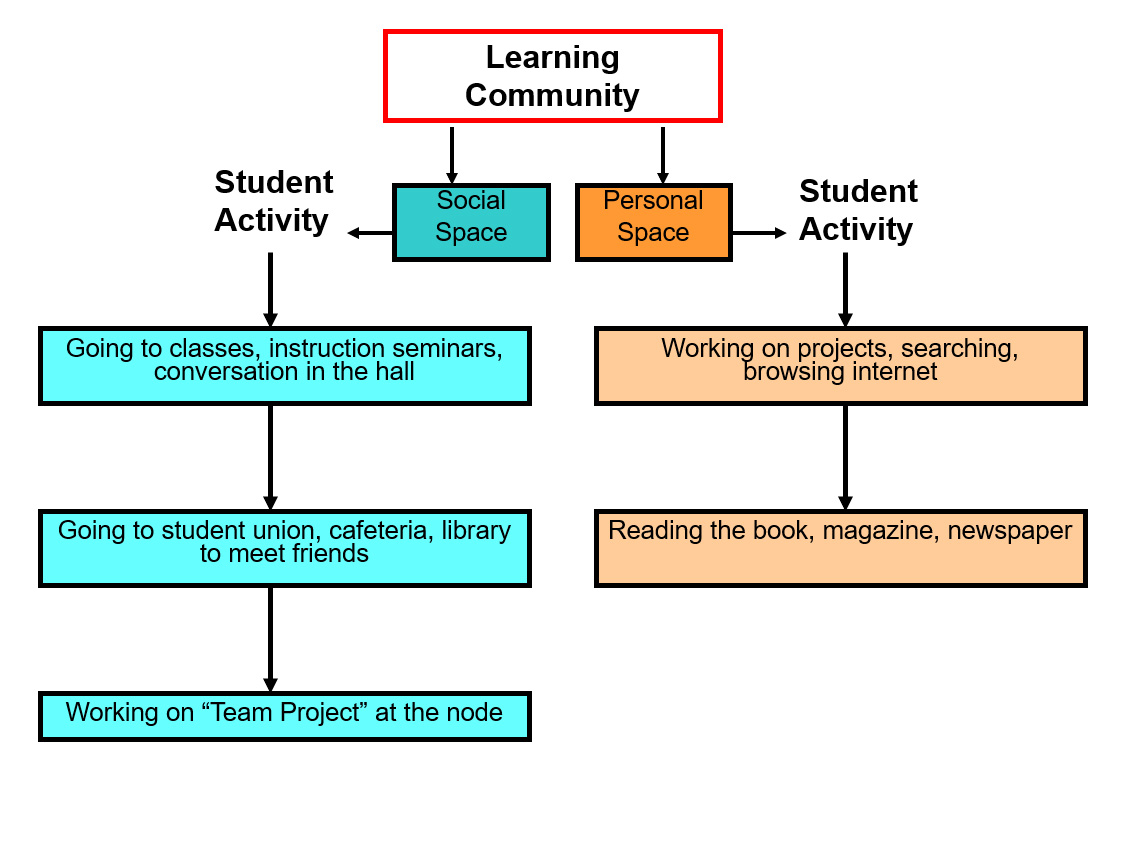
Step 6 — Prototype Before Committing: Before demolishing or constructing any permanent desk infrastructure, test the proposed configuration with temporary furniture, movable signage, and adjusted staff assignments for a minimum of four to six weeks. Collect patron feedback through brief exit interviews and systematic staff observations. Adjust based on findings. Only then specify the permanent solution. This step, frequently skipped under budget and schedule pressure, is the most reliable protection against costly reconfiguration within five years of opening.
The six-step protocol is not a checklist to be completed in a single afternoon. It is a structured evidence-gathering process that typically unfolds over six to twelve weeks, depending on building size and the complexity of the existing service model. The investment is modest relative to the cost of a desk that nobody approaches for three years — or a renovation that must be revisited before the warranty expires.
For institutions beginning a library master planning process, the service point audit is the natural first analytical step. It produces behavioral evidence that informs not only desk placement but collection adjacency, technology zone location, and the staffing model that will govern the building for the next decade. For institutions undertaking a targeted service reorganization without a full capital project, the audit produces the operational evidence needed to justify a reconfiguration to administration, trustees, and the staff who will be asked to change how they work.
Putting It Into Practice
What to Do, What to Avoid, and What to Ask
The following guidance distills the behavioral and operational principles above into the specific actions and decisions that determine whether a service point configuration succeeds or fails in practice.
What to do:
Position at least one staffed service point within the natural sightline of the primary entry before patrons commit to a direction of travel. Use structured observation of patron movement, not circulation statistics alone, to determine where service points belong in the floor plan. Design desk surfaces at a height that permits comfortable eye contact from a standing patron and minimizes the visual barrier between staff and patron. Assign the highest-skill, most welcoming staff to the first-contact point, regardless of their title or departmental assignment. Automate high-volume transactional work to free staff time for visible, roving, patron-side engagement. Prototype any major reconfiguration with temporary furniture for at least four weeks before specifying permanent construction. Treat evening and weekend staffing levels as a primary configuration variable, not an afterthought applied after the floor plan is set.
What to avoid:
Do not place a service desk based on where it has always been or where it fits departmental organizational logic. Do not design a desk that creates a physical or visual barrier taller than 36 inches at the primary patron approach surface. Do not consolidate service points without first modeling the cross-training requirements for all staff who will work the unified desk. Do not assume that self-service technology reduces the need for visible human presence; patron observation evidence consistently says otherwise. Do not use signage to compensate for poor desk placement; patrons follow architecture before they follow signs. Do not specialize a first-contact desk so narrowly that patrons with general questions are redirected elsewhere before receiving any help at all. Do not close the most visible service point during the highest-demand hours because of internal scheduling preference.
Can a patron who has never been in this building before identify where to ask for help within ten seconds of entering? If the answer is uncertain, the desk placement requires reconsideration before any other configuration variable is addressed.
What does the current service point configuration communicate to a patron who arrives at eight in the evening on a Tuesday? Evening and weekend staffing levels are a configuration variable, not a scheduling afterthought. The answer to this question reveals institutional priorities more honestly than any mission statement.
If all existing desks were removed and the institution started over, would they be placed in the same locations? This question, asked honestly, separates configuration decisions grounded in behavioral evidence from those perpetuated by organizational habit and sunk-cost reasoning.
Have you observed what actually happens at your service points, or are you relying on what staff believe happens? Transaction logs capture completed interactions. Structured observation captures the full behavioral picture, including the questions never asked and the patrons who left without help.
Related Reading
Deepen Your Understanding of Library Space and Service Planning
The service point planning questions addressed on this page connect directly to the broader methodological frameworks and sector-specific guidance available across the Aaron Cohen Associates site. The following resources develop the topics introduced here in greater depth.
How Do Library Consultants Assess Library Performance? The Visual Scan in Practice — The structured walkthrough methodology that turns observable patron behavior into actionable space and service recommendations. The Visual Scan is the primary observational tool underlying every service point audit we conduct.
Library Master Planning: Aligning Space, Services, and Institutional Mission Over Time — Service point configuration is one element of a larger master planning process. This resource situates desk placement within the full arc of capital planning, programming, and institutional strategy.
Twelve Critical Dimensions of Modern Academic Library Space — A framework for evaluating every spatial dimension of an academic library, from entry sequence to collection adjacency to technology integration. Service point placement is one of the twelve dimensions examined.
The Library as a Thinking System: AI, Creativity, and Future Service — The planning implications of AI-assisted research tools for service adjacencies, desk configuration, and the evolving role of professional staff at the point of contact.
How to program the processing room, loading dock, and staging zones that sit between incoming acquisitions and permanent storage, and why their adjacency relationships determine operational efficiency for decades.
Sources
The following published sources inform the behavioral research and planning principles cited on this page. They are listed here as plain references for readers who wish to pursue the primary literature.
Using Service Design to Transform Your Library Service Point — Buro Happold
Best Practices for the Customer-Focused Library — WebJunction / OCLC
Toward an Understanding of Library Patron Wayfinding: Observing Patrons' Entry Routes in a Public Library — Lauren Mandel, Library and Information Science Research
Perks and Quirks of a Single Service Point — ACRLog
Library Public Services Models: Resource List and Annotated Bibliography — Consortium of Academic and Research Libraries in Illinois
For more on Aaron Cohen Associates' methodology and service offerings, visit the Services page or contact us directly to discuss a planning engagement.
Contact Aaron Cohen Associates