
Planning
Tools
Built to Work
Work With Us

TL;DR
Three things to know before you read on
Aaron Cohen Associates has translated fifty years of library planning methodology into two free online tools that any institution can use today. Cornerstone converts your space and service requirements into a fully calculated building program — the kind of document that survives architect review and board scrutiny alike. Reference Library Place is a daily almanac of vetted, curated reference sources for researchers, planners, and the genuinely curious. Both tools carry the firm's planning discipline into your workflow at no cost. And if the numbers raise bigger questions, our consulting team is one conversation away.
The Story Behind the Tools

When the spreadsheet is not enough
Consider a scenario we have encountered in dozens of engagements: a library director sits across a table from a building committee armed with a spreadsheet that lists every room the new facility will contain. The square footage column is filled with round numbers — educated guesses, really. The architect is waiting. The board wants a cost estimate. And the director knows, with quiet certainty, that those numbers were not derived from anything the library's actual community told anyone.
That gap — between institutional aspiration and defensible, evidence-grounded programming — is exactly what our planning method closes. We built these tools because the gap is real, it costs institutions money, and it does not have to persist. A library building program that cannot be traced back to service data and community need will not survive the first serious budget review. These tools give planning teams a structured way to begin that traceability before an architect is ever engaged.
Planning Tools from Aaron Cohen Associates
Built to carry our planning method to anyone planning a library
We have built two free online tools that carry our planning method to anyone planning a library. One turns a library's needs into a calculated building program. The other is a daily almanac for the curious. Neither requires a consulting engagement to use. Both are grounded in the same analytical discipline that has shaped hundreds of library planning projects across academic, municipal, governmental, and specialized research environments over more than five decades.
The tools work best when institutional leaders understand the methodological framework behind them. The pages below explain that framework in full — what each tool does, what it does not do, and when a planning engagement is the right next step.
What These Tools Do
Capabilities embedded in both tools
Each tool reflects a distinct planning capability that Aaron Cohen Associates has developed and refined through project work spanning five decades. The bars below represent the methodological depth behind each capability — the kind of rigor you bring into your planning process the moment you open either tool.
Cornerstone translates patron counts, service programs, and collection projections into square footage requirements grounded in published space standards and field-tested benchmarks. The output is a building program document, not a rough estimate — suitable for presentation to architects, trustees, and capital planning committees.
Reference Library Place applies the firm's curatorial discipline to the open web, organizing thousands of vetted reference sources into twelve subject departments. Each entry is evaluated for reliability, currency, and usefulness to researchers, planners, and educators — the same evaluative lens applied in library collection consulting.
Both tools are built on the principle that every planning decision should be traceable to data. Cornerstone makes the derivation of each square footage number explicit. Reference Library Place makes the selection criteria for each curated source transparent. This evidence discipline is the foundation of every Aaron Cohen Associates engagement.
Planning methodology that lives only in a consultant's head does not scale. These tools make the firm's core frameworks accessible to any institution, at any stage of planning, without a prior engagement. A small public library system and a research university planning committee can both begin with the same analytical starting point.
Cornerstone: Library Building Program Builder
Turn a library's needs into a fully calculated building program
Cornerstone is the digital expression of the building program methodology Aaron Cohen Associates has applied across hundreds of library projects. It takes your institution's service data — patron counts, collection size, staff positions, program functions — and returns a calculated, documented space program that any architect or cost estimator can read and work from directly.
The tool is free. The methodology behind it is not simple. A building program is not a list of rooms; it is a defensible argument for why each room exists, how large it needs to be, and what service function it supports. Cornerstone makes that argument on your behalf, drawing on space standards that have been validated against real project outcomes in academic, public, and specialized library environments.
When the numbers Cornerstone produces raise larger questions — about phasing, about adjacency planning, about the relationship between collection strategy and square footage projections — that is the moment a consulting engagement typically begins. The tool is designed to be the beginning of a planning conversation, not the end of one.
Explore Cornerstone in detail — including a sample program and planning toolkit — or go directly to the tool at the Cornerstone builder.
Reference Library Place

A daily almanac for the curious
Reference Library Place is a curated web directory and daily almanac organized across twelve subject departments, updated continuously, and evaluated by the same standard applied to any reference collection: accuracy, authority, currency, and relevance to the people who will use it. It draws its curatorial lineage from the great reference desk tradition — the idea that the first and most important service a library provides is connecting a person with the right source, efficiently and reliably.
The almanac is designed for researchers, educators, government professionals, and institutional planners who need reliable starting points for inquiry without the noise of an unfiltered search engine. Each of the twelve departments reflects a category of knowledge that institutions consistently need to access: legal reference, statistical data, medical and scientific literature, historical archives, and more.
Reference Library Place also includes an AI-staffed reference desk, grounded in the catalog of curated sources rather than the open web, so that responses are anchored in vetted material. This is the digital expression of a methodology Aaron Cohen Associates has applied in digital library planning engagements: build the collection first, then build the discovery layer on top of it.
Explore Reference Library Place in full — including the catalog structure, the daily edition format, and membership access — or visit the almanac directly at referencelibraryplace.madewithremy.com.
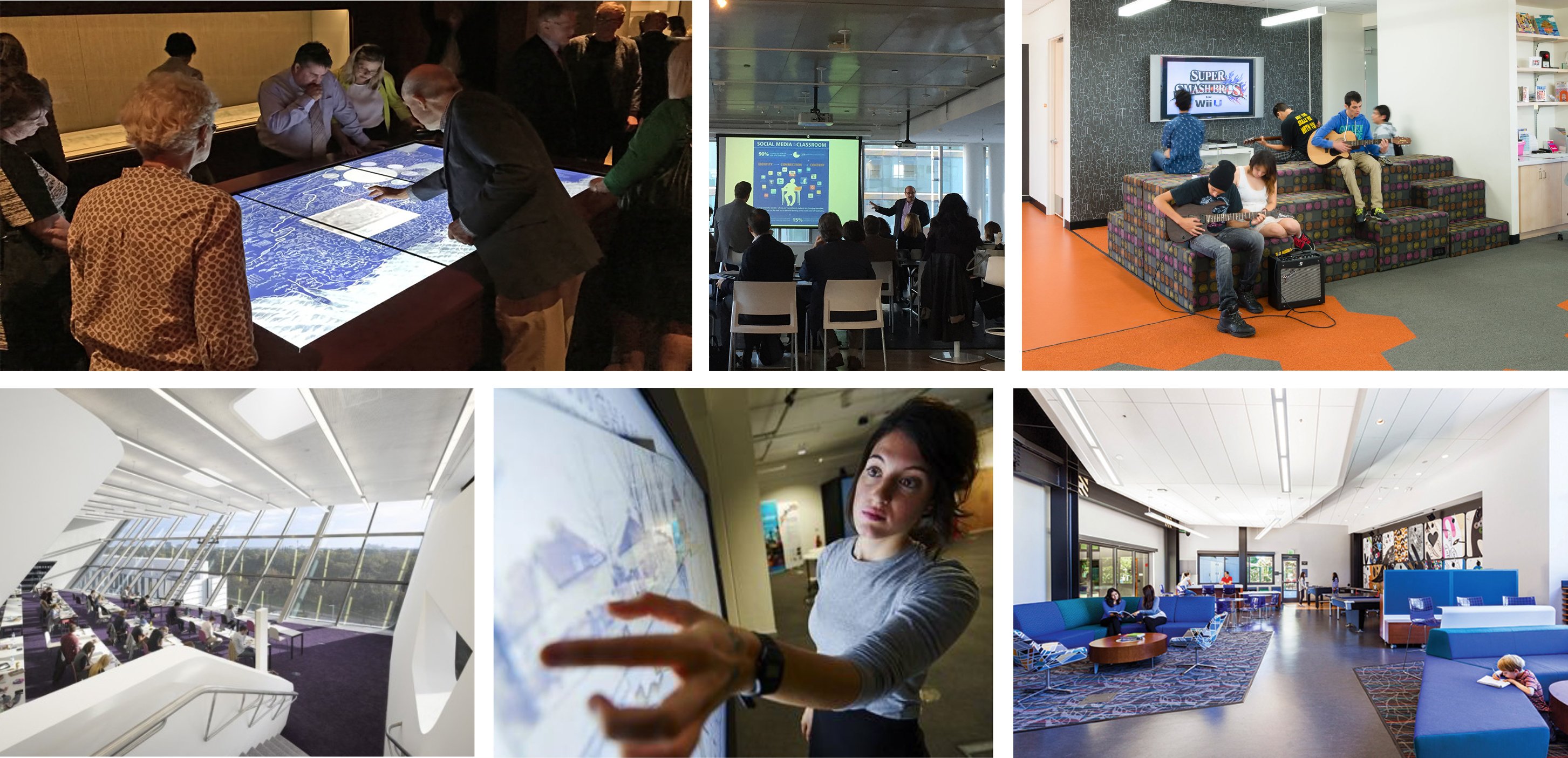
The Planning Environment

How the Tools Fit into a Planning Engagement
A starting point, not a substitute for expert judgment
These tools are free because we believe that better-informed clients produce better library buildings. An institution that arrives at a planning engagement having already worked through Cornerstone's space calculations knows which questions to ask and which assumptions to challenge. That accelerates the engagement and focuses expert attention where it creates the most value: on the adjacency decisions, phasing strategies, and community alignment work that no tool can automate.
The firm's consulting services cover the full spectrum of library planning — from initial master planning and institutional alignment through space and service analysis, strategic planning, automated storage and archival systems, and digital transformation. The tools are the entry point. The engagement is where the planning becomes specific, defensible, and fundable.
Institutions that have used Cornerstone to build an initial space program and then engaged the firm for a full building programming study have consistently found that the tool surfaces the right questions early — before design decisions foreclose options and before capital commitments lock in assumptions that have not been tested against real patron behavior and service data.
Related Planning Resources
Go deeper into the methodology
The tools connect to a broader body of planning knowledge available across this site. If Cornerstone's calculations raise questions about how space standards are derived, Library Planning Fundamentals explains the evidence base in detail. If Reference Library Place prompts questions about how digital collections should be built and curated, Building a Digital Library From Scratch walks through the full service planning sequence.
For institutions at the beginning of a capital planning process, Library Capital Planning: Building the Evidence Base for a Bond Campaign shows how feasibility data, usage patterns, and return-on-investment models are assembled into a fundable case. For those evaluating whether to engage an outside firm, What Does a Library Consultant Do? and How to Evaluate Library Consulting Firms provide the criteria for a sound selection process.
The firm's full consulting portfolio spans academic, public, government, law, medical, and special collections libraries across five decades of project work. That body of experience is what the tools are built on, and it is what distinguishes the analytical framework behind Cornerstone and Reference Library Place from generic space planning calculators.
Work with us
Planning a library project? Talk to us. The tools are the starting point. The conversation is where the planning becomes specific to your institution, your community, and your capital timeline. Aaron Cohen Associates has guided library projects through every stage of the planning arc — from the first feasibility question through construction documents and opening day — and the firm's consulting capacity is available to academic, public, government, and specialized library institutions worldwide.
Whether your project begins with a space calculation in Cornerstone, a reference question at Reference Library Place, or a direct inquiry about a planning engagement, the firm is ready to help you build a library that serves your community for the next fifty years.
Contact Aaron Cohen Associates