
Library
Master
Planning
Talk to a Planner

TL;DR

What You Need to Know First
A library master plan is a ten-year strategic document integrating services, staffing, digital platforms, and space before any architect draws a line. Without a master plan, capital requests lack evidence, renovations stay piecemeal, and library space becomes vulnerable to institutional repurposing. The master planning process produces the institutional intelligence that makes every downstream decision — from bond campaigns to building programs — defensible.
This page explains the full methodology: why the master plan precedes the building program, how evidence is gathered, what the six-phase framework delivers, and how to put it into practice at your institution. For a closer look at how space and service planning intersect, or how capital campaigns are built on planning evidence, those pages extend this framework in detail.
The Director Who Called the Architect First
A Scenario That Repeats Itself
Picture a director of a mid-sized academic library, three years into her role, who has spent those years approving sensible incremental improvements: a remodeled service desk, two new group study rooms, a refreshed computer cluster. Each project was justified on its own terms. Each was funded from modest operating reserves or one-time allocations. The building looks, in places, markedly better. And yet something has not changed: there is still no coherent answer to the question the provost will eventually ask, which is simply this: what does this library need to become, and what will it cost to get there?
When the provost's capital planning office finally requests a ten-year facility forecast, the director calls an architect. The architect is talented. Within six weeks, there is a space program: square footages for group rooms, stack capacities, service desk configurations, a bright rendering of a future reading room. The document is well-produced and architecturally plausible. It is also, in an important sense, premature. The building program answers the question of how much space. It does not answer the prior questions of which services, for which users, organized around which institutional mission, funded in what sequence, and subject to what collection management strategy. Those are the questions only a library master plan can answer, and they must be answered before the architect ever opens a file.
This scenario plays out with uncomfortable regularity across academic and public library contexts. The master plan is not an architectural document. It is an institutional intelligence document that precedes, informs, and shapes the building program. It is the platform on which every downstream capital decision rests. Without it, even a beautifully designed building can be misaligned with the institution it serves. The role of a skilled library master planner is precisely to prevent that misalignment, and to give every dollar the library eventually spends a coherent strategic reason for existing.
The master plan assembles evidence across services, staffing, collections, and digital platforms into a single coherent framework that administrators, trustees, and capital planners can evaluate and act on.
A phased capital strategy built into the master plan allows incremental, fundable projects to advance toward a long-term goal without waiting for a single all-or-nothing commitment.
An active, evidence-grounded master plan prevents institutional space planners and facilities managers from repurposing library real estate to serve broader campus priorities rather than library service needs.
A formal three-year review cycle keeps the master plan calibrated to actual institutional change, distinguishing it from a static strategic statement and preserving its authority as a capital advocacy instrument.

What a Library Master Planner Produces
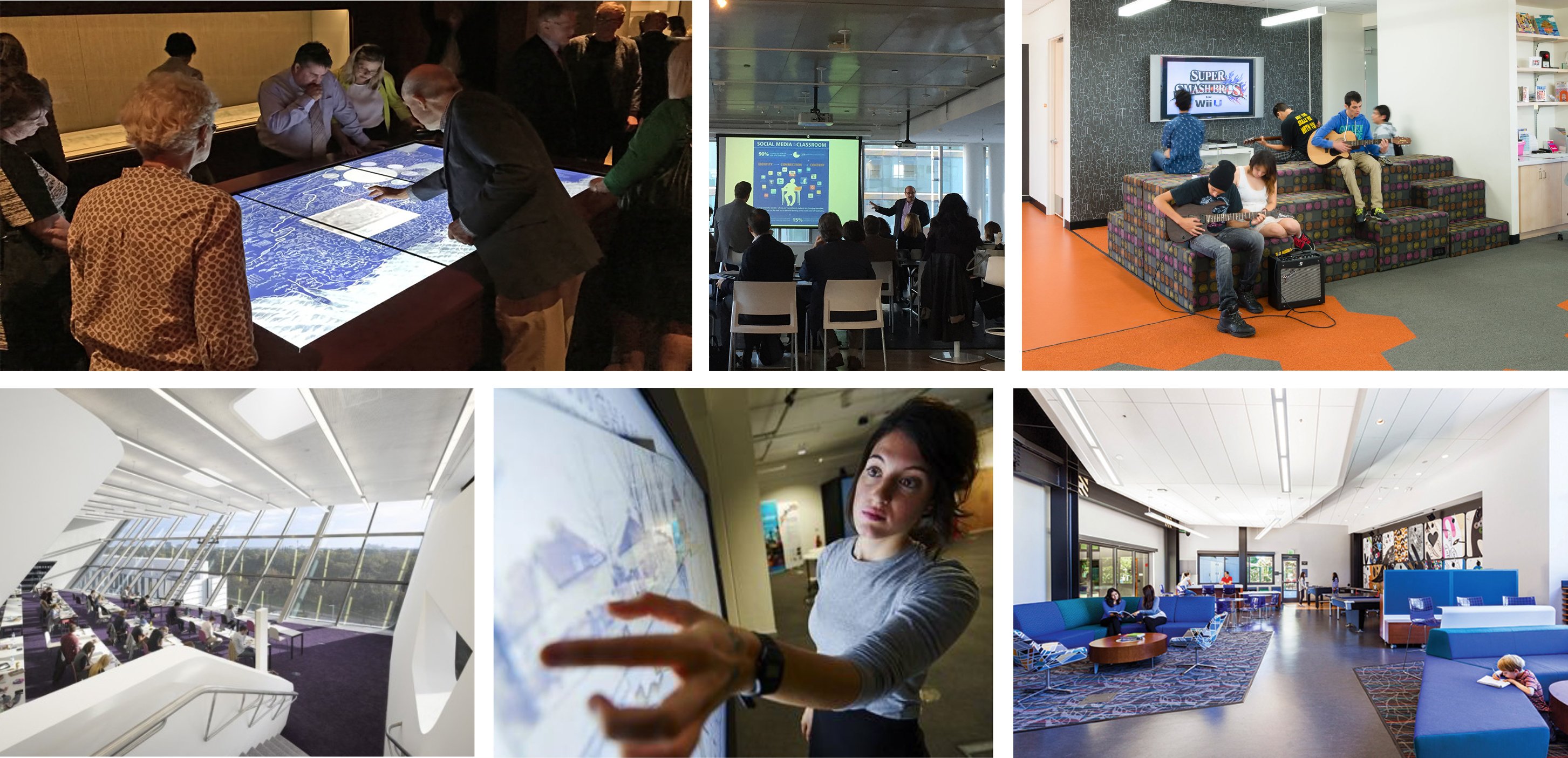
Institutional Intelligence, Not Architecture
The term master plan migrated into library usage from campus planning, where it describes a long-range framework for land use, buildings, and infrastructure. In library practice, the term carries a similar ambition but a substantially different scope. A library master plan is a comprehensive strategic document that integrates services, staffing, collections, digital platforms, and physical space into a single coherent framework, typically organized around a ten-year horizon. It is not a design document. It is a decision-making instrument.
The master plan asks and answers questions that architecture alone cannot address. What services will this library offer in year five and year ten? Which of those services require dedicated physical space, and which can be delivered digitally, remotely, or in partnership with other campus units? How should the print collection be managed to free up floor area for active learning? What staffing model will the new service configuration require? How does the library's digital platform — including its website, its discovery tools, and its content management systems — support or undermine the physical experience? These questions belong to the master planning process, not to schematic design.
At Aaron Cohen Associates, we have consistently found that the master plan must analyze the library's digital platforms alongside its physical ones. How does the website function as a service gateway? What is the institutional brand the library projects? How do back-office workflows affect staff productivity and, by extension, patron-facing service quality? Our master planning framework covers everything from sociofugal and sociopetal space dynamics to digital office automation and knowledge platform architecture. The master plan is a whole-institution study, not a room schedule, and any engagement that treats it as the latter will produce a document that cannot support serious capital advocacy.
Master Plan Deliverables



- Space and service inventory: what currently exists, what it costs to operate, and where the gaps are
- Service forecasting: which programs the institution will need to sustain or build over ten years
- Collection rationalization: how physical holdings will be managed, consolidated, stored, or deaccessioned
- Digital platform review: website, discovery systems, digital asset management, and social media presence
- Staffing analysis: how the evolving service model maps to organizational structure and headcount
- Phased capital strategy: what can be accomplished in 0 to 18 months, 1 to 3 years, and 5 to 10 years
The Ten-Year Rolling Framework
Libraries Need a Compass Before a Blueprint
Libraries are not static organizations. They evolve organically and opportunistically, adding a new service here, renovating a floor there, absorbing a digital archive or a new academic unit with each administrative initiative. After several years of this accumulation, the facility and the service model can grow inconsistent with each other in ways that are difficult to see from inside the institution. This is precisely why the library planning field has converged on the ten-year master plan as the standard instrument of institutional calibration.
Buro Happold, drawing on work with more than eighty libraries, described the cycle with useful precision: libraries that change organically and opportunistically need, about every ten years, to look back, think ahead, and right themselves for the coming decade, and the best tool for doing so is a master plan. The University of Saskatchewan's master plan, completed in 2017 and covering a ten-year period through 2027, illustrates this in structural terms. That plan was grounded in a randomized survey sent to more than eight thousand faculty, staff, and students, supplemented by pop-up consultation booths at seven campus locations and focused sessions with student groups. That depth of evidence allowed the library to consolidate its print collections strategically and redesign its branch network around five clear organizational principles without losing a year to internal deliberation.
The ten-year horizon matters for a specific institutional reason: it aligns the library's planning cycle with the typical cadence of campus capital planning, bond referendums, and strategic planning processes. When the provost, a board, or a city council requests a facilities forecast, the library director who can respond with a master plan rather than an ad hoc wish list is operating from a position of institutional credibility. The American Library Association's professional guidance on library facility master planning is direct on this point: administrative support and capital funding requests are substantially better received when they are presented within the context of a master plan that aligns with campus-wide strategic goals.
Critically, the plan must function as a living document. A master plan written in year one that is not reviewed in year four or year six will provide false confidence. The standard of practice that we recommend is a formal review every three years, with updates to the phasing strategy and service forecasts as enrollment, demographics, or institutional priorities shift. This is what distinguishes a library master plan from a static strategic statement: the master plan carries spatial and capital implications, and those implications must be re-tested against the institution's actual trajectory on a defined schedule.
A ten-year planning horizon aligns library development with institutional capital cycles, bond referendums, and strategic planning processes so that library priorities register at the institutional level.
Formal reviews every three years keep the plan calibrated to actual institutional change, ensuring the document retains its authority as a capital advocacy instrument over the full planning horizon.
The plan addresses physical and digital service evolution simultaneously and with equal rigor, covering everything from stack configurations to discovery systems and digital asset management.
Phased implementation allows incremental capital requests while maintaining a coherent long-term vision, so the institution can advance toward its goal through a series of discrete, fundable projects rather than a single all-or-nothing commitment.

Stakeholder Intelligence

Building the Evidence Base That Makes a Plan Defensible
The authority of a master plan derives entirely from the evidence it contains. A document built on assumption has no standing in a capital campaign, a provostial review, or a bond referendum. This is why the evidence-gathering phase of a library master plan is not a courtesy consultation but a rigorous, multi-channel data collection effort drawing on surveys, behavioral observation, service usage analysis, demographic projections, and structured stakeholder engagement across every constituency the library serves.
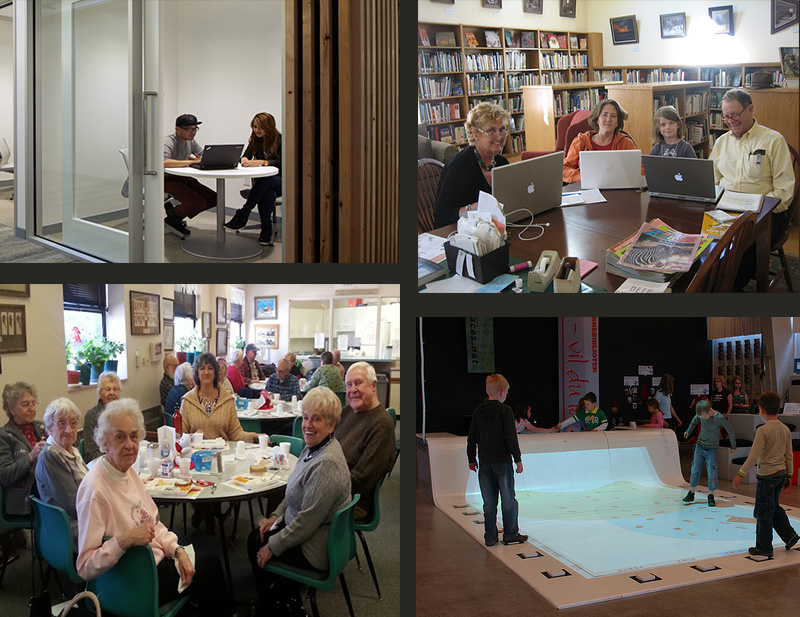
At Aaron Cohen Associates, the Visual Scan is the foundational observational tool in this phase: a facilitated walkthrough of the existing facility conducted with community members, staff, faculty, and administrators. The Visual Scan surfaces behavioral patterns, service failures, and spatial inefficiencies that do not appear in circulation statistics or space utilization reports. It is the ethnographic layer of the evidence base, complementary to the quantitative data that a thorough master planner assembles from enrollment trends, collection growth rates, service delivery metrics, and peer institution benchmarks.
The stakeholder engagement must be broad enough to be defensible. The University of Saskatchewan's planning team sent a randomized survey to more than eight thousand faculty, staff, and students, supplemented by seven pop-up consultation booths across the campus and sessions at centers serving international and Indigenous student populations. Buro Happold's planning work at the University of Pittsburgh, on the reinvention of Hillman Library, used interviews, workshops, and behavioral observations to identify emerging needs that quantitative data alone could not capture. What matters is not any single method but the principle: the evidence base must include voices from across the institution, including from non-users of the library, whose absence from the facility is itself a significant planning datum.
The service forecasting layer of the evidence base is equally important. It asks: given projected enrollment, demographic composition, and academic program growth, what will this community need from this library in year five and year ten? Those projections must then be translated into specific space types, staffing configurations, and technology investments. This is the work that makes the master plan actionable and that sets the foundation for the defensible space program the architect will eventually need.
The Evidence Base: Five Channels
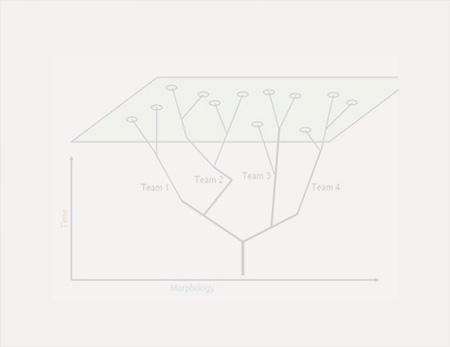



- Quantitative data: enrollment trends, usage statistics, collection growth projections, and peer institution benchmarks
- Qualitative observation: Visual Scan walkthroughs, behavioral mapping, and service workflow analysis
- Community engagement: surveys, pop-up consultations, facilitated workshops, and stakeholder interviews
- Non-user research: understanding why portions of the community the library serves are not using it
- Service forecasting: translating community needs into future space, staffing, and technology requirements
The Master Plan as the Foundation for Capital Success
From Internal Document to Capital Instrument
A library master plan is not only an internal planning document. In practice, it functions as the institution's primary instrument for securing capital investment. This is a point that many directors underestimate until they have sat before a bond committee or a donor prospect with an architect's rendering rather than a data-grounded strategic document. The rendering shows what a library could look like. The master plan shows why it must become that, what it will cost, in what sequence, and what the community will gain from every dollar committed.
The testimony from our Manchester, Connecticut engagement speaks to this directly. Director Doug McDonough credited the planning foundation developed with Aaron Cohen Associates as a central element in a November bond referendum that resulted in $39 million in voter-approved funding, combined with additional grant support, to build a new approximately 75,000 square-foot main library in downtown Manchester. The voters did not approve an architect's vision. They approved a documented, evidence-grounded case for community need. That is the difference the master plan makes.
The American Library Association's professional guidance on library facility master planning identifies another risk that directors often overlook: without a comprehensive plan, collection management policies intended to free up library space can make library real estate a target for both desirable and less desirable non-library uses. This dynamic is persistent in both academic and public library contexts. When a library director cannot demonstrate an active, evidence-grounded master plan, the institution's space planners and facilities managers will fill the planning vacuum themselves, frequently in ways that serve broader campus priorities rather than library service needs.
The master plan also performs a protective function during budget contraction. Fargo Public Library, working from a master plan developed in a comprehensive planning engagement, faced a budget reduction of $241,858 for fiscal year 2026. Because the plan had already identified which services and programs the community valued most, the library director could explain to city commissioners not just what was changing but why, and how each decision fit into a long-range roadmap. That capacity to explain and defend decisions in terms of a coherent long-term strategy rather than reactive adjustments is one of the most underappreciated returns on a master planning investment. For a closer look at how to construct the evidence base for capital campaigns, the relationship between master planning and bond referendum preparation warrants its own examination.
A master plan converts institutional need into a defensible capital case that administrators and voters can evaluate, grounding every funding request in documented community evidence rather than architectural aspiration.
It protects library space from repurposing by other institutional departments during campus-wide space audits, ensuring that library real estate serves library service needs.
It provides the evidence base for bond campaigns, donor campaigns, and competitive grant applications, giving every funding request a coherent strategic foundation.
It enables disciplined, defensible decision-making during budget contractions as well as capital expansions, because every decision can be explained in terms of a coherent long-range roadmap rather than reactive adjustment.
The Six-Phase Library Master Planning Framework
The following framework reflects the methodology Aaron Cohen Associates has refined across hundreds of academic, public, and specialized library engagements. Each phase is substantive, not ceremonial. The sequence is deliberate: later phases depend on the evidence assembled in earlier ones. No phase should be compressed because a deadline is tight or a budget is constrained. Compression at the front of the process produces miscalibration at the back, and that miscalibration surfaces eventually as expensive change orders, service failures, and institutional regret.
Phase 1 — Mission Alignment Audit
Before any space is measured or any user is surveyed, the library master planner works with institutional leadership to define precisely what the library must accomplish for the institution over the planning horizon. This is not a visioning exercise; it is a rigorous mapping of the institution's current strategic priorities onto the library's existing service portfolio. The output is a gap analysis: what the library currently does versus what the institution needs it to do in year three, year five, and year ten. Without this alignment, the master plan risks optimizing a service model that the institution has already moved past.
Phase 2 — Current State Assessment
The Visual Scan, usage data review, collection analysis, condition assessment, and digital platform audit are conducted in parallel. The goal is an honest, evidence-grounded portrait of the library as it actually functions, not as it is officially described. Staff interviews and behavioral observation supplement quantitative data to surface the operational realities that institutional reports typically obscure: service bottlenecks, spatial dysfunctions, technology gaps, and workflow inefficiencies that have been normalized by familiarity.
Phase 3 — Community and Stakeholder Engagement
Surveys, pop-up consultations, facilitated workshops, and structured interviews with faculty, students, non-users, administrators, IT, and partner units generate the community evidence base. The engagement must be broad enough to be statistically defensible and qualitatively rich. Non-users of the library are explicitly included, because their distance from the facility reveals service failures that the current user base has simply accommodated rather than reported.
Phase 4 — Service and Space Forecasting
Drawing on the evidence assembled in the first three phases, the master planner develops quantified projections of future service demand, seating requirements, staffing configurations, collection footprints, and technology infrastructure needs. These projections are organized around at least two planning horizons: a near-term period of zero to three years, and a long-term period of five to ten years. Alternative scenarios are developed and stress-tested against realistic funding assumptions so that the plan remains usable under a range of institutional conditions.
Phase 5 — Scenario Development and Phased Capital Strategy
Multiple spatial and service scenarios are developed, presented to stakeholders, and refined through facilitated workshops. Each scenario is accompanied by a phased implementation strategy that allows the institution to advance toward its long-term goal through a series of discrete, fundable projects rather than a single all-or-nothing capital commitment. This phase produces the prioritized project list, cost ranges, and funding strategy that will be presented to institutional leadership, bond committees, or donor prospects.
Phase 6 — Governance and Rolling Review
A master plan that is not maintained loses its authority within two to three years. This final phase establishes a governance structure for the plan: who is responsible for it, how it will be reviewed, and on what schedule. The standard recommendation is a formal review every three years, with updates to service forecasts and phasing as conditions change. This institutionalizes the master plan as a living strategic asset rather than a shelf document, and it ensures that the plan retains its value as an instrument of capital advocacy over the full ten-year horizon.
Putting It Into Practice

What to Do
Begin master planning at least eighteen to twenty-four months before engaging an architect for a capital project, so the building program can be grounded in a completed strategic analysis. Include digital platforms — the library website, discovery tools, and digital asset management systems — in the scope of the master plan alongside physical space. Engage faculty, students, non-users, campus administrators, and IT and facilities management as formal stakeholders, not incidental consultees.
Build phased implementation into the plan from the beginning so that incremental capital requests are possible without waiting for a fully-funded single project. Align the library master plan explicitly with the institution's current strategic plan and capital planning cycle so that library priorities register at the institutional level. Review and update the master plan on a formal three-year cycle rather than treating it as a one-time document that remains valid indefinitely.
What to Avoid
Common Errors That Undermine Master Plans
Treating a building program as a substitute for a master plan is the most consequential error a director can make. The building program is a downstream product of the master planning process, not a strategic precursor. Limiting the scope of the master plan to physical space and ignoring services, staffing, and digital systems — which are equally consequential planning variables — produces a document that cannot support serious capital advocacy.
Conducting stakeholder engagement only among current library users is a structural error. Non-users carry critical planning information that shapes service and space decisions; their absence from the consultation is itself a significant planning datum. Presenting a capital request to a board, a bond committee, or a major donor without an evidence-grounded master plan behind it is the institutional equivalent of asking for trust without providing evidence.
Allowing the master plan to become obsolete by failing to review it when institutional strategy, enrollment figures, or demographic profiles change materially is a governance failure. And treating the master plan as an internal document rather than a capital advocacy instrument that must be legible to administrators, trustees, and community stakeholders misunderstands its primary function.
The building program is a downstream product of the master planning process. Engaging an architect before the master plan is complete produces a space program that answers the wrong questions first.
Services, staffing, and digital systems are equally consequential planning variables. A master plan that ignores them cannot support the full range of capital and operational decisions the institution will face.
Non-users carry critical planning information. Their distance from the facility reveals service failures that the current user base has simply accommodated rather than reported, and those failures must be addressed in the plan.
A master plan that is not reviewed when institutional strategy, enrollment figures, or demographic profiles change materially provides false confidence and loses its authority as a capital advocacy instrument.

Questions to Ask

A Self-Assessment for Directors and Trustees
When was our library's most recent master plan completed, and has it been formally reviewed within the last three years? Does our master plan address digital services, digital platforms, and staffing configurations alongside physical space requirements? Is the library's master plan explicitly aligned with the institution's current strategic plan and enrollment projections?
Do we have phased cost estimates that allow for incremental capital requests rather than a single all-or-nothing project commitment? Have we engaged non-users of the library in our planning process, and do we understand the specific barriers keeping them away? Does our master plan include a governance structure that assigns responsibility for rolling review and update on a defined schedule?
If any of these questions cannot be answered with confidence, the institution is operating without the institutional intelligence a master plan provides. Aaron Cohen Associates has guided libraries through this process for more than fifty years. Contact us to discuss where your institution stands and what a master planning engagement would involve.
Related Reading

Sources
- 4-Part Webinar Series: Library Facility Master Planning, American Library Association
- University Library Master Plan, University of Saskatchewan
- Creating Your Library's Vision and Master Plan in 10 Steps, Buro Happold
- Master Planning Your Library's Next Chapter, JLG Architects
- Planning Optimal Library Spaces: Principles, Processes, and Practices, McMillan Pazdan Smith
- Library Master Planning, Aaron Cohen Associates Blog