
What Does a Library Consultant Do?
Roles, Methods, and When to Hire One — a practical guide for directors, trustees, and administrators preparing for a planning engagement.
Start a Conversation
TL;DR

The short answer
A library consultant diagnoses facility and service problems, translates those findings into precise buildable programs, and serves as a credible outside voice when internal advocacy alone cannot move institutional decisions.
The work spans strategic planning, architectural programming, technology integration, community engagement, and capital justification, and it shifts substantially depending on the library's type and sector.
The clearest signal that a consultant is needed is irreversibility: when the cost of a planning error exceeds the cost of expert guidance.
A Decision That Cannot Be Delegated
The gap between intent and readiness
Picture a library director who has just received a charge from her board: develop a plan to renovate the main branch, articulate what the institution needs for the next twenty years, and return in ninety days with a document the board can act on. She has a talented staff, a loyal community, and a building that was designed well enough in 1987 but no longer aligns with how anyone actually uses the library today. She also has a capital architect on retainer, eager to begin. What she does not yet have is a program.
This moment — the gap between institutional intent and institutional readiness — is precisely where a library consultant earns their place. The director's question is not whether to renovate. The board has already resolved that. Her question is more practical: what does a library consultant do that justifies the fee and the timeline, given everything her staff already knows about their own building and community?
The answer is not simple, and any experienced consultant will tell you so. A good consulting engagement is not a report that gets filed in a drawer. It is a structured process that extracts and organizes knowledge already inside the institution, supplements it with evidence that can only come from outside, and translates it all into decisions that hold up under scrutiny from boards, architects, administrators, and bond counsel alike. Understanding that process, and the distinct roles it requires, is the first thing any director or board member should know before committing to a planning engagement.

The Three Roles Every Library Consultant Plays

Diagnostician, strategist, and advocate
The confusion about what consultants do usually traces to a misunderstanding about how many different functions a single engagement may require. In more than fifty years of practice at Aaron Cohen Associates, we have found that the work almost always falls into three overlapping roles, regardless of whether the client is a municipal branch system, a research university, a corporate special collection, a law library, a federal agency, or a medical center.
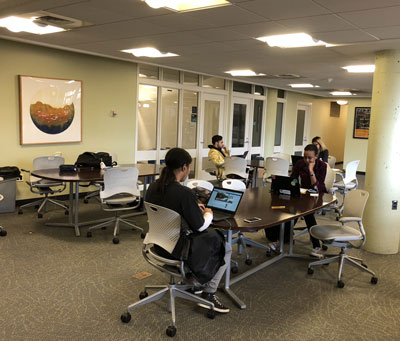
The first role is that of the diagnostician. The consultant's initial job is to understand the existing condition with more precision than internal staff can achieve on their own. Not because staff lacks intelligence or commitment, but because proximity makes objective assessment nearly impossible. A director who has worked in the same building for fifteen years no longer perceives it the way a first-time patron does. Using structured observation methods, including the Visual Scan — a facilitated walkthrough conducted with community members and staff together — a consultant maps how people actually move through a space: where they cluster, where they avoid, and what behaviors the building either supports or frustrates. That observational record becomes the foundation for every recommendation that follows.
The second role is that of the strategist. Once the diagnostic picture is clear, the work shifts to translation: converting service aspirations into spatial and operational requirements. This is architectural programming in its truest form. It means asking not just how much space a library needs, but what each service does, who uses it, when and how often, and what physical conditions it requires to function well. The resulting program document is a precise technical specification that an architect can build from and a board can fund. Without it, architects design on intuition. With it, they design on evidence.
The third role is rarely discussed and arguably the most valuable: the political advocate and institutional expediter. The partners of this firm, writing in Computers in Libraries, described consultants as functioning simultaneously as technical expediters and political activists. The political role is real. A consultant can ask the uncomfortable questions that staff members cannot safely raise. They can validate the director's instincts in a boardroom where hierarchy makes honest disagreement costly. And they can present evidence to trustees and elected officials in a form that carries the weight of independent professional judgment — weight that an internal memo cannot replicate.
Core Consulting Capabilities
What the work actually requires
Each of the five capabilities below represents a distinct body of professional knowledge that a qualified library consultant brings to an engagement. Together they constitute the full scope of what a productive planning partnership delivers.
Maps actual patron behavior and identifies spatial misalignments that internal familiarity obscures. The Visual Scan methodology surfaces patterns no written survey can capture.
Translates service objectives into a precise architectural program with square footage, adjacencies, and cost models that architects and boards can act on.
Provides the independent credibility that moves institutional decisions forward when internal voices have insufficient standing with trustees, elected officials, or senior administration.
Surfaces disagreement between staff, administration, and board early enough to resolve it before it becomes a construction change order. Genuine stakeholder consensus is as consequential as any space plan.
Equips library staff with frameworks and tools they can continue to use after the engagement concludes, ensuring that the work outlasts the consultants.

What Does a Library Consultant Do, Project by Project
Scope shifts with the triggering event
The scope of a consulting engagement changes significantly depending on the triggering event. A strategic planning process looks quite different from an architectural programming study, and both differ from a technology assessment or a capital campaign preparation. Understanding these distinctions helps directors and boards match the right engagement scope to the actual institutional need.
Strategic planning engagements begin with community assessment: surveys, focus groups, demographic analysis, and stakeholder interviews structured to surface both the known preferences of active library users and the unmet needs of those who are not using the library at all. Experienced consultants bring interpretive knowledge that raw data alone cannot supply. They know, for example, that patron satisfaction surveys in virtually any library will generate requests for longer hours, more parking, and faster access to popular materials. Knowing how to weigh those responses against utilization trends and comparable facility benchmarks is the skill that separates a professional planning process from an informal community conversation.
Architectural programming and space planning engagements produce the program document that must exist before schematic design begins. This work involves a detailed analysis of existing and projected space needs: seating types and quantities, linear footage of collection shelving, technology infrastructure, acoustic zone requirements, and the adjacency relationships that determine whether a building functions smoothly or requires patrons to navigate against the grain of their own behavior. These decisions, made on paper before a single wall moves, determine whether the resulting facility serves its community for decades or requires expensive correction within a few years of opening.
Technology integration engagements address the specifications that govern how digital tools, platforms, and physical research environments work together. As libraries incorporate artificial intelligence research tools, digital asset management systems, and hybrid physical-digital learning environments, the planning questions become more complex and the cost of imprecise specifications rises accordingly. A consultant with depth in this area helps translate institutional aspirations into technical requirements that procurement officers, architects, and information technology staff can act on.
Capital justification engagements prepare the evidence base for a bond referendum, a capital campaign, or a major institutional appropriation. The case must be made in language that resonates beyond the library community itself: utilization data, facility condition assessments, comparable institutional standards, projected growth models, and return-on-investment frameworks that connect the library's performance to institutional or community health. The work this firm did with the Manchester, Connecticut Public Library illustrates the result: a justification foundation developed through a consulting engagement contributed to the community's approval of a $39 million bond referendum, ultimately producing a new approximately 75,000-square-foot main library at a new downtown location.
Engagement Types at a Glance
-
Strategic planning
Community assessment, stakeholder engagement, benchmarking, and an outcome-focused plan with measurable implementation goals.
-
Architectural programming
Space allocation, adjacency mapping, collection capacity analysis, and a formal program document that guides the architect.
-
Technology integration
AI tools, digital asset management, IT infrastructure, and hybrid physical-digital environment specifications.
-
Capital justification
Feasibility studies, utilization data, cost modeling, and the evidence base for bond referendums and donor campaigns.
-
Organizational development
Staff configuration, service realignment, and operational planning connected to new or renovated facilities.
Why Sector Expertise Matters as Much as Method
The sector question is foundational
One of the most important things to understand about library consulting is that the field is not homogeneous. A consultant experienced in academic research libraries brings a substantially different body of knowledge than one who has spent their career in public systems. Both differ from the specialized requirements of law libraries, medical and biomedical environments, corporate special collections, government research installations, and archival or museum collections. When evaluating a consultant, the sector question is not secondary. It is foundational.
In a law library, spatial planning centers on security, controlled access, specialized print collection densities, and the workflow rhythms of attorneys and research staff. Confidentiality requirements shape everything from reading room placement to printing and copying infrastructure. In a biomedical library serving a clinical environment, planning must address the intersection of research support and direct patient care, the urgency of evidence-based clinical practice, and the spatial demands of interdisciplinary teams working across institutional boundaries.
Government and defense research libraries introduce classified reading rooms, document control protocols, and integration requirements with federal records management systems. Corporate special libraries operate under entirely different assumptions about institutional value, often needing to justify their existence in terms that a chief financial officer will find persuasive. Archival and special collections environments require specialized environmental controls, security protocols, and adjacency relationships between storage, processing, reading room, and digitization operations that have no equivalent in a general circulation library.
Academic libraries span an enormous range: the undergraduate learning commons serving thousands of students a day has fundamentally different planning requirements than the research library supporting doctoral programs and faculty scholarship. Public library systems face their own set of drivers, from branch equity and community demographic shifts to the integration of social services that have become central to many urban library missions. A consultant who can navigate all of these environments brings a portfolio of models, a library of architectural precedents, and a depth of cross-sector comparison that no internal team can replicate.
Learning commons design, research support environments, collection rationalization, and campus-wide space optimization.
Community needs assessment, branch equity, programming integration, and capital campaign readiness.
Security planning, controlled access, dense specialized collection management, and attorney workflow support.
Clinical research support, evidence-based practice infrastructure, and interdisciplinary team environments.

Recognizing the Right Moment

When a consultant is the right investment
The clearest signal that a consulting engagement is warranted is irreversibility. When the decision facing a library carries consequences that cannot be easily corrected — when spatial relationships will be locked in for forty years, when a bond referendum will succeed or fail based on the quality of the evidence presented, when a technology integration poorly specified at the outset will cost more to replace than it cost to build — external expertise is not an optional amenity. It is institutional risk management.
A second signal is internal bandwidth. A library preparing a major capital project while simultaneously managing day-to-day service delivery is asking its staff to perform two full-time jobs. One of those efforts will suffer. The question is which one the institution can afford to compromise. A consultant absorbs the planning burden, allowing staff to maintain service quality through the transition rather than degrading both.
A third signal is political. When the change required is significant enough to face institutional resistance — from administrators who prefer the status quo, from staff groups invested in existing workflows, from community members skeptical of public expenditure — an outside voice carrying documented expertise and independent standing can move the conversation in ways that even the most capable internal advocate cannot. An early lesson from this firm's own history underlines the point: one of the first electronic commons installations in an academic library failed not because of technical error but because the plan bypassed staff participation entirely. The director lost confidence, the project was removed, and the lesson stayed with us. A consultant's role in facilitating genuine stakeholder consensus is as consequential as any space plan or technology specification they deliver.
The right moment to begin a strategic planning engagement is before the crisis, not during it. Libraries that wait until a building is failing, a budget is under severe pressure, or a board has lost confidence in institutional direction find that the consultant's first task becomes stabilization rather than planning. The institutions that use consulting engagements most effectively treat them as a regular instrument of governance, returning every ten to twenty years to reexamine their facilities and services with fresh evidence and professional rigor.
Five Signals That a Consultant Is Warranted
Building programs, technology platform selections, and bond referendum preparations all carry consequences that outlast the planning period.
Simultaneous capital planning and daily operations reliably degrade one or both without external support.
Independent professional judgment carries institutional authority that internal advocacy, however well-founded, often cannot match alone.
A new director inheriting a facility without a current program or plan needs an objective baseline before making long-term commitments.
A strategic or facilities plan more than five to seven years old is no longer a reliable guide to institutional decision-making in a rapidly changing environment.
See how our full range of consulting services maps to each of these institutional moments.
A Five-Phase Framework
For a productive consulting engagement
Whether the project is a strategic plan, an architectural program, or a capital justification study, the most effective consulting engagements follow a consistent structural sequence. These five phases apply across sectors and project types, though their relative weight and duration shift with context. Understanding the sequence in advance helps library leadership set realistic expectations and participate more productively at each stage.
Before issuing an RFP, define precisely what the engagement must deliver. Is the product a strategic plan? An architectural program document? A technology specification? A capital feasibility study? Each requires a different deliverable, a different timeline, and a different set of professional qualifications. Proposals written without a clear scope statement are incomparable and produce contracts that drift. The scope definition step should also name the institutional decision that the deliverable must enable: a board vote, an architect's commission, a bond resolution, or a grant application. That downstream decision is what gives the deliverable its shape.
Identify every group that has a legitimate stake in the outcome: board members, senior administration, library staff at every level, faculty or primary patron communities, non-users, community leaders, and funding authorities. Establish the engagement method appropriate to each group: structured surveys, focus groups, facilitated stakeholder interviews, demographic analysis, or individual meetings. Non-users deserve particular attention. They represent unmet demand, and their absence from the building is information. The research tools required to reach them, including phone surveys and market segmentation analysis, are specialist skills that most library staffs do not maintain in-house.
Conduct a structured assessment of existing conditions. The Visual Scan methodology — a guided facilitated walkthrough with community members and staff together — surfaces behavioral patterns and spatial misalignments that would never appear in a written survey or conference room discussion. For projects involving existing buildings, this step produces the utilization, condition, and adjacency data that inform the program. For institutions planning new facilities, equivalent diagnostic work focuses on service models, comparable facility performance, and community behavior data rather than built conditions.
Translate diagnostic findings into the formal deliverable: a space program with square footage allocations, seating configurations, collection capacities, technology infrastructure requirements, and adjacency diagrams; or a strategic plan with measurable goals, priority initiatives, and implementation benchmarks. This document must speak simultaneously to architects, engineers, administrators, board members, and funders. Its precision is what makes it useful. Vague aspirational documents produce vague buildings and vague accountability.
Present the program or plan through a structured review process that gives key stakeholders a genuine opportunity to engage with the findings before the document is finalized. This is not a presentation of predetermined conclusions. It is the step at which institutional commitment is built or lost. Plans that skip this phase may be technically sound but institutionally inert. The final deliverable should include implementation benchmarks that allow the library to track progress independently after the consulting engagement concludes, ensuring that the work outlasts the consultants.

Putting It Into Practice

What to do
Define the specific deliverable you need before writing an RFP. Knowing whether you need a strategic plan, an architectural program, a technology specification, or a capital feasibility study determines the scope, timeline, and qualifications required.
Ask about sector experience by name. A consultant's body of work in academic libraries does not automatically transfer to medical, law, government, or corporate environments. Request client references from projects comparable to yours in type and scale.
Involve staff from the beginning of the engagement, not only at the review stage. Plans that bypass staff participation during development routinely face implementation resistance regardless of their technical quality.
Treat the program document as a living instrument that continues to guide the architect and the institution through design, construction, and occupancy. It is not a report to be filed after board approval.
Plan for the relationship to extend beyond the initial deliverable. The most productive consulting partnerships include accessible follow-up during the design and implementation phases, when questions arise that the original document did not anticipate.
What to Avoid
-
Hiring a consultant to validate a decision that has already been made internally. If the outcome is predetermined, the engagement produces a document that no stakeholder fully trusts and no institution can build lasting commitment around.
-
Beginning architectural schematic design before the program document is complete. This is one of the most reliably expensive mistakes in library capital planning, producing change orders that far exceed what the program study would have cost.
-
Issuing an RFP without a budget range. Proposals written without cost guidance are structurally incomparable and waste the time of every qualified firm that responds.
-
Confusing a project manager with a planning consultant. Both roles carry value, but they require different expertise, operate at different phases of a project, and should not be treated as interchangeable.
-
Expecting the consultant to build institutional consensus alone. The most effective engagements treat the consultant as a partner in a political process that library leadership must actively participate in and ultimately own.
Questions to Ask
Before you sign a contract
These questions are designed to surface the information that distinguishes a genuinely qualified consultant from one who presents well in a proposal but lacks the sector depth, methodological rigor, or institutional experience your project requires.
What is your specific experience with libraries of our type, scale, and sector? Can you name comparable completed projects and connect us with the directors who led them?
What precise deliverable will we receive at the end of this engagement, and in what format will it be presented to our board and our architect?
How do you involve library staff and community members throughout the process, not only at the final review stage?
What is your methodology for engaging community members who are not current library users, and what tools do you use to reach them?
Can you describe a project in which your findings differed significantly from the client's initial assumptions, and how that difference was navigated with leadership and the board?
How do you coordinate your work with the architect if both are engaged simultaneously, and who holds the program document as the governing reference throughout design?
What happens if the scope of the engagement changes materially after the contract is signed, and how is that governed?

Start the Conversation
Sources
The Benefits of Hiring a Library Consultant — ReThinking Libraries
How To Hire The Right Consultant For Your Library — Computers in Libraries, July/August 2003, Information Today
Do You Need a Library Consultant for Your Strategic Plan? — The Ivy Group
ACRL Consulting Services — American Library Association