
Translating
Academic Needs
into Defensible Library Space
Start Here

The Challenge
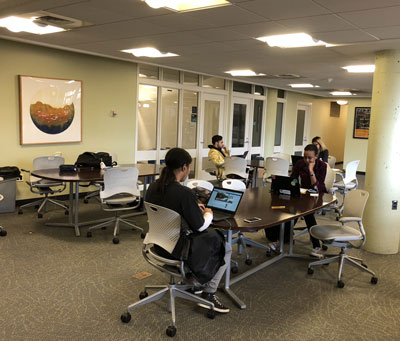
Programming Before Design
Campus leadership often expects library facilities to absorb enrollment growth and pedagogical shifts without clear spatial data to justify the capital budget. When architectural design begins before service models and collection trajectories are rigorously programmed, the finished building risks fighting its users within a decade. These guides demonstrate how to build an evidence-based space program and select the right consulting partners to protect your institutional investment.
Independent programming establishes behavioral and operational requirements before architects draw a line. The result is a building brief that capital committees can defend, architects can execute, and communities can rely on for the decades ahead. Every engagement Aaron Cohen Associates undertakes begins with this foundational discipline: observation, measurement, and translation of institutional data into spatial requirements that hold up under scrutiny.
Why It Matters
Evidence-Based Space Programming
Enrollment growth and curriculum shifts demand space allocations that capital committees can defend. Overlooking service mix or collection trajectories produces facilities that fail user needs over time. Independent programming establishes behavioral and operational requirements before architects draw a line. The following capabilities represent the core disciplines we bring to every academic library engagement.
Converting headcount projections and curriculum data into square footage programs that survive capital review and remain defensible as institutional priorities shift over time.
Projecting physical and digital collection growth to ensure storage, access, and preservation requirements are built into the program before a single structural decision is made.
Structured walkthroughs and usage observation that reveal how patrons actually move through and use space, producing adjacency requirements grounded in real behavior rather than assumption.
Equipping trustees, provosts, and project managers with the criteria needed to evaluate and select an independent library planning consultant before committing to an architectural engagement.
In This Collection



Academic Library Planner: From Enrollment Data to a Defensible Space Program
Learn how to translate enrollment projections, curriculum shifts, and collection growth into a defensible square footage program before hiring an architect. This guide details the six-step translation process that converts headcount and institutional data into an approved square footage program. It is the essential starting point for any campus leadership team preparing to make a capital investment in library facilities.
Read the Planner GuideCollege Library Design Consultants: What to Look for Before You Sign an Engagement
Discover the critical criteria trustees and provosts must evaluate when selecting an independent consultant to lead library programming and behavioral observation. This guide walks decision-makers through the qualifications, methodologies, and track records that distinguish a rigorous library planning consultant from a generalist design advisor, and explains why that distinction determines whether your capital investment holds its value.
Read the Selection GuideQuestions These Pages Answer

Practical Guidance for Capital Decision-Makers
These resources are written for the administrators, trustees, and project managers who must translate institutional ambition into a fundable, defensible capital program. The questions below represent the core planning challenges this collection addresses directly.
- How do we translate enrollment growth into a defensible square footage program?
- Why should we hire a library planning consultant before engaging an architect?
- How do we justify our library space allocations to the capital committee?
- What criteria should we use to evaluate library design consultants before signing an agreement?
Each question points to a failure mode we have observed repeatedly across academic library projects: the institution that hired an architect before completing a space program, the capital committee that approved square footage without behavioral data, the provost who selected a consultant on reputation alone rather than demonstrated methodology. These guides exist to prevent those outcomes.
Keep Exploring
Related Collections and Resources
The academic library planning process connects to a broader set of methodologies and sector-specific frameworks. The resources below extend the thinking introduced in this collection into adjacent disciplines and planning contexts.
Core methodologies and decision frameworks for administrators, trustees, and architects who are starting or restarting a library planning process. This collection establishes the foundational evidence-gathering and programming disciplines that underpin every successful capital project.
Facility planning guidance tailored to the distinct security, workflow, collection, and staffing requirements of specialized library types. Where academic planning addresses enrollment and pedagogy, sector design addresses the operational and regulatory constraints that vary by institution type.
Every collection in one place. The full library gathers all of Aaron Cohen Associates' planning frameworks, case evidence, and methodological resources across every sector and service type, from urban public systems to research universities and specialized archives.
Planning Your Academic Library Project?
Speak with our team about translating your enrollment trends, collections, and service goals into a buildable space program. Every successful academic library project begins with a rigorous programming engagement that establishes spatial requirements before architectural design begins. Aaron Cohen Associates has guided this process across hundreds of academic, municipal, and specialized installations. We bring the same evidence-based discipline to every engagement, regardless of project scale or institutional type.
Whether you are preparing a capital campaign, evaluating a renovation, or beginning a master planning process, the right starting point is a conversation about what your institution actually needs from its library facility over the next twenty to thirty years. That conversation shapes every decision that follows.
Contact Our Team