
College Library
Design Consultants
What to Look for
Talk to a Consultant

TL;DR
Before You Sign an Engagement
College library design consultants serve a fundamentally different function from architects: they translate service aspirations into a precise, buildable program before the architect lifts a pencil.
The right firm brings a tested methodology for observing actual patron behavior, a disciplined programming process, and the institutional credibility to advance decisions that internal voices cannot.
Evaluating candidates on portfolio depth, programming approach, observational tools, and reference calls will distinguish firms that protect the institution from those that simply produce reports.
Begin Your EngagementA Building Committee Without a Program
How Projects Go Wrong Before They Begin
Picture a provost at a mid-sized regional college who convenes her first library building committee in September. The existing facility was designed in the late 1980s: still structurally sound, well located at the center of campus, but functionally adrift. Stack ranges occupy two full floors that students largely avoid. The reference desk sits at a remove from the main entrance, visible from the lobby but separated by a row of catalog terminals that nobody uses. The computing cluster near the front door is perennially overcrowded while the quiet reading room three flights up sits nearly empty most afternoons. The institution has a capital architect already under contract from a prior facilities project, eager to begin. The provost's assumption is that the renovation can simply be handed to that firm. The only remaining question, in her framing, is whether the project also needs what the facilities director calls a planning consultant.
What follows is a scenario we have encountered many times in more than fifty years of academic library consulting. The architect, talented and experienced in higher education construction, begins sketching concepts within weeks. Each iteration looks attractive. None is anchored to a program document that specifies what the library must do, for whom, in what sequence, at what scale, and under what environmental conditions. By the time anyone raises the question of programming, the design has already committed the building to a spatial logic that serves the architect's aesthetic instincts more than the institution's service mission. Reversing course will cost time and money the college does not have.
This interval — the gap between the moment an institution decides to renovate and the moment it understands precisely what it is building — is exactly where college library design consultants earn their place. The question is not whether to hire one. For a capital project of this scale and irreversibility, the answer is almost always yes. The more consequential question is how to evaluate candidates, and what separates a firm that will protect the institution's investment from one that will produce a document and move on.
What College Library Design Consultants Do That Architects Cannot

Three Functions Distinct from Architectural Design
The confusion that leads institutions to skip the planning consultant almost always begins with a reasonable assumption: a skilled architect with library experience ought to be sufficient. The assumption is understandable, but it is wrong. As Fred Schlipf, one of the most cited voices in library building literature, writes plainly: an architect is not a substitute for a library building consultant. No matter how extensive an architect's library portfolio, architects are not librarians, they do not work inside libraries, and their professional priorities are different from those of an institution trying to build a facility that will serve its community well for a century or more.
The work that college library design consultants perform falls into three overlapping functions, each distinct from architectural design. The first is diagnostic: mapping how people actually use the existing building, where they cluster, what they avoid, and what institutional habits have calcified into spatial assumptions that no longer serve anyone well. The second is strategic: translating what the library needs to do, expressed in terms of services and user behaviors, into the precise square footage allocations, adjacency requirements, and functional specifications that constitute an architectural program. The third is political: providing the independent professional credibility that allows an institution to make difficult decisions, resolve internal disagreements, and present evidence to boards and capital campaign stakeholders in a form that internal advocacy alone cannot achieve. As the partners of this firm noted in Computers in Libraries, the consultant functions simultaneously as technical expediter and political activist.
These three functions are described in greater depth in our guide to what a library consultant does, but the essential point for anyone selecting a firm is this: when you evaluate a candidate, you are not primarily evaluating design sensibility. You are evaluating analytical method, programming discipline, and institutional judgment. Those qualities require a different set of questions than you would bring to an architectural selection committee.
The Four Core Functions



Functions in Detail
What Each Function Delivers
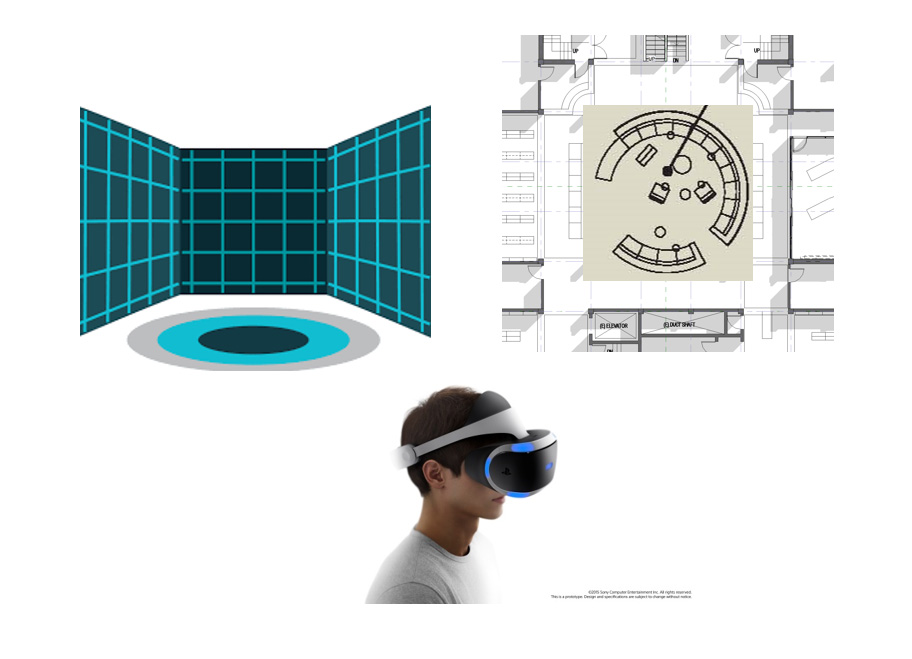
Understanding the four core functions of a college library design consultant is the foundation for evaluating any candidate. Each function addresses a distinct failure mode that arises when institutions rely on architects alone to guide a capital library project.
Observes actual patron movement and behavior through structured walkthroughs before making any spatial recommendation. This is not a survey or a focus group — it is direct, trained observation of how people inhabit the building under real conditions.
Converts service aspirations and institutional data into a written building program with specific square footage, adjacency logic, and functional requirements for each space. The program is the document that governs every subsequent design decision.
Provides the independent credibility that moves decisions forward when internal staff and administration are constrained by hierarchy or competing institutional interests. The consultant can say what the library director cannot say alone.
Distinguishes spaces the library genuinely needs from spaces the institution assumes it needs, often for the first time in the institution's planning history. This distinction alone frequently reshapes the project scope and budget in ways that save the institution far more than the consulting fee.
The Building Program: The Central Test of Consultant Capability
The Most Important Deliverable
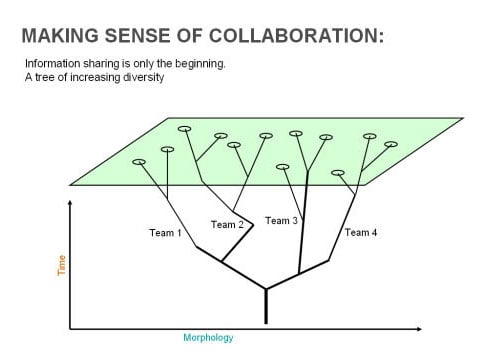
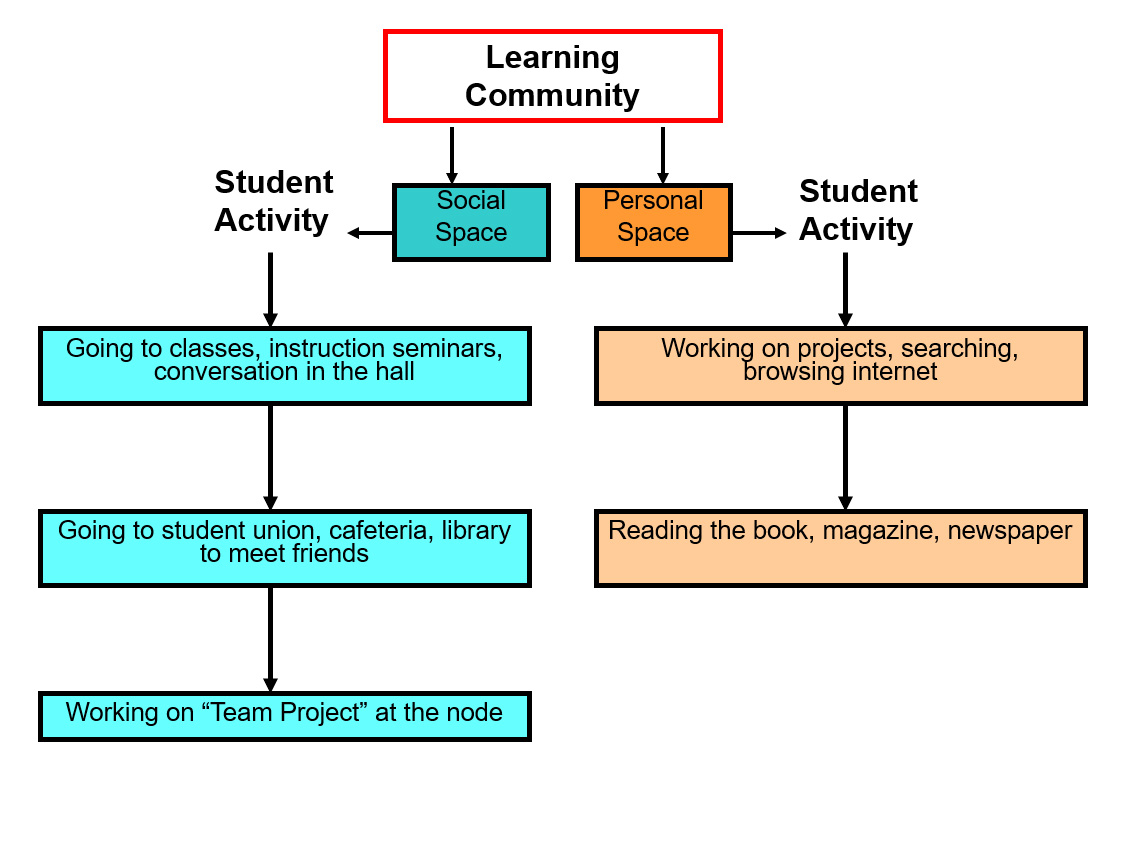
The single most important deliverable that college library design consultants produce is the building program, and understanding what a genuine program contains is the clearest test available for evaluating candidates before you hire them. A building program is not a vision statement, a space inventory, or a renovation wish list. It is an extremely detailed description of every space the library needs to meet its long-term service goals, including the purpose, square footage, physical character, furniture requirements, environmental specifications, and required adjacencies of each space. As Schlipf writes, a good program begins with services, moves from there to contents and spaces, and only then to building size.
This sequencing is diagnostic. A consultant who starts from square footage is working backward from assumptions. A consultant who starts from services is working forward from evidence. When you interview candidates, ask them to walk you through their programming process from first institutional meeting to final document. The answer will tell you immediately whether the firm treats programming as a research activity or as a formatting exercise. The Association of College and Research Libraries and Core, in their joint guide to academic library building design, place the library needs assessment and the institutional strategic plan at the foundation of any planning process. A candidate who cannot explain how those documents connect to the room-by-room specifications in the final program has not understood the assignment.
One of the most consequential findings from a 2016 Project Information Literacy study of 49 stakeholders across 22 academic library projects in the United States and Canada was that fewer than one in three participants reported using formal methods to systematically collect user data as part of the planning process. That finding reflects what happens when institutions rely on design intuition rather than programmatic evidence. A building shaped by assumption tends to replicate the existing facility's failures in a more expensive shell. The building program is what prevents that outcome, and the quality of your candidate's programming methodology is the most direct indicator of whether your project will succeed.
For institutions approaching a library master planning process rather than a single renovation, the program document must hold up not just against today's service model but against the enrollment, pedagogical, and technological changes the institution can reasonably anticipate over the next two to three decades. Ask every candidate this question before you sign: what does your program account for that the institution does not yet know it needs?
What a Complete Building Program Contains
Program Specifications and Process Standards
A complete building program specifies each space by primary purpose and user groups; required square footage with a flexibility range; adjacency requirements relative to other spaces; environmental conditions including lighting levels, acoustic treatment, and power density; and furniture and equipment needed at opening day.
Each space is defined by purpose, user groups, square footage range, adjacency logic, environmental conditions, and opening-day equipment. No space enters the program without a service rationale.
Programming must precede architectural design entirely. If a candidate proposes to program in parallel with early schematic design, treat that as a warning. The two activities cannot be conducted simultaneously without compromising the integrity of both.
Ask to review a completed program document from a comparable institution before signing the engagement letter. A firm that cannot or will not share a sample program has not produced one that would survive scrutiny.
The program must account for enrollment growth, pedagogical change, and digital infrastructure evolution over the next two to three decades. A program that only describes today's service model is already obsolete at the moment of occupancy.

Behavioral Evidence and the Question of Observational Method
What Surveys Cannot Tell You
The 2016 Project Information Literacy research found that fewer than one in three stakeholders across twenty-two campus library projects used formal methods to systematically collect user data before making design decisions. That gap matters enormously in practice. Surveys and focus groups produce self-reported preferences, which are useful but incomplete: people describe how they think they use a space, or how they wish they used it, not necessarily how they behave under actual conditions. The most reliable observational tools are structured, facilitated walkthroughs conducted with library staff and community members together, in which trained observers map patron movement, cluster formation, avoided zones, and the behavioral patterns that the existing building either supports or frustrates.
This methodology, described in detail in our Visual Scan guide, generates an observational record that becomes the foundation for every spatial recommendation that follows. When you interview candidates, ask what specific field method they use to document how patrons currently use the building. If the answer is surveys and focus groups only, ask a follow-up: at what point in your process do you actually observe behavior in the space? The question is not hostile. It is the clearest way to determine whether a firm will program your specific library or a generalized version of one.
Research from Ithaka S+R underscores why institution-specific observation matters so much. As Nancy Fried Foster noted in her work on evidence-based academic library design, the role of the library varies significantly from one college or university to another; academic libraries no longer share a mission in any way like they did as recently as thirty or forty years ago. A firm that relies on what worked at comparable institutions, rather than on what your specific users actually do in your specific building, is not programming your library. It is applying a template. Templates save time in the short run and cost money in the long one.
Evaluating Observational Method
What to Look for in a Candidate's Field Methodology
Structured, facilitated walkthroughs with staff and community members produce behavioral data that surveys and focus groups cannot replicate. The distinction between self-reported preferences and observed behavior is where most programming errors originate, and it is where the right consultant earns the most institutional value.
Look for candidates who distinguish explicitly between self-reported preferences and observed behavior when describing their methodology. The walkthrough protocol should involve library staff, community members, and trained observers working together in the actual building.
Observational fieldwork should precede any spatial recommendation. Ask at what stage in the process field observations are conducted. If the answer is after preliminary design, the observation is being used to justify decisions already made rather than to inform decisions not yet made.
An academic library planner working from enrollment and usage statistics must supplement that quantitative picture with direct behavioral observation to produce reliable spatial recommendations. Numbers describe what happened; observation explains why.
A firm that relies on what worked at comparable institutions rather than on what your specific users actually do in your specific building is not programming your library. It is applying a template. The behavioral record must be specific to your building, your users, and your service mission.
Portfolio, References, and the Question of Institutional Navigation

What Portfolio Review Actually Reveals
Every credible request for proposals for library planning services asks candidates to provide examples of similar projects, with contact information for the institutional representative on each. This standard is not bureaucratic formality. It reflects a genuine need to understand whether a firm has encountered the specific challenges your project will present. A four-year residential college library faces different conditions than a community college learning resource center, an urban research university, or a specialized health sciences facility. When you review a portfolio, look for institutional type, scale, and service complexity that approximates your situation. Prestigious names and large footprints are not the right criteria.
Portfolio review should also examine staying power. As Schlipf has written, library building consultants should be expected to remain with projects from programming through bid, reviewing construction documents for alignment with the program and participating in punch list at project completion. The most experienced firms earn a significant share of their value in these later phases, when lighting and acoustic specifications are checked against program requirements and when the institution still holds contractual leverage over the contractor to require corrections. A firm whose engagement ends at the program document has handed off its institutional knowledge at the moment it is most needed.
The 2016 PIL research revealed another dimension of this problem: in many projects studied, provosts and senior administrators made early decisions about shared spaces and campus partnerships without adequate input from library staff. The result, according to the librarians interviewed, was clashes over mission, culture, and space allocation that proved difficult to resolve once design had advanced. The right consultant prevents this outcome by establishing clear programmatic requirements before design can commit the institution to decisions no one has examined carefully. This is not incidental to the planning engagement. It is the engagement.
Reference calls are where this institutional history becomes legible. When you contact past clients, ask specifically whether the building program was complete before design began, whether the consultant remained engaged through construction document review, and how the firm handled moments when architectural preferences and library service requirements conflicted. The answers reveal whether the firm functions as a genuine institutional advocate or as a report generator. That distinction will matter more than any line item in the fee proposal.
Reference Call Standards
What to Ask Past Clients
Three Reference Call Standards
Reference calls are not a formality. They are the most direct source of evidence about whether a firm functions as a genuine institutional advocate or as a report generator. The questions below are designed to surface that distinction before you commit to an engagement.
Request a full list of completed library projects from the past ten years with active contact names. Look for at least three projects comparable to yours in institutional type, scale, and service complexity. A firm that cannot provide active contacts for recent comparable projects has not maintained the institutional relationships that define a genuine planning practice.
Ask explicitly about the consultant's involvement during construction document review and punch list, not only during programming and early design. The most consequential errors in library construction are caught at this stage, and a firm that exits at the program document is not present when those errors occur.
Reference calls should probe institutional outcomes: Was the program complete before design began? Were there major design changes after programming? How were conflicts between consultant recommendations and architectural preferences resolved? The answers distinguish consultants who protect institutions from those who serve them at a comfortable distance.

The Selection Framework: Six Steps to the Right Engagement
Applied in This Sequence
Applied in this sequence, these steps protect the institution from the two most common selection errors in academic library capital projects: choosing an architect who performs programming as a secondary service, and choosing a planning firm that programs in the abstract rather than from observed behavioral evidence.
Step 1: Define the engagement scope before you advertise. Decide whether you need programming only, programming plus master planning, or a full engagement from program through construction document review and punch list. These are distinct scopes requiring different fee structures, timelines, and professional qualifications. A candidate who proposes the same process regardless of your scope has not heard your situation carefully.
Step 2: Separate the consultant's contract from the architect's. Issue separate contracts for planning and architecture, with the program document as the deliverable that must exist before the architect begins schematic design. If your institution has already retained an architect, establish in writing for both parties that the consultant's program takes precedence over any preliminary sketches already in circulation.
Step 3: Test the programming methodology in the interview. Ask candidates to describe their programming process from first institutional meeting to final document. Listen for whether they begin from services, users, and institutional mission, or from square footage benchmarks and comparable-project data. The right starting point is what the library must do and for whom. Building size follows from that answer; it does not precede it.
Step 4: Probe the behavioral and observational toolkit. Ask what specific method the firm uses to observe how patrons currently use the existing building before making any recommendations. Candidates should describe a structured, facilitated field observation protocol involving library staff and community members. If the answer is surveys and focus groups only, ask the follow-up: at what point do you actually observe behavior in the building? The gap between self-report and observed behavior is where most programming errors originate.
Step 5: Evaluate the portfolio by institutional type, scale, and recency. Request a full list of completed library projects from the past ten years with active contact information for the institutional representative on each. Within that list, look for at least three projects comparable to yours in type, scale, and service complexity. For renovation projects, ask specifically about experience assessing existing structures for functional strengths and problems, not only for designing new space.
Step 6: Conduct reference calls focused on institutional outcomes, not deliverables. Ask past clients these questions: Was the building program complete before design began? Did the consultant remain engaged through construction document review and punch list? Were there significant design changes after the program was finalized, and how were they handled? How did the firm navigate disagreements between its recommendations and the architect's design preferences? The answers distinguish consultants who protect institutions from those who serve them at a comfortable distance.
Putting It Into Practice
What to Do
Issue the planning consultant engagement before retaining an architect, or simultaneously with clear contractual language establishing that the program document precedes schematic design. Require candidates to demonstrate library-specific experience with references, not simply architectural experience in higher education construction. Ask to review a completed building program document from a comparable institution before signing the engagement letter. Include the library director in every step of the consultant selection process; the consultant must be able to work effectively with library staff, not only with provost-level administration. Keep the consultant engaged from programming through construction document review and punch list; planning expertise does not become irrelevant when design begins. Align the engagement timeline with the ACRL and Core framework: institutional strategic plan, library needs assessment, and campus master plan should all be in hand before programming begins.
Issue the planning consultant engagement before retaining an architect. The program document is the deliverable that must exist before schematic design begins. This sequence is not a preference; it is the structural condition that makes the program useful.
Include the library director in every step of the consultant selection process. The consultant must be able to work effectively with library staff, not only with provost-level administration. A consultant who cannot build trust with the director will not produce a program the library can use.
Align the engagement timeline with the ACRL and Core framework: institutional strategic plan, library needs assessment, and campus master plan should all be in hand before programming begins. A consultant who starts without these documents is programming in a vacuum.
What to Avoid
The Most Costly Selection Errors
Allowing design sketches to precede the building program, regardless of pressure from the architect or the construction schedule, is the single most common and most expensive error in academic library capital projects. Once a design has committed the building to a spatial logic, reversing course costs time and money the institution does not have.
Selecting a consultant primarily on fee is the second most common error. The cost of a planning error in a capital library project almost always exceeds the consulting fee by a significant multiple. A program that misallocates 2,000 square feet of a $40 million renovation is not a small mistake.
Accepting a claim of library experience without reviewing completed program documents and speaking to the institutional representatives who commissioned them leaves the institution without the evidence it needs to distinguish genuine expertise from portfolio marketing. Assuming the architect's internal programming service is equivalent to independent library planning consultation is a related error that produces the same outcome.
Excluding the planning consultant from conversations about institutional technology strategy, digital collections, and service model evolution is a structural mistake, since these decisions shape space requirements directly. A service point planning engagement that does not account for digital infrastructure will produce a program that is obsolete before the building opens.
Treating the engagement as a one-directional reporting relationship is the final error on this list and the hardest to correct once it has taken hold. The most valuable planning work surfaces disagreements early enough to resolve them before they become construction change orders. A consultant who only reports and never challenges is not protecting the institution's investment.
Questions to Ask Every Candidate
Six Questions That Distinguish Firms
These questions are designed to surface the methodological and institutional qualities that separate firms that protect the institution from those that produce documents and move on. Ask them in the interview, not after the engagement letter is signed.
Does your programming process begin from service requirements and user behaviors, or from square footage benchmarks and comparable-institution data? The answer reveals whether the firm treats programming as a research activity or as a formatting exercise.
What specific method do you use to observe how patrons actually use the existing building before making spatial recommendations? The answer should describe a structured, facilitated field observation protocol, not surveys and focus groups alone.
Can you share a completed building program document from a college or university project of comparable scale and service complexity? A firm that cannot or will not share a sample program has not produced one that would survive scrutiny.
Who on your team has direct professional experience working inside a library as a practitioner, not only as a planning consultant? How do you handle situations where your program recommendations conflict with the architect's preliminary design preferences? Will your engagement extend through construction document review and punch list, and what does your involvement in those phases look like in practice?
Related Reading
Explore Further
Pages in This Collection
What Does a Library Consultant Do? Roles, Methods, and When to Hire One — The foundational guide to understanding the consultant's role before any engagement begins.
Academic Library Planner: From Enrollment Data to a Defensible Space Program — How enrollment projections, usage statistics, and behavioral observation combine into a space program that survives board scrutiny.
How Do Library Consultants Assess Library Performance? The Visual Scan in Practice — The structured walkthrough methodology that turns observable patron behavior into actionable spatial recommendations.
Library Master Planning: Aligning Space, Services, and Institutional Mission Over Time — For institutions planning beyond a single renovation cycle.
Discuss Your ProjectSources
Planning and Designing Academic Library Learning Spaces: Expert Perspectives of Architects, Librarians, and Library Consultants
Academic Library Building Design: Resources for Planning
Using Evidence in the Design of Academic Library Spaces
Why Hire a Library Building Consultant?
Request for Proposals for Space Needs Analysis and Projected Building Program, Aram Public Library
Contact Aaron Cohen Associates