
Building a Digital Library
From Scratch
Explore Digital Library Development

TL;DR
Start With Questions, Not Platforms
Why institutions that begin with platform selection end up with collections nobody asked for, and how structured inquiry and dialogue produce a service plan that actually fits the community.
Institutions that begin digital library planning with platform selection consistently produce collections that researchers do not use. A five-step inquiry framework — moving from inventory through structured dialogue to service translation — produces a plan aligned to actual institutional need. Digital literacy instruction is not an add-on to the digital library; it is a core service that must be built into the plan from the first day of planning.
The Platform Was Purchased. The Community Was Not Consulted.
A Predictable Failure Pattern
Consider a director at a mid-sized institution who has just completed a digital library planning process the way most institutions complete it: working backward from a vendor demonstration. The platform was sophisticated. The collection was substantial. The procurement process was thorough. What was missing was any structured inquiry into what the institution's researchers, faculty, and students actually needed from a digital library.
Nine months after launch, usage statistics were thin. The databases sat largely untouched. A second-year graduate student, when asked why she did not use the institutional subscriptions, said she had not known they existed. A faculty member in the journalism program said he had relied on a free public archive for his broadcast media research because nobody had shown him that the library held anything relevant.
This is not an unusual outcome. It is the predictable result of digital library planning that begins with products rather than people. The digital library is an academic service. Like any academic service, it must be planned around the users it serves, the work they do, and the challenges the institution's pedagogy creates for researchers at every level. A planner who understands those three dimensions can design a digital library that earns its license fees. One who does not is running a very expensive shopping trip.
This article sets out the planning framework we have refined through decades of work with academic, municipal, government, and specialized library institutions. It rests on two foundations: structured inquiry through planning questions about current resources, user challenges, and coverage gaps; and dialogue — which here means specific, disciplined methods of group investigation that turn survey data into shared institutional understanding. For institutions that want to see what a curated digital access environment looks like when it has been built around what researchers actually need, the reference portal at Reference Library Place offers a practical and working model that serves educators, government researchers, and organizational users across every subject domain.
Formal needs-assessment methods — surveys, structured interviews, and focus groups — that surface actual researcher behavior before any platform decision is made.
Disciplined group investigation that transforms raw survey data into shared institutional understanding, surfacing hidden assumptions held by faculty, librarians, and administrators.
Source-type-by-source-type inventory that reveals blind spots in audio, broadcast, and international collections before the budget is committed.
Instruction in research method — including AI citation transparency and source evaluation — designed into the service plan from the outset, not appended after the collection is licensed.

The Digital Library as an Academic Service, Not a Product Set
A Category Error With Lasting Consequences
The most persistent error in digital library planning is a category error. Institutions treat the digital library as a bundle of products to be procured rather than a service to be designed. Ithaka S+R, in a framework developed through review of academic libraries across the United States, identified nine key service areas for academic libraries, including enabling academic success, facilitating information access, and fostering scholarship and creation. The framework's authors observed a consistent finding among the library leaders they consulted: it is difficult to distinguish the library's resources from its services.
A database is not a service. Access to that database, structured so that the right researcher finds the right material at the right moment in their work, is a service. That distinction determines whether a licensed collection gets used or sits idle.
Project Information Literacy, in a 2016 qualitative study of 22 academic library learning space projects drawing on 49 interviews with librarians, architects, and library consultants, found that fewer than one third of planning teams had used formal methods to systematically collect user data as part of the design process. Most relied on gate counts and usage statistics after the fact. The pattern holds for digital collections as readily as for physical space: decisions about what to build are made before anyone has asked the people who will use it what they need. When that happens, the resulting collection reflects the preferences of whoever spoke loudest in the planning meeting, not the actual intellectual life of the institution.
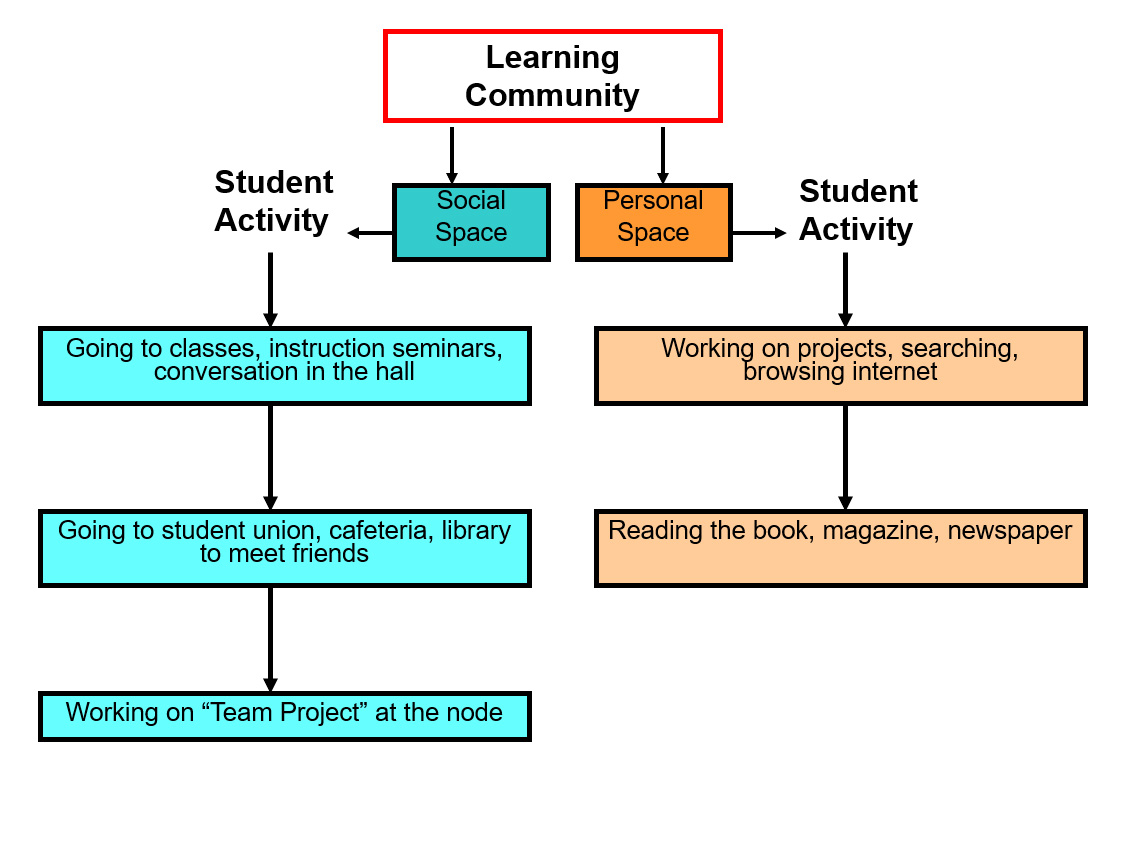
The groundwork for sound digital library development follows the same logic as the think, make, share architecture of library service. Users arrive with a question, an assignment, or a research challenge. The first task is thinking, which requires orientation, language, context, and sources. The second task is making, which requires tools, production capacity, and scholarly resources. The third is sharing, which requires access, publishing channels, and instructional support. A digital library service plan that maps to those three cognitive stages will be used. One that maps only to license agreements will not.
Why Platform-First Planning Produces Collections Nobody Uses
A Planning Sequence Problem
The pattern is familiar in institutions of every size. A committee is formed. Vendor representatives are invited to demonstrate their products. A shortlist is drawn up. A license is signed. The digital library launches. Faculty receive an announcement email. Students see a banner on the library website. And then, six months later, usage data reveals that most of what was licensed is going unused. The institution does not have a technology problem. It has a planning sequence problem.
When platform selection precedes inquiry, the institution builds a collection to fit a tool rather than a tool to serve a community that has actually been understood. Research in service design for libraries makes clear that libraries tend to develop each service in isolation from the others, with little user input prior to implementation. The result is a set of parallel silos that do not form a coherent research environment. Researchers encounter a landscape of unfamiliar platforms and return to whatever resources they relied on before.
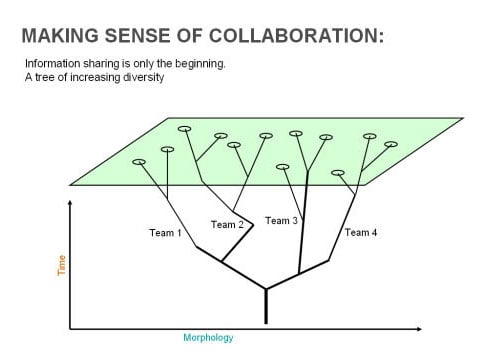
The dialogue method offers a corrective. Dialogue, as developed by Glenna Gerard and Linda Ellinor through their work at The Dialogue Group and applied to organizational planning by P. Holman and Tom Devane, is not debate, and it is not discussion. Debate produces a winner. Discussion produces a decision. Dialogue produces understanding, and understanding is the only reliable foundation for a digital library service plan that will last. When library planners bring structured dialogue into the planning process, hidden assumptions surface. Faculty members discover that their assumptions about student research behavior were incorrect. Librarians discover that entire departments rely on sources the library never knew existed. These revelations cannot come from a vendor demonstration. They come only from disciplined listening.
A related problem is the exclusion of general-purpose research tools from the planning conversation. Researchers at every level already use AI-assisted tools, including conversational research assistants, AI-powered literature synthesis platforms, and open-reference portals, as part of their daily workflow. A digital library plan that leaves those tools out of the inventory describes the institution as it was two years ago, not as it is today. The planning question is not whether these tools belong in the research environment. They are already there. The question is how the library will support their responsible use, including citation transparency and the preservation of scholarly judgment.
Digital Literacy as a Core Service in Digital Library Planning

Instruction Built In, Not Bolted On
A 2024 annotated bibliography of library instruction and information literacy literature, published in Reference Services Review and covering 374 English-language sources from 2023, confirms that the field has expanded well beyond basic database navigation and password access. The emergence of AI tools in academic research has compelled a rapid expansion of traditional information literacy frameworks to incorporate what researchers now call AI literacy: the capacity to understand how AI systems work, critically evaluate AI-generated outputs, and apply AI tools responsibly and ethically in academic and professional contexts. These are not peripheral concerns. They are the intellectual core of what a digital library is for.
Yet most digital literacy programs at academic institutions are designed after the digital library itself, as instructional add-ons attached to existing collections rather than integrated service components. This sequencing produces the same mismatch as platform-first planning. When instruction is designed around what was licensed rather than around what researchers need to learn, it teaches tools rather than judgment. A researcher who can run a database search but cannot evaluate whether the results are relevant, credible, or appropriate for the task at hand has not been served by the library. A researcher who can frame a question, distinguish primary evidence from synthesized summary, and cite transparently when AI tools contribute to their work has been served.
The modern research environment demands that librarians act not only as stewards of access but as instructors in method. When AI-assisted tools enter the research process, as they already have, the librarian's instructional role becomes more important, not less. The strength of the tool makes the need for judgment greater, not smaller. As the think, make, share framework makes clear, every stage of the research process — from initial inquiry through production to sharing — requires the researcher to exercise professional judgment that no tool can supply. A digital library service plan that includes explicit instruction in source evaluation, citation transparency, and the relationship between AI synthesis and primary evidence is building intellectual infrastructure. One that stops at providing database access is building a shelf.
Institutions that want to see what a curated reference environment looks like when organized around actual researcher need can visit Reference Library Place. The portal is organized by subject domain and research type, structured to serve educators, government agencies, and organizational researchers alongside students. It demonstrates how electronic resource management and curated access — designed with the researcher's workflow in mind — operates as a living service rather than a static list of subscriptions.
Coverage Gaps, Hidden Blind Spots, and What the Inventory Reveals
Surfacing What the Library Does Not Know
A user-centered information needs assessment, properly designed and triangulated across surveys, structured interviews, and focus group sessions, provides complementary perspectives that strengthen the credibility of planning findings. The goal is not to confirm what the library already knows. It is to surface what the library does not know. A formal assessment conducted for a large medical center library serving approximately 5,900 physicians, clinicians, and nonclinical staff revealed patterns in information-seeking behavior the library had not previously documented, including the high value clinicians placed on just-in-time information at the point of care, and the degree to which nonusers were entirely unaware that library services existed. Libraries across every sector show similar patterns when the inquiry is structured carefully.
Coverage gaps appear in four consistent categories. Access challenges include the inability to reach paywalled content and the absence of international perspectives, which is partly a licensing matter and partly a reflection of how collections were originally scoped. Evaluation challenges include difficulty assessing whether archival sources are relevant and appropriate for a specific research question, and difficulty identifying credible journalism and media sources. These are judgment problems, not access problems, and no license agreement resolves them. Navigation challenges arise when collections require specialist search knowledge to use, rendering them effectively closed to most researchers. Skills challenges include the need to develop source-evaluation competence and to use AI tools with citation transparency. Each category points to a specific service response.
One blind spot appears in almost every planning process we have encountered: audio and broadcast material. Many institutions treat historical radio news, broadcast transcripts, and podcast archives as marginal resources to be added after the text-based core is finished. For disciplines that study media, politics, communication, history, and public discourse, audio is often primary evidence, not supplementary material. An inventory instrument that asks about audio explicitly makes this need visible in the planning record. One that omits it produces a service plan that leaves an entire evidentiary domain unserved.
International source coverage presents the same problem at a different scale. A digital library that holds only domestic journalism and scholarship narrows the intellectual horizon of every researcher who uses it. For institutions whose curricula address global affairs, comparative policy, international business, or cross-cultural communication, international media monitoring and analysis is not a specialty acquisition. It is a core service. Measuring coverage by source type independently, rather than by aggregate collection size, is the only planning method that surfaces these gaps before the budget is committed and the contracts are signed.
The Five-Step Digital Library Planning Framework

Framework in Detail
Step 1 — Establish the Inventory of Actual Use
Before deciding what to build, the institution must know what it already relies on. The key question is not what the library licenses. It is what researchers, faculty, and students actually use. The inventory should cover the full range of resources in play: news and journalism databases such as Nexis and Factiva; audio archives and broadcast collections; primary source archives; scholarly databases and journal collections such as JSTOR and EBSCOhost; general-purpose AI research tools including conversational assistants and literature synthesis platforms; and library-enabled discovery tools such as Scite and Consensus. Leave space in the instrument for "other" and "none of these." Unexpected answers often matter most. When a department relies on a resource the library did not know about, the plan has a gap. When a department uses nothing at all, the plan has an opportunity.
Step 2 — Assess Where Research Actually Breaks Down
An inventory shows what exists. This step shows what fails. Ask users directly where their research breaks down. The common failure modes fall into four groups: access failures, including paywalled content and absent international sources; evaluation failures, including inability to assess source relevance or identify credible journalism and media sources; navigation failures, when complex database interfaces require specialist knowledge to use and effectively close the collection to the non-specialist; and skills failures, including difficulty developing source-evaluation competence and using AI tools with citation transparency. These four categories should appear as named sections in the planning instrument and should allow narrative response. The most diagnostic data often comes from open-ended answers, not from rating scales alone.
Step 3 — Rate Coverage by Source Type, Separately
Ask respondents to rate how well current resources support their work for each source type independently: written journalism and news analysis, historical broadcast material and radio archives, audio programs and podcasts, international media monitoring, primary source collections, and scholarly databases and journals. Keeping source types separate prevents one strong area from concealing a critical gap. An institution may be well served for scholarly literature and entirely unserved for broadcast archives. A single aggregate rating would bury that difference. Rating separately surfaces it, and surfacing it is the only way to address it before the service plan is finalized.
Step 4 — Convene Structured Dialogue Around the Findings
Survey responses are data, not understanding. Bring the results to a cross-section of stakeholders and use them as the starting point for structured inquiry rather than as a verdict. The guiding questions are open: Why do so many researchers turn to general AI tools before consulting scholarly databases? What does difficulty with archive relevance say about how assignments are structured? Why are international perspectives absent from the collection, and who decided its current scope? In dialogue, participants examine their assumptions before they defend them. A faculty member may assume students lack search skills. A librarian may assume faculty never assign archival work. Dialogue gives both assumptions room to be stated, tested, and revised. What emerges is a shared picture of the institution's research life — and that picture is the real foundation of the digital library service plan. The same process that shapes the plan also builds ownership of it.
Step 5 — Translate Shared Understanding Into a Digital Library Service Plan
With shared understanding in place, map each challenge category to a service response. Access challenges call for a licensing strategy with deliberate attention to international and underrepresented sources. Evaluation challenges call for curated pathways, contextual guidance, and source-assessment instruction embedded in the digital library environment. Navigation challenges call for discovery design that serves the non-specialist, including a well-organized reference portal as the visible face of the collection. Skills challenges call for explicit instruction in research method, including guidance on citation transparency when AI tools contribute to the research process. Coverage gaps identified in Step 3 set acquisition priorities. The inventory from Step 1 identifies what to keep, what to consolidate, and what to retire. The platform and the interface are selected last, to serve this plan — not to define it.
Putting It Into Practice
What to Do
The sequence below is not a checklist. It is a discipline of inquiry that must be followed in order, because each step depends on the understanding produced by the step before it. Institutions that skip steps, particularly steps two through four, do not save time. They spend it later correcting a plan that was built on incomplete ground. This framework has been used in academic, governmental, and specialized library engagements across five decades of consulting work at Aaron Cohen Associates.
Begin with a user needs assessment before any platform selection or vendor demonstration. The sequence is not arbitrary; it determines whether the resulting collection serves the institution or sits unused.
Include AI-assisted tools and general-purpose research resources in your planning inventory, because researchers are already using them whether the library endorses them or not.
Invite a cross-functional group of stakeholders into dialogue sessions: faculty, students, researchers, librarians, and administrators each see the collection from where they experience it, and each view is partial.
Design digital literacy instruction into the service plan from the beginning, not as an add-on after the collection is licensed. Rate coverage by source type separately so that one strong area cannot conceal a critical gap in audio, broadcast, or international sources. Use a curated reference portal to give the digital library a visible, organized face that reflects genuine researcher needs and that any user can navigate without specialist training.
What to Avoid

Common Errors That Undermine the Plan
Beginning the planning process with a vendor demonstration or a shortlist of platforms before conducting structured user research is the single most reliable path to a collection that earns its license fees only on paper. Assuming that usage statistics from licensed resources tell the whole story of researcher behavior compounds the problem. Non-use is data too, and it is often the most important data. Treating audio, broadcast, and international sources as afterthoughts to be added once the text-based core is finished leaves entire evidentiary domains unserved.
Conducting a single planning survey and treating the results as a finished plan rather than the starting point for dialogue collapses the most generative phase of the process. Excluding AI tools from the planning conversation on the grounds that the library has not formally endorsed them describes an institution that is planning for 2019 while its researchers work in 2025. Letting high-level administrators make collection decisions without structured input from librarians and the researchers who will use the collection replaces institutional knowledge with institutional rank.
Questions to Ask
The Diagnostic Inquiry That Shapes a Defensible Plan
What resources do our researchers actually use, as distinct from what we license on their behalf? Where does the research process break down most reliably in this institution, and what does that failure reveal about our collection and our instruction? Which source types are absent or inadequate in the current collection, and which disciplines or programs are most affected by those gaps?
How will the digital library support responsible use of AI-assisted research tools, including explicit instruction in citation transparency? What does digital literacy mean at this institution, and how will instruction be designed into the service plan from the outset rather than appended to it afterward? Who was not in the room when the last collection decision was made, and what would they have said if they had been included?
These six questions, taken together, constitute the opening act of a sound digital library planning process. They are not rhetorical. Each one is designed to produce information that the institution does not already have, and that information is the raw material of a service plan that will be used. Contact us to begin the structured inquiry that your institution's digital library deserves.
Begin the ConversationRelated Reading
Continue the Inquiry
Every topic on this page connects to a broader body of planning practice developed through five decades of library consulting work. The pages below extend the framework directly.
The Digital Library Service Plan: Translating Dialogue Into Acquisitions, Discovery, and Instruction — the operational sequel to this framework, showing how shared understanding becomes a durable acquisition and instruction strategy.
Digital Literacy and the Academic Library: Designing for Judgment, Not Just Access — an extended treatment of what digital literacy instruction must accomplish in a research environment reshaped by AI-assisted tools.
Digital Library Development — frameworks, dialogue methods, and service planning sequences for institutions building or rebuilding a digital library from the ground up.
Reference Library Place: A Portal for Educators, Government, and Organizational Research — a working demonstration of what curated digital access, organized around actual researcher need, looks like in practice.
How quantitative evidence drawn from circulation patterns, enrollment trends, and collection use data is assembled into a brief that survives administrative scrutiny and bond campaign review.
The criteria that separate a firm with deep methodological grounding from a generalist advisor, and the questions every institution should ask before committing to a planning engagement.
Sources

Literature Informing This Framework
Conducting a User-Centered Information Needs Assessment: The Via Christi Libraries' Experience
Service Design: An Introduction to a Holistic Assessment Methodology of Library Services
Planning and Designing Academic Library Learning Spaces: Expert Perspectives of Architects, Librarians, and Library Consultants
The Services Portfolio of an Academic Library: A Framework