
The Digital Library
Service Plan
Turning Dialogue Into Decisions
Work With Us

TL;DR
What This Article Establishes
Survey findings become a defensible digital library service plan only when they pass through structured dialogue that surfaces stakeholder assumptions before any acquisition or platform decision is made. Licensing strategy, discovery design, and instructional support each address a distinct challenge category revealed by a well-constructed planning instrument. Library strategic plan consultants add their greatest value not by interpreting data for institutions but by helping institutions interpret data for themselves.
The five-step method described here converts raw survey data and facilitated dialogue into a prioritized, board-ready plan. No step can be skipped without compromising the integrity of what follows it. The sequence is the method.
A Spreadsheet Full of Findings and Two Meetings on the Calendar
When the Numbers Arrive Before the Plan
Consider the director of academic library services at a mid-sized regional university. She has just received the results of a 47-item stakeholder survey distributed to 320 faculty members, graduate students, and administrative staff. The response rate held at 61 percent. The findings are not what she expected.
The most-used research tools on campus are not the library's licensed databases. They are general-purpose AI assistants and open-web search. Only 29 percent of graduate respondents rate the library's coverage of international media as adequate. Three academic departments have never activated their remote access credentials. The historical broadcast archive the library licensed three years ago shows fewer than forty total usage sessions in its log. One tenured professor in the communications department, who served on the library advisory board, did not know that archive existed.
The director has numbers. She does not yet have a plan. The findings are sitting in a spreadsheet, and two scheduled meetings are coming up fast: one with the provost and one with the faculty senate. This is precisely the moment when library strategic plan consultants deliver their most essential work: not to interpret the numbers for the institution, but to create the conditions under which the institution interprets the numbers for itself.
The difference between those two roles is the difference between a plan that gets implemented and a plan that gets shelved.
Constructing planning instruments that capture actual use patterns—including AI tools and open-web research—rather than simply inventorying licensed holdings.
Convening cross-stakeholder working groups with the discipline to separate listening from defending, so that shared institutional understanding can emerge before decisions are locked in.
Mapping coverage gaps by source type—journalism archives, broadcast material, primary source collections, AI tools—and translating that map into a prioritized acquisition sequence.
Embedding information literacy and AI-use guidance into the curriculum as a designed service, not a corrective response deployed after problems surface in the research process.

The Gap Between Survey Findings and Institutional Understanding
Why Dashboards Are Not Plans
The academic library survey has become a standard instrument. Institutions deploy it, collect responses, and produce dashboards. What they rarely do is convert those dashboards into shared institutional understanding, which is the only foundation from which a durable service plan can be built.
The problem is structural. Faculty, students, graduate researchers, instructors, and administrators each experience the library from a different vantage point. A faculty member in the sciences sees a collection that serves her discipline reasonably well and assumes the same is true for the humanities. A graduate student in media studies has learned to work around the library because nobody showed him the broadcast archive. A department chair assumes students lack research skills; a librarian assumes faculty never assign archival work. Each assumption is stated with confidence, and none of them has been tested against evidence.
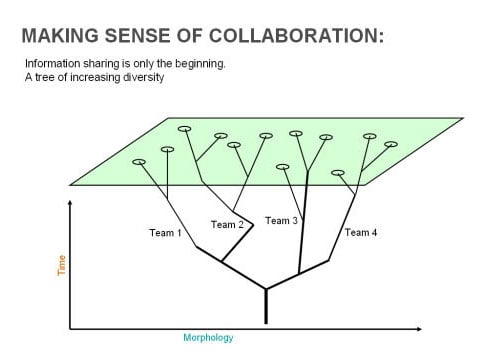
Research published in College and Research Libraries by Harland, Stewart, and Bruce found that library directors identified the diversity of stakeholder requirements as the most significant operational challenge they face. The same research documented that non-engagement produces a predictable outcome: stakeholders sit back and grumble about what they are not getting, while the library remains none the wiser. Survey data, on its own, does not close that gap. It identifies the shape of the problem. Dialogue reveals its causes.
The Ithaka S+R US Library Survey 2025, which drew on responses from 483 library deans and directors at four-year institutions, found that while nearly all leaders identify fostering student learning and supporting information literacy as core priorities, smaller shares express confidence in the library's actual effectiveness in those areas. The same survey found that only 31 percent of library leaders agree they are involved in key decision-making processes at the campus level. These two findings, read together, suggest a persistent legitimacy gap: the library holds the right priorities but lacks the institutional authority to act on them decisively. A well-constructed service plan, grounded in documented stakeholder evidence, is the instrument that closes that gap.
Library strategic plan consultants understand this dynamic because they have worked through it across dozens of institutions. The service plan is not a document produced after the dialogue. It is the product of the dialogue, written in a language that administrators, faculty, and board members can read and act on.
What the Evidence Tells Us



Three Pillars of the Digital Library Service Plan
Licensing, Discovery, and Instruction
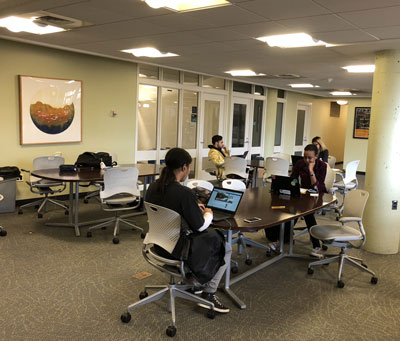
Once survey findings have been mapped against the four challenge categories identified in the planning instrument—namely access, evaluation and relevance, navigation, and skills and judgment—the service plan takes shape around three corresponding pillars. Each pillar addresses a distinct class of problem. Each demands a different kind of institutional response.
Licensing strategy begins with the inventory, not the vendor catalog. The planning instrument should capture what users actually rely on across the full range of resource types: scholarly databases, news and journalism archives, historical broadcast material, primary source collections, and the general-purpose AI research tools now embedded in everyday academic work. The last category requires deliberate inclusion. The Ithaka S+R 2025 survey found that library leaders anticipate increased demand for AI literacy instruction and research integrity safeguards, yet many institutions have not yet integrated AI into their library planning frameworks at all. A licensing strategy that ignores the tools researchers already use describes the institution as it was rather than as it is. Coverage gaps, identified by rating each source type independently rather than collapsing them into a single overall score, set the acquisition priorities. Rating each source type on its own scale prevents one strong collection area from masking a critical weakness elsewhere.
Discovery design addresses the navigation problem, which is among the most persistent obstacles in academic library use. A collection that only specialists can navigate is effectively closed to everyone else. The design of the discovery layer, including choices about interface structure, search entry points, guided pathways, and contextual help, determines whether a licensed resource gets used or sits idle. Discovery design is not a technology decision. It is a service decision that expresses the library's commitment to the non-specialist researcher.
Instructional support is the third pillar and the one most frequently treated as an afterthought. It is not. The ACRL Framework for Information Literacy for Higher Education organizes information literacy around threshold concepts rather than procedural checklists and explicitly provides a foundation for librarians and teaching faculty to design instruction, assignments, and curricula together. The framework recognizes that information literacy is not a fixed skill set but a set of dispositions researchers develop over time and across contexts. In the current environment, those dispositions must extend to the responsible use of AI tools: understanding what a language model generates versus what a cited source asserts, maintaining citation transparency, and preserving academic judgment throughout the research process. Instruction programs built after licenses are signed will always be reactive. Programs built as part of the service plan are strategic.
Sage Publishing's research on digital library development for university librarians reinforces this sequence, noting that embedding digital resources into the learning flow not only boosts discoverability but encourages the kind of sustained engagement that justifies ongoing investment. The same research emphasizes aligning acquisitions to course reading lists so that licensed resources connect directly to learning outcomes. That alignment cannot happen unless librarians and faculty have already talked about what courses require, which is precisely what the dialogue stage of the planning process produces.
Designing the interface structure, search entry points, and guided pathways that determine whether licensed resources are actually used by non-specialist researchers or remain invisible to everyone except subject librarians.
Building AI tool guidance into the instructional plan from the outset—distinguishing what a language model generates from what a cited source asserts—so that academic judgment is preserved throughout the research process.
Mapping licensed acquisitions to course reading lists and assignment structures so that every resource the library purchases connects directly to a documented learning outcome rather than a speculative departmental interest.
Pillar Principles at a Glance

What Each Pillar Requires
Rate each source type—journalism, broadcast, primary sources, and AI tools—on its own scale to prevent one strong area from hiding coverage gaps. A single aggregated score is a planning liability: it allows the institution to feel confident in areas where it should be alarmed.
Discovery layer decisions are service decisions, not technology decisions. Interface design determines who can actually use a collection. When a graduate student in media studies cannot find the broadcast archive that a full-time researcher navigates fluently, the discovery layer has failed its institutional mandate regardless of the technical quality of the underlying system.
The ACRL Framework positions instruction as a faculty-librarian collaboration built into the curriculum, not a standalone library program. Instruction delivered at the reference desk after a researcher has already made decisions is remediation. Instruction embedded in course design before assignments are written is strategy.
AI tool guidance must be part of the instructional plan before licenses are signed, not a corrective response to problems that emerge after. The institutions that will navigate the next decade of digital research well are those that treat AI as a resource to be planned around, not a disruption to be reacted to. The library as a thinking system integrates these tools deliberately, with documented guidance embedded in the curriculum from the outset.
Library Strategic Plan Consultants and the Architecture of Dialogue
What Dialogue Actually Means in a Planning Context
The word dialogue is used loosely in institutional settings to mean almost any form of conversation. In library planning, it has a specific and disciplined meaning, one developed through the work of Glenna Gerard and Linda Ellinor at The Dialogue Group and codified in P. Holman and Tom Devane's The Change Handbook. Dialogue, properly understood, is not debate, which seeks a winner, and it is not discussion, which seeks a decision. Dialogue seeks understanding. Its defining feature is the deliberate suspension of judgment long enough for genuine listening to occur.
For digital library planning, this distinction is consequential. When the director in our opening scenario brings her survey findings to a cross-stakeholder working group without first establishing dialogue ground rules, the meeting will produce a debate about which database to license next. Faculty will defend their disciplines. Administrators will raise budget constraints. The communications professor who did not know about the broadcast archive will feel defensive rather than curious. The findings will be argued over rather than understood.
Library strategic plan consultants structure the dialogue session differently. They bring the survey results to the room as starting questions, not as verdicts. Why do so many researchers use general-purpose AI tools before consulting licensed databases? What does the difficulty with archive navigation say about how assignments are currently designed? Why are international perspectives underrepresented, and who made the original scope decisions for the collection? These questions invite participants to examine their assumptions before they defend their positions. What emerges is a shared picture of the institution's research environment that no single stakeholder could have produced alone.
There is a practical benefit that most planning frameworks undercount. The same dialogue that shapes the service plan also generates ownership of it. Faculty who helped identify the gap in broadcast coverage will assign the new audio archive when it is licensed. Students whose navigation struggles were heard and acted on will return for instruction. The Ithaka S+R 2025 survey found that the ability to collaborate and the ability to manage change were the two competencies library leaders identify as most valuable in their current roles, cited by 48 percent and 47 percent of respondents respectively. Those are not technical skills. They are dialogue skills. Library strategic plan consultants apply them structurally, so that the planning process itself builds the institutional relationships the plan will depend on for its implementation.
The digital library planning framework developed through this firm's decades of practice rests on the same principle: a digital library built from stakeholder dialogue reflects what the institution actually needs. One built without it reflects a grocery list assembled by whoever spoke loudest.
Convening faculty, students, administrators, and librarians in a structured session where survey findings are treated as open questions rather than verdicts, with ground rules that require each participant to restate what they heard before adding their own perspective.
Identifying the unstated assumptions each stakeholder group carries into the room—about what the library provides, what researchers need, and what the institution can afford—and surfacing those assumptions before any resource or platform decision is made.
Producing a session record that the full stakeholder group can amend before it is finalized, creating an institutional document of shared understanding that carries more authority before an administration than any recommendation delivered from outside.
Dialogue: Four Things That Must Be True

The Conditions That Make Dialogue Work
Dialogue suspends judgment long enough for real listening; debate and discussion do not. Only dialogue produces the shared understanding a service plan requires. This is not a philosophical preference. It is a structural requirement: a plan built on positions defended rather than assumptions examined will face resistance at every implementation step because it reflects no one's shared understanding.
Bring survey findings to a dialogue session as open questions, not as conclusions awaiting ratification. The director who walks in and says "our broadcast archive is underused and we need to fix that" has already ended the conversation. The director who asks "what does forty usage sessions in three years tell us about how assignments are currently designed?" has opened the one worth having.
The 2025 Ithaka S+R survey found collaboration and change management—both fundamentally dialogue competencies—are the skills library leaders value most, cited by 48 percent and 47 percent of respondents respectively. These are plannable capacities. They are built through structured practice, not personality.
Dialogue generates ownership. Stakeholders who helped shape the plan will use the resources it describes and defend the investment before the board. This is not a secondary benefit. It is the mechanism by which a written plan becomes an operating reality. No amount of analytical rigor substitutes for the institutional will that ownership produces. For institutions ready to build that ownership deliberately, the services overview describes how this firm structures the process from first instrument to final prioritized plan.
The Five-Step Service Plan Translation Method
Library strategic plan consultants apply a consistent sequence to convert raw survey findings and dialogue sessions into a defensible, prioritized digital library service plan. Each step builds on the one before it, and none can be skipped without compromising the integrity of the result.
Before treating findings as evidence, examine what the instrument was designed to measure. Does it capture actual use, or only licensed holdings? Does it ask about AI tools alongside scholarly databases? Does it distinguish challenge types: access, evaluation, navigation, and skills? Does it allow for "other" and "none" responses? A survey that did not ask the right questions will produce findings that answer the wrong ones. Retrofit the instrument if necessary before the next planning cycle, and document explicitly what this cycle's data cannot tell you. This audit step is where more than half of institutional planning failures originate: institutions analyze findings from instruments that were never designed to surface the problems they are now trying to solve.
Organize every significant finding under one of four headings: access challenges including paywalled content, remote authentication gaps, and international coverage; evaluation and relevance challenges including source credibility, assignment alignment, and archive appropriateness; navigation challenges including search complexity, interface barriers, and non-specialist friction; and skills and judgment challenges including research method, AI tool use, and citation transparency. This mapping converts a list of complaints into a structured problem inventory. Each category will drive a corresponding service response in the plan. The director with forty broadcast archive sessions in three years has a navigation and awareness problem, not a licensing problem. The mapping reveals which solution category to reach for before any budget is committed.
Have respondents rate library support separately for written journalism, historical broadcast material, audio programmes and podcasts, international media, primary source collections, and AI research tools. Present these ratings side by side rather than aggregated. The pattern will reveal which source types are well served and which are invisible. Source types with low coverage ratings and high curriculum relevance become first-tier acquisition priorities. Source types with low coverage and low reported use become candidates for investigation: either the curriculum does not require them or researchers do not know they exist. Aggregating these into a single overall score is one of the most reliable ways to produce a confident dashboard that conceals a critical institutional gap.
Bring a cross-section of stakeholders together with the survey findings presented not as conclusions but as open questions. Use prompts such as: Why is this the case? What does this pattern assume? Who else should be in this conversation? Establish ground rules that separate listening from responding, and require each participant to restate what they heard before adding their own perspective. Record the session's insights in a shared document that the group can amend before it is finalized. That document becomes the institutional record of shared understanding, and it is more defensible in front of an administration than any recommendation delivered from outside. The facilitation structure described in Holman and Devane's work is not optional procedure; it is the mechanism that converts competing positions into shared institutional knowledge.
Draft the service plan in three sections corresponding to the three pillars: licensing strategy, discovery design, and instructional support. Under each pillar, cite the specific challenge findings and dialogue insights that justify each proposed action. Assign priority ratings based on the intersection of community need, curricular relevance, and coverage gap severity. Include a schedule for reviewing usage data and returning to dialogue at a defined interval, so that the plan is treated as a living knowledge base framework rather than a fixed document with a shelf life. A plan reviewed annually against actual usage data, with structured dialogue at each renewal cycle, remains aligned with what the institution actually needs. One filed after adoption describes what the institution needed the year it was written.
Begin Your Planning EngagementPutting It Into Practice
What to Do
Rate each source type on its own scale in the planning survey to prevent strong areas from masking critical gaps elsewhere. The finding that reveals a coverage crisis in broadcast archives cannot surface if broadcast archives are averaged into a single "collections quality" score dominated by a strong STEM database portfolio.
Include general-purpose AI research tools in the resource inventory alongside licensed databases. They are already part of the research environment whether the library endorses them or not. Excluding them from the planning instrument produces a service plan that describes a research environment that no longer exists.
Build the dialogue session before the platform decision. Understanding must precede acquisition. A licensing decision made before the dialogue session has occurred is a guess dressed up as strategy.
Use the dialogue session's shared record as the primary evidence base for the service plan's recommendations. This is what gives the plan institutional authority: it reflects what the institution's own stakeholders said and agreed to, not what a consultant recommended from outside the room.
Revisit the dialogue process on a defined schedule, annually or at each major renewal cycle, to keep the plan aligned with actual community use. The institution that returns to structured dialogue every year builds compounding institutional intelligence. The one that treats the plan as a completed document loses alignment with its community within eighteen months.
Embed discovery support and instructional guidance as plan deliverables from the outset, not as supplementary programs added after licensing is complete. Discovery and instruction that are designed alongside acquisitions integrate naturally into the research workflow. Those added afterward are always fighting for attention against established habits.
Connect the service plan to a structured reference portal as a practical discovery scaffold for educators, researchers, and organizational users. The portal layer translates the library's licensing investments into a navigable research environment that non-specialist researchers can enter without prior training.
Establishing the structured stakeholder dialogue before any platform or vendor selection is initiated, so that every acquisition decision is grounded in documented institutional need rather than vendor opportunity or administrative assumption.
Building the return to structured dialogue into the service plan itself, at the annual renewal cycle and at each major usage review, so that the plan remains a living framework rather than a dated document the institution has outgrown.

What to Avoid and What to Ask
Common Planning Errors That Undermine Service Plans
Starting the planning process with a platform or vendor selection. Technology decisions made before needs are understood produce misaligned collections and wasted license expenditure. The vendor who arrives with a compelling demo before the institution has mapped its coverage gaps will always find a reason why their product fills those gaps.
Treating survey findings as a verdict. Findings are the beginning of inquiry, not the end of it. The 29 percent adequacy rating for international media coverage is a question to be investigated, not a purchase order to be written.
Aggregating source-type coverage ratings into a single overall score. That single number will bury the gaps the plan is designed to address. It will also produce the false confidence that precedes the most expensive planning mistakes.
Allowing the most vocal stakeholder voices to substitute for a representative evidence base. Well-facilitated dialogue counteracts this tendency; unstructured meetings amplify it. The tenured professor who attends every committee meeting is not a sample.
Building instruction programs as a corrective response after researchers begin using AI tools improperly. Instructional support must be designed as part of the service plan from the start. Reactive instruction arrives after habits have formed and credibility with the faculty senate has already been spent.
Skipping the dialogue stage when time is short. A plan built on unexamined survey data will face resistance at implementation because it reflects nobody's shared understanding. The time saved by skipping dialogue is recovered in full at the implementation stage, with interest.
Questions That Drive the Inquiry
What do users actually use for research, as opposed to what the library has licensed? Where does the research process break down most frequently, and for which user groups specifically? Which source types are absent from or underrepresented in the library's current coverage ratings? Who was not in the room during the dialogue session, and what assumptions did that absence leave unexamined?
Does the discovery layer serve a graduate student in media studies as effectively as it serves a tenured researcher in the sciences? What instruction does the library currently offer on the responsible use of AI tools in the research process, and at what point in the curriculum does it occur? How will the library measure whether the service plan is working, and when will it next return to structured dialogue with stakeholders?
These are not rhetorical questions. Each one, answered with documented evidence from a well-structured survey and a facilitated dialogue session, becomes a paragraph in the service plan that an administrator, a trustee, or a faculty senate committee can read and act on. That is the standard of defensibility that a plan must meet: not whether it is analytically sophisticated, but whether the institution's own stakeholders recognize their experience in it and trust the recommendations it draws from that experience.
Related Reading
Continue the Inquiry

Pages That Develop This Framework Further
Building a Digital Library From Scratch: Start With Questions, Not Platforms — The companion page to this article: the foundational framework for institutions that have not yet built a digital library and must decide where to start before any survey instrument is deployed.
Digital Literacy and the Academic Library: Designing for Judgment, Not Just Access — The instructional pillar developed in depth: how the ACRL Framework translates into curriculum-integrated information literacy that extends to AI tool use and citation transparency.
Reference Library Place: A Portal for Educators, Government, and Organizational Research — A working example of structured discovery design: how a reference portal can serve as the practical scaffold that connects licensed resources to the researchers who need them.
The Library as a Thinking System: AI, Creativity, and Future Service — The broader institutional argument: how libraries that integrate AI deliberately, with documented guidance and service design, outperform those that react to it after the fact.
Library Consulting and Strategic Planning for Modern Learning Ecosystems — The strategic planning context in which a digital library service plan sits: how space, service, and digital stewardship are planned together rather than sequentially.
How Library Consultants Use Bibliometrics and Community Data to Defend a Space Program — The quantitative complement to dialogue: how usage data, bibliometric analysis, and community surveys are assembled into an evidence base that holds up before a board.
Sources

Research and Literature Cited
US Library Survey 2025: Under Pressure — Ithaka S+R
Framework for Information Literacy for Higher Education — Association of College and Research Libraries
Leading the Academic Library in Strategic Engagement with Stakeholders: A Constructivist Grounded Theory — College and Research Libraries
Building Effective Digital Library Resources: Strategies for University Librarians — Sage Publishing Asia Pacific Insights