
Digital Literacy
and the
Academic Library
Talk to a Consultant

Designing for Judgment, Not Just Access
The Central Challenge
How a digital library moves beyond licensing content to actively building the source-evaluation and citation-transparency skills that researchers need in an environment where general AI tools are already in daily use. Access without judgment is not literacy. The ACRL Framework's threshold concepts give librarians a principled vocabulary for redesigning instruction around source evaluation and citation transparency. A well-designed digital literacy library builds research judgment into every pathway, not as an add-on program but as the organizing logic of the whole service.
Core Capabilities
What This Work Demands
Redesigning a digital library as a judgment environment requires a layered set of institutional capabilities. These are not optional enhancements; they are the structural conditions under which information literacy instruction can actually change researcher behavior. Each capability below reflects work we have undertaken across academic, public, law, and specialized library installations over five decades of practice.
Embedding evaluation prompts into the discovery interface so every research pathway requires the researcher to consider source type, credibility, and origin — not as an afterthought but as the first move.
Building attribution discipline into every assignment consultation the library supports, before work is submitted rather than after, so the scholarly record remains coherent and traceable across research generations.
Positioning AI tool guidance alongside database guidance in the reference environment, treating AI and scholarship as parts of one research process rather than as competing or incompatible workflows.
Mapping identified judgment failures to specific instructional responses — verification exercises, bias analysis, comparative reading of AI-generated and peer-reviewed sources — built into the full instruction program rather than offered only as optional workshops.

The Statistics No One Asked For

When the Numbers Tell a Different Story
Imagine a library director reviewing usage analytics at the start of a planning cycle. Fifteen database subscriptions renewed automatically for three years. The discovery layer shows steady traffic. The numbers look stable. Then a faculty survey arrives, and it tells a different story.
The survey data show that most students arrive at research with an AI-generated outline already in hand. ChatGPT, Gemini, and Microsoft Copilot appear in nearly every student workflow description, almost always before any database login. A student focus group that follows makes the picture sharper: students find AI outputs fluent, confident, and immediately usable. They do not know how to verify what the tool produced. They are not sure whether the sources it named actually exist. No one has asked them to disclose its role in their work, and their syllabi are silent on the question.
The director now faces a choice that many institutions postpone. The library can continue treating itself as a content delivery system, renewing licenses and monitoring download counts, or it can redesign its services as an environment that builds research judgment. That choice determines whether the digital literacy library remains central to academic work or gradually becomes a background service that researchers bypass without particular regret.
When Access Outpaces Understanding
The Core Digital Literacy Library Challenge
The phrase digital literacy library appears frequently in planning conversations, but its practical meaning varies widely. Some institutions treat digital literacy as a set of technical competencies: how to log in, how to navigate a database, how to export a citation. These competencies matter, but they describe the beginning of research skill, not its center. The harder work is evaluating what has been found, tracing where it came from, understanding what it cannot say, and attributing it honestly. That work belongs to the library just as much as the license agreement does.
The ACRL Framework for Information Literacy for Higher Education defines information literacy as a set of skills that work together to help researchers critically acquire new information, understand how information is made, use what they know to make new knowledge, and ethically participate in learning communities. The Framework introduces threshold concepts: foundational ideas whose mastery unlocks new perspectives on academic inquiry. These concepts have always required active instruction. Generative AI makes that instruction more urgent, not less.
Research published in College and Research Libraries finds that generative AI outputs are polished but opaque, offering little to no citations, a hard-to-follow evidence trail, and no clear sense of the voices and data that shaped them. For students, this creates what scholars describe as an illusion of authority. The output reads like scholarship. Without explicit guidance, students can accept AI-generated content at face value, unknowingly reproduce its biases, or present work shaped by AI without any acknowledgment.
This is not primarily a cheating problem. It is a judgment problem. Libraries that respond to AI with access restrictions are addressing a symptom. Libraries that respond with instruction in source evaluation, attribution practice, and citation transparency are addressing the condition itself. The two responses produce different institutions, and over time they produce different researchers.
AI-generated text has no author, no peer review, and no traceable process of intellectual construction. The library's instruction program must make this distinction plain at every point of contact with researchers.
The ACRL Framework's threshold concept of Authority Is Constructed and Contextual is now the most practically challenged concept in daily research instruction. AI displaces the question of authorship entirely.
Students who cannot evaluate AI outputs are not digitally literate regardless of how many databases their institution licenses. Access restrictions on AI tools defer the instructional work without resolving it.
The Transparency Gap
What Generative AI Hides From Academic Researchers
The ACRL Framework's threshold concepts were formalized in 2015, before generative AI became a daily instrument of academic research. Each concept now operates under new pressure. Authority Is Constructed and Contextual requires students to ask who created an information source and under what circumstances. Generative AI produces text that resembles authority without the construction that makes authority accountable. There is no author whose credentials can be examined, no editorial process whose rigor can be assessed, no institutional affiliation that places the work in an intellectual tradition.
The Framework's concept of Scholarship as Conversation is the one most directly concerned with citation transparency. Academic knowledge accumulates through attribution. Each paper acknowledges its debts to prior work, and that chain of acknowledgment is what makes the scholarly record coherent and usable. The phrase standing on the shoulders of giants captures the idea precisely: acknowledging prior work is not an act of courtesy but the mechanism by which knowledge advances from one generation of inquiry to the next. When a student builds a paper on AI-generated text without disclosing that use or tracing the AI's claims to their actual sources, that chain is severed.
Research published in peer-reviewed library literature finds that libraries can play a prominent role in navigating the AI era by developing new instruction capabilities, providing staff training, and organizing workshops that build students' capacity to critically evaluate AI-generated content. The same literature notes that equipping instructors and students alike with information literacy skills enables more informed critical evaluation of AI-produced material, and that librarians are uniquely positioned for this work because source evaluation, citation practice, and attribution have been central to library instruction for decades.
What is new is the point in the research cycle where the judgment failure occurs. AI tools are typically used before the library search begins, which means the library must move its instruction earlier: into orientation programs, into faculty conversations about assignment design, and into the discovery interface itself. Waiting for the researcher to arrive at the reference desk or attend a database workshop is, in most cases, waiting too long.
ACRL Threshold Concepts Under Pressure


Authority Is Constructed and Contextual
AI outputs have no author, no peer review, and no traceable process of intellectual construction. This threshold concept, which has always required active instruction, now confronts a daily counterexample that students find more convenient than any database the library licenses.
Information Has Value
When research is built on AI-generated text without disclosure, the scholarly record cannot accurately account for the intellectual work that actually contributed. Attribution is not a formality; it is the mechanism by which the value of intellectual labor is recognized and built upon.
Research as Inquiry
AI tools can generate plausible research questions but cannot supply the researcher's own judgment about what matters in a specific context. The library's instruction must protect and develop that irreplaceable faculty of personal intellectual inquiry.
Scholarship as Conversation
Citation transparency is the mechanism by which individual research joins the larger scholarly record. Opaque AI use severs that connection at the point where it is most consequential — when a student's work enters the shared intellectual commons of the discipline.
Designing the Digital Library as a Judgment Architecture
From Content Delivery to Judgment Environment
The digital library planning framework developed through our firm's work identifies four challenge categories that emerge from honest user surveys: access, evaluation and relevance, navigation, and skills and judgment. The last category explicitly names supporting students in developing research and source-evaluation skills and using library research tools while preserving academic judgment and citation transparency as distinct instructional challenges. This framing matters. It treats AI tools not as violations of research protocol but as research tools that require the same intellectual discipline any other tool requires. The digital library service plan translates these challenges into a program architecture.
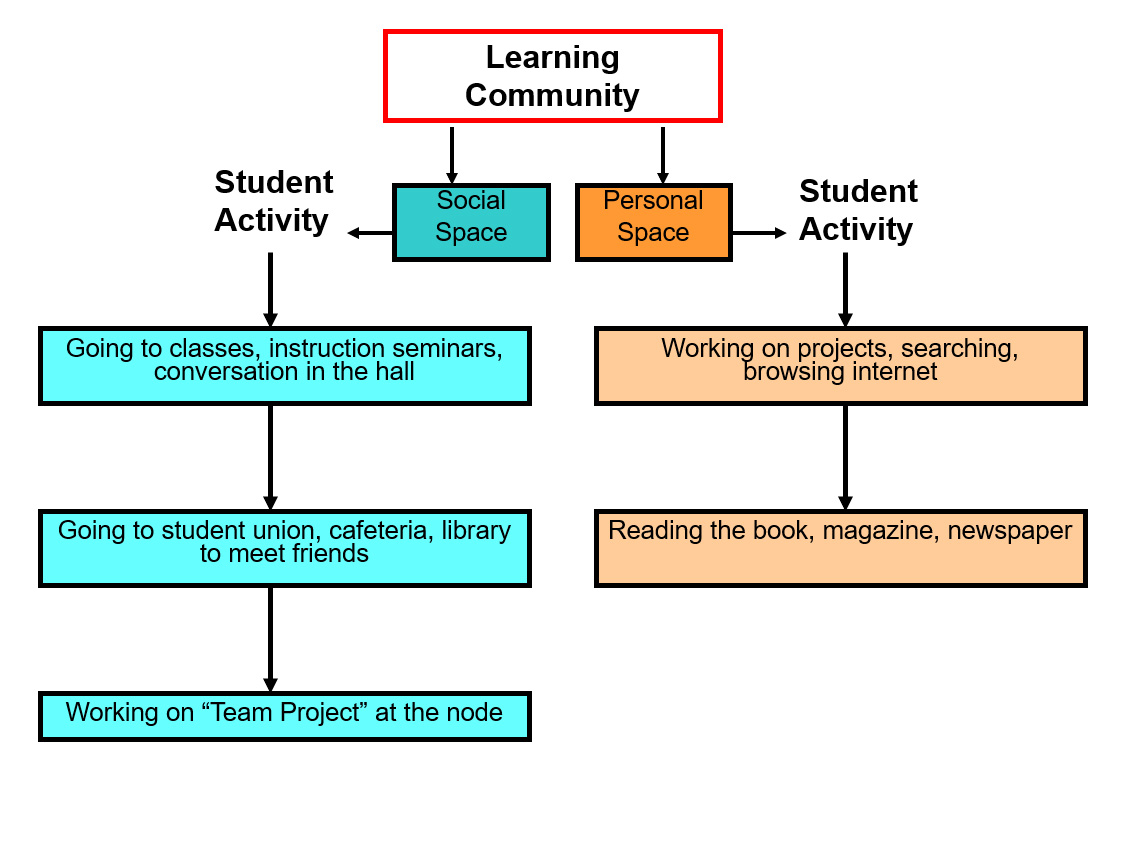
Designing a digital literacy library environment for judgment means more than adding a workshop to the annual schedule. It means building evaluation prompts into the discovery interface so that every pathway encourages the researcher to consider source type, credibility, and origin. It means creating curated pathways that move researchers from AI-assisted orientation to verified scholarly sources, treating those two activities as parts of one research process rather than as competing workflows. And it means positioning the reference librarian not only as a resource guide but as a judgment coach: someone who can help a researcher understand what an AI output is and is not claiming, and what verification work remains to be done.
Our firm's think-make-share framework gives library technology a governing logic. The thinking phase of research requires orientation, context, source language, and a method of inquiry. AI tools can accelerate orientation, but they cannot substitute for the researcher's formation of a question that is genuinely their own. The making phase requires the move from inquiry to artifact, with all the documentation that makes the artifact a contribution to knowledge rather than a confident-sounding rearrangement of training data. The sharing phase requires that the finished work be legible to the scholarly community, which means traceable citations and transparent acknowledgment of every tool used in its production.
The reference portal as a designed environment sits at the center of this architecture. A well-built portal does not simply list databases; it models good attribution practice, distinguishes between source types, and places research tools, including AI-assisted ones, in the context of the broader research process. The Reference Library Place portal, developed as a launching point for digital library services supporting educators, government users, and organizational researchers, demonstrates what a principled reference environment looks like: organized by subject, contextualized with editorial care, and built to support the full arc of a research inquiry from first question to final citation.
Embed source-type distinctions into the discovery interface itself, not only in standalone instruction sessions that most researchers will not attend. Every search pathway is an instructional moment.
Create curated pathways that connect AI-assisted research orientation to verified scholarly sources as parts of a single workflow rather than as competing alternatives. The two belong together, not in separate silos.
Build disclosure and citation transparency practice into every assignment consultation the library supports, before the assignment is submitted rather than after. The library's most consequential instructional moment is the conversation with faculty at course design time.
Design the reference environment to demonstrate by its own organization and attribution what disciplined research practice actually looks like. The portal is not a byproduct of the service plan; it is the service plan made visible.
The Five-Step Judgment-Centered Digital Literacy Audit
Planning a digital literacy library program that builds research judgment requires a structured assessment of current behavior, existing instruction, and the reference environment. These five steps extend the planning framework described in Building a Digital Library From Scratch with specific attention to the judgment challenges introduced by generative AI tools in daily academic use.
Survey what researchers actually use, not what the library licenses. Include AI tools alongside scholarly databases, news archives, and primary source collections in the survey instrument. The planning question is not whether AI belongs in the research environment; it is already there. The question is what judgment support exists around its use, and where that support is absent entirely.
Identify specifically where research breaks down. Distinguish between access failures, navigation failures, and judgment failures. Access failures mean the content is unavailable. Navigation failures mean the researcher cannot find the content. Judgment failures mean the researcher cannot evaluate what has been found or cannot attribute it honestly. Digital literacy instruction addresses the third category. No license agreement does.
Review the citation and attribution requirements actually in force across the courses the library supports. Identify where AI tools are in active use and where disclosure requirements are absent, unclear, or inconsistently applied. This is not primarily a disciplinary problem for the academic integrity office; it is an instructional opportunity for the library to establish itself as the authoritative campus voice on research transparency.
Map each identified judgment failure to a specific instructional response. Verification exercises, bias analysis, comparative reading of AI-generated and peer-reviewed sources on the same topic, and disclosure statement drafting are all established techniques with documented precedents in library instruction literature. Build these into the full instruction program rather than offering them only as optional workshops.
Audit the library's reference portal to ensure that it models good attribution, distinguishes source types clearly, integrates AI tool guidance alongside database guidance, and positions each resource in its proper research context. The reference environment is not a byproduct of the service plan; it is an argument about what good research practice looks like, and it teaches that argument every time a researcher uses it.
Putting It Into Practice

What to Do
Embed source-evaluation checkpoints into the discovery interface and every research tutorial, not only in standalone workshops that most researchers will never attend. Position AI tool guidance alongside database guidance in the reference environment rather than in a separate section that implies AI and scholarship belong to different workflows. Engage faculty in assignment design conversations before the semester begins, so citation transparency requirements are built into the assignment rather than enforced after submission. Survey research behavior annually with AI tool use included as a standard category alongside licensed database use, so the planning picture reflects the institution as it actually is. Use verification exercises, bias analysis activities, and disclosure statement drafting as the core of digital literacy instruction, not supplementary add-ons attached to database orientation sessions. Review the digital library service plan annually through the judgment lens: not only what content is available but whether the instruction program equips researchers to evaluate and attribute anything they find.

What to Avoid
Do not treat AI bans as a digital literacy strategy; they defer the instructional work without resolving the judgment problem, and they end the moment the researcher leaves the institution. Do not use database access metrics as the primary measure of digital literacy program success; usage counts do not measure whether researchers can evaluate what they found. Do not design instruction only for the first encounter with a research tool; the judgment failures that matter most occur in the middle of the research process, when the researcher is interpreting and attributing rather than searching. Do not separate AI literacy from information literacy in program design; they draw on the same threshold concepts and require the same intellectual habits, and treating them separately doubles the instructional burden unnecessarily. Do not assume that researchers who can locate information can evaluate it; these are distinct skills that require distinct instruction at every level of academic experience, from first-year undergraduates to doctoral candidates.
Questions to Ask
Diagnostic Questions for Library Directors and Planners
The following questions are drawn directly from the five-step audit framework. They are not rhetorical. Each one has a specific answer that can be found by looking at usage data, instruction records, portal design, and faculty conversations. If the answer to any of these questions is unknown, that is itself a planning finding that warrants immediate attention.
What do your students do after they receive an AI-generated response, and does your library's instruction program reach them at that point in their research process? This is the judgment gap. If your instruction stops at the database orientation session, it stops before the problem starts.
How does your discovery interface distinguish between source types, and does it help the researcher understand what that distinction means for their specific research task? A list of databases is not a judgment environment. A designed interface that contextualizes source type is.
Where does citation transparency appear in your library's instruction program, and is it addressed in the context of AI tools or only in the context of traditional academic sources? A transparency practice that does not account for AI tools is already incomplete.
Has your library surveyed which AI tools are in active use on your campus, and does your digital library service plan account for them as part of the research environment rather than as a threat to it? If not, the service plan describes a research environment that no longer exists.
Does your reference portal model good attribution practice by its own design, or does it list resources without contextual guidance about source type, purpose, and appropriate use? The portal either teaches or it does not. There is no neutral position.

Related Reading
Further Resources in This Collection
The pages below each address a distinct aspect of the planning problem described in this article. Together they form a planning sequence that moves from initial assessment through service design to portal implementation. Each one is grounded in the same methodological framework developed across fifty years of library planning practice.
Building a Digital Library From Scratch: Start With Questions, Not Platforms — the foundational planning framework for institutions beginning or restarting a digital library program.
The Digital Library Service Plan: Translating Dialogue Into Acquisitions, Discovery, and Instruction — how user dialogue becomes a structured, defensible program architecture.
The Library as a Thinking System: AI, Creativity, and Future Service — the think-make-share framework applied to AI integration in library service design.
Reference Library Place: A Portal for Educators, Government, and Organizational Research — a working demonstration of the judgment-architecture principles described in this article.
Sources

Literature and Frameworks Referenced
The analysis in this article draws on the following published sources. Citations are provided for verification and further reading. No outside links are included; all sources are listed as plain text.
Framework for Information Literacy for Higher Education — American Library Association, Association of College and Research Libraries
Invisible Sources: Transparency and Attribution as Foundations of AI Literacy Instruction
Can AI Become an Information Literacy Ally? A Survey of Library Instructor Perspectives on ChatGPT — College and Research Libraries
AI Literacy Is Information Literacy: One Academic Library's Plan for AI Instruction — Information Matters
Reference Library Place: A Daily Almanac for the Curious