
Library
Consulting
Firms

Start a Conversation
Academic library interior showing collaborative and research spaces

TL;DR

Library consultant reviewing planning documents with institutional stakeholders

What you need to know before signing

Not every library consulting firm brings the same depth: the difference between methodological expertise and generalist advisory work determines whether your engagement produces a defensible plan or a recycled template.

Genuine expertise reveals itself in observable signals: a named diagnostic method, sector-specific case histories, and the capacity to integrate digital library development with physical space and service planning.

Use a structured five-criterion evaluation protocol before signing: probe a firm's methods, review comparable deliverables, and test whether the firm can connect digital literacy outcomes and electronic resource management to a coherent service plan.

Four Proposals, One Difficult Decision

When every proposal looks the same

Consider a director at a mid-sized regional university who has just received a charge from her provost: produce a plan that renovates the main library, extends its digital collection infrastructure, and positions the institution's research services for the next two decades. She issues a request for proposals and, six weeks later, sits with four submissions from library consulting firms on her desk. Each is well-formatted. Each cites the ACRL Framework for Information Literacy. Each promises stakeholder engagement, needs assessment, and a final program document. Each firm's biography lists impressive institutional names.

She calls a colleague who completed a similar process at a comparable institution. The colleague's advice is direct: proposals all look the same because firms write them to win, not to reveal. What the director needs to examine is what lies underneath the proposal narrative: the method the firm will use to understand her library before it recommends anything, the kind of document it will produce at the end, and whether it has genuine experience guiding institutions through digital library development as well as physical renovation.

This scenario replays itself across academic, public, and special library sectors every year. The proposal document is not a reliable signal of expertise. What separates library consulting firms that deliver lasting institutional value from those that produce polished but generic work is not how they write but how they think — and testing that distinction requires a structured evaluation process before the engagement begins.

Methodological Depth

A named, repeatable diagnostic method distinguishes evidence-based practice from accumulated professional opinion. Firms with structured instruments produce programs that hold up under board, bond counsel, and provost scrutiny.

Sector-Specific Experience

Deep familiarity with academic, public, law, medical, and special library environments means that a consultant reads collection data, behavioral patterns, and workflow adjacencies through the right professional lens from the first site visit.

Integrated Digital and Physical Planning

The institutions that benefit most from a consulting engagement are those whose firms treat electronic resource management, knowledge base architecture, and physical space programming as a single, unified service design question.

Institutional Advocacy Capacity

An independent professional voice carries weight in a boardroom or bond hearing that an internal memorandum cannot replicate. The best firms combine technical program authority with the communication standing to defend findings publicly when institutional decisions require it.
Library planning consultation showing space diagrams and digital resource mapping

Why Library Consulting Firms Are Not Interchangeable

Library stacks and reading room illustrating the range of physical planning challenges

The market is wider than it appears

The library consulting market encompasses a wide range of practitioners. Some are former directors or senior librarians who shifted into advisory work after long institutional careers. Some are facilities planning generalists who handle libraries alongside courthouses and corporate campuses. Some are technology firms that have extended their scope to include library services as one offering among many. And a small number are specialized firms that have spent decades developing and refining proprietary methods for diagnosing library performance, translating service requirements into architectural programs, managing electronic resource management strategies, and guiding digital library development as an integrated practice.

The difference among these categories is not visible in a proposal. It becomes visible during the engagement, by which point the contract is already signed and the institution is committed. ACRL and Core, in their joint guidance for academic library building design, identify the starting materials for any planning process: institution and library vision statements, strategic plans, campus master plans, needs assessments, and applicable standards. That list describes what any qualified practitioner should consult. It does not distinguish a firm that knows how to interpret those documents critically, challenge their assumptions, and translate them into specifications from one that simply knows how to cite them.

A Project Information Literacy study led by Alison Head examined 49 stakeholders involved in 22 academic library learning space projects at community colleges and universities in the United States and Canada between 2011 and 2016. Among its most significant findings: fewer than 31 percent of those projects had used formal methods to systematically collect user data as part of the planning process. The implications are substantial. Most library planning proceeds on intuition and professional judgment rather than structured evidence. A consulting firm that arrives with a named, repeatable diagnostic method is not a luxury addition to the engagement; it is what separates a plan built on evidence from one built on assumption.

  • Former-practitioner advisors may carry deep sector knowledge but limited methodological infrastructure for replicating results across institutions.
  • Generalist facilities consultants often lack the library science literacy to interpret collection data or behavioral patterns in research environments.
  • Technology-first firms frequently treat platform selection as the beginning of digital library planning rather than its conclusion.
  • Specialized library consulting firms with proprietary diagnostic methods offer replicable, evidence-grounded processes that hold up under board and bond counsel scrutiny.

The Methodological Signals That Reveal Deep Library Consulting Expertise

Ask what the firm does, not what it believes

The most reliable way to distinguish library consulting firms before committing to an engagement is to ask each firm to describe its methodology, not its philosophy. A philosophy statement tells you what the firm believes. A methodology statement tells you what the firm does, in what sequence, using what instruments, and to produce what specific outputs. If the answer is vague, that vagueness is itself the finding.

In more than fifty years of practice at Aaron Cohen Associates, the work has consistently fallen into three overlapping roles: diagnostician, strategist, and institutional advocate. The diagnostic role is where methodology is most visible. It requires a structured instrument for observing how people actually use a library space or digital system — not how staff believe they use it, and not how gate counts and usage statistics summarize it. The Visual Scan, a facilitated walkthrough conducted with community members and staff together, generates an observational record of behavior that becomes the evidence base for every recommendation that follows. When evaluating library consulting firms, ask each one to name and describe its diagnostic instrument. If a firm cannot do so with precision, it is relying on accumulated experience rather than repeatable method.

The strategic role requires the ability to translate service aspirations into precise specifications. In physical planning, this means producing a building program that architects can design from and boards can fund: square footage allocations, adjacency requirements, collection capacity models, and technology infrastructure standards. In digital library planning, the same precision applies: an inventory of current resources against actual use, an assessment of where user research breaks down, a coverage analysis by source type, and a service plan that connects access, evaluation, navigation, and instruction into a coherent design. A firm that produces both kinds of specifications, treating physical and digital planning as integrated aspects of the same institutional question, is operating at a level most generalist advisors cannot reach.

The institutional advocate role is the least discussed and often the most valuable. As described in Computers in Libraries by the partners of this firm, consultants function simultaneously as technical expediters and political activists. The external voice of an independent professional carries weight in a boardroom, a provost's office, or a bond hearing that an internal memorandum cannot replicate. When evaluating library consulting firms, assess whether the firm's project leads have the standing, communication skills, and sector credibility to perform that function when institutional decisions require it.

Named Diagnostic Method

A named diagnostic method with a described sequence and observable outputs — not a vague reference to site visits. The Visual Scan is one such instrument: a facilitated, structured walkthrough that produces an observational record of actual patron behavior.

Structured Stakeholder Engagement

A structured stakeholder engagement protocol that generates shared institutional understanding rather than a summary of collected opinions. The difference between discussion, debate, and genuine dialogue is methodological, and it is demonstrable.

Buildable Program Documents

A demonstrated capacity to produce buildable program documents with technical specifications — not narrative summaries. An architect or vendor should be able to begin work directly from the firm's deliverable without further interpretation.

Integrated Digital and Physical Scope

The ability to address physical space planning and digital library development as integrated aspects of the same service design question — with sector-specific case histories from institutions comparable to yours in type, scale, and planning challenge.

Library planning session with space analysis documentation and digital overlay

Digital Library Development and Digital Literacy as a Differentiating Test

Digital asset management and library technology planning workspace

The clearest test for distinguishing firms

One of the clearest tests for distinguishing library consulting firms today is to ask, in specific terms, how the firm approaches digital library development. This is not a question about software. It is a question about whether the firm understands the library as an academic service — one that must be planned around the curricular work users actually do, the challenges they face in doing it, and the gaps in coverage that the existing collection leaves unaddressed. A firm that opens the digital library conversation with a platform recommendation has already revealed that it is thinking about products rather than services.

Genuine digital library planning begins with structured inquiry. The first question is not which system to license but what users already rely on: scholarly databases, news and journalism archives, historical broadcast material, primary source collections, and general-purpose AI-powered knowledge base tools that researchers use whether or not the library has formally endorsed them. The plan that ignores those tools does not describe the institution as it is. The plan that incorporates them — addressing citation transparency and academic judgment alongside access and navigation — is the one that will serve the institution beyond a single licensing cycle. Electronic resource management, in this framework, is not a procurement decision. It is a service design decision, and it requires the same structured planning as the physical environment.

Digital literacy is inseparable from this work. The ACRL Framework for Information Literacy for Higher Education positions information literacy as a set of dispositions and practices — among them the authority of information, the research process as inquiry, and the value of scholarship as conversation. A consulting firm that can connect those dispositions to collection development decisions, knowledge base design, discovery interface choices, and instructional program planning is integrating library science with service design at a level generalist advisors cannot reach. The knowledge base articles, curated pathways, and contextual guidance that constitute a well-designed digital library are not features of a software system. They are expressions of a service philosophy, and they require the same planning discipline as a building program.

Institutions building or renewing digital library access benefit from examining what structured reference access looks like in practice. Building a knowledge base for a library or research institution, like building any institutional knowledge system, is most effective when it begins with questions about use and challenge rather than decisions about platform and content.

  • Ask the firm how it moves from a resource inventory through user challenge assessment to a formal digital service plan.
  • Confirm that AI-powered knowledge base tools and general research platforms are part of the firm's planning scope, not an afterthought.
  • Verify that the firm's digital literacy approach connects ACRL framework dispositions to actual collection development and instruction decisions.
  • Assess whether the firm treats electronic resource management as a service design question with pedagogical dimensions, not a procurement exercise.

What a Strong Engagement Proposal from Library Consulting Firms Actually Contains

A process, not just a product

A well-constructed engagement proposal describes a process, not just a product. It tells the client how findings will be gathered, how they will be validated with the people who generated them, and how they will be translated into decisions the institution can act on. The absence of a described process is itself a signal: it means the firm intends to decide its method after the contract is signed, based on what seems appropriate at the time.

An Information Needs Assessment framework, as applied in federal library consulting practice, examines the future of library services, the current state of existing services, the gap between the two, and the detailed planning required to close that gap. That four-part structure is a reasonable baseline for any engagement. What distinguishes deeper practice is the rigor of the methods applied at each stage: how the current state is assessed through observation rather than self-report, how the gap is validated across stakeholder groups who may see it differently, and how the resulting plan is specific enough to guide budget decisions, procurement, and construction.

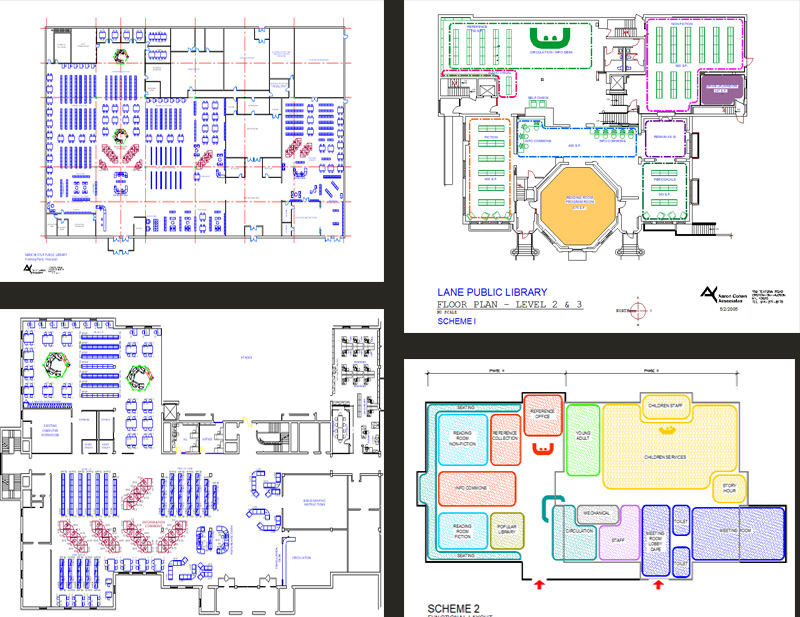
The best proposals also describe the deliverable architecture in detail. A building program is not a report about what the building should feel like. It is a technical specification: square footages, adjacency matrices, collection capacities, furniture and equipment standards, and technology infrastructure requirements. A digital library service plan carries the same standard of specificity: each service area, its user group, its content and knowledge base software requirements, its instructional support design, and its integration with the physical environment. When you review proposals from library consulting firms, ask yourself whether an architect could begin design work from this document, or whether a vendor could respond to it as a technical requirement. If the answer to both is no, the deliverable is a summary, not a program.

Services listed in the Library Consultants Directory span facilities design and planning, strategic planning, needs assessment, technology management, collection development, and stakeholder engagement. Those categories describe what consultants offer. They do not describe how they deliver. The proposal evaluation process must go below the category level to the method level, and doing so requires asking specific questions rather than reading proposals at face value.

Phased Work Plan with Named Deliverables

A phased work plan with named deliverables at each stage and a described method for producing each one. The proposal should answer, before work begins, what the institution will hold at the end of every phase and how the firm produced it.

Behavioral Observation Diagnostic Phase

A diagnostic phase that includes structured behavioral observation, not just document review and stakeholder interviews. The Visual Scan methodology is the instrument that converts observable patron movement into an evidence base that defends every downstream recommendation.

Unified Digital Library Component

A digital library component that addresses electronic resource management, knowledge base architecture, AI tool integration, and digital literacy instruction as a unified service design — not a separate technology section appended to the physical planning report.

Strategic library planning document review and service model mapping

The Five-Criterion Pre-Engagement Evaluation Protocol

Library reading room illustrating sector-specific space requirements
Library collaborative zone showing behavioral observation considerations
Digital library infrastructure planning workspace
Stakeholder engagement session in a library planning context
Academic library interior showing deliverable-driven design outcome
Community library space demonstrating public-sector planning expertise

Applying Each Criterion

Library consultant evaluation framework applied to a planning engagement

Before issuing a request for proposals

Every institution benefits from defining precisely what it will evaluate. The following five criteria give a selection committee a structured basis for distinguishing library consulting firms with genuine methodological depth from those with impressive credentials and thin practice. Apply each criterion in both the written proposal review and the interview stage, and weight the interview and sample deliverable more heavily than the proposal narrative.

Criterion One: Sector Depth

Verify that the firm has completed engagements comparable to yours in institution type, planning challenge, and scale. A firm with extensive public library work may have no experience with research university workflows. A firm with strong physical renovation histories may have never guided a digital library development initiative from inventory through service plan. Ask for three specific case histories that match your challenge as closely as possible, and ask what deliverable each produced and how the institution used it after the engagement concluded. Review the Aaron Cohen Associates portfolio for the breadth of comparable engagements this firm has completed across academic, public, law, medical, and special library sectors.

Criterion Two: Diagnostic Methodology

Ask the firm to describe, in writing, the method it uses to assess existing facility or service performance before making any recommendations. The method should have a name, a sequence, and a describable logic. It should account for actual patron behavior, not just staff perception or usage statistics. References to site visits and stakeholder interviews without further specification are not a methodology. If the firm cannot describe its diagnostic instrument clearly and precisely, it does not have one. The Visual Scan, as practiced at Aaron Cohen Associates, is one example of a named, documented instrument that meets this standard.

Criterion Three: Digital Library Planning Capability

Ask the firm to walk you through how it approaches digital library development. Specifically: how does it move from a resource inventory through a user challenge assessment to a formal service plan? How does it address electronic resource management as a service design question rather than a procurement decision? How does it account for AI-powered knowledge base tools that researchers are already using? A firm that separates physical and digital planning — or that opens the digital conversation with platform recommendations — is not practicing at the level this work requires. See Digital Assets and Digital Transformation of the Library for the integrated framework this firm applies.

Criterion Four: Stakeholder Engagement Design

Ask how the firm will distinguish between collecting opinions and building shared institutional understanding. Research on library space projects consistently identifies sustained, structured communication as the most critical success factor across planning engagements. A firm that can describe the difference between discussion, debate, and genuine dialogue — and that has a structured method for achieving the latter — is operating at a level that generic survey-and-report practices cannot reach. Ask for a specific description of a stakeholder session the firm has facilitated and what understanding it produced. This is distinct from a summary of themes: it is a testable account of how the session moved participants from competing positions to shared commitments.

Criterion Five: Deliverable Architecture

Ask to see a sample deliverable: specifically a building program or digital service plan the firm produced for a comparable institution. The document should contain spatial or service specifications that an architect, vendor, or board can act on directly. It should read like a technical brief rather than a summary report. Ask yourself whether construction or procurement could begin from this document. If the sample is primarily narrative, the engagement will likely produce the same. The standard Aaron Cohen Associates applies to every program document is that an architect unfamiliar with the institution should be able to begin schematic design from it without additional interpretation.

Putting It Into Practice

What to do before you sign

Request Comparable Case Histories

Request case histories specific to your institution type and planning challenge, with details about what deliverable each produced and how the institution used it after the engagement ended. Generic institutional name lists are not case histories; a comparable case history names the planning challenge, describes the method applied, and identifies the deliverable and its institutional use.

Probe Diagnostic Methodology Before Signing

Ask each firm to describe its diagnostic methodology by name and sequence before the proposal stage, not during the engagement. A firm that cannot do so before it is hired will not develop one after. This is the single question most likely to reveal the difference between methodological depth and accumulated professional opinion.

Verify Digital Practice with Prior Engagements

Verify that digital library development, digital literacy program planning, and electronic resource management are part of the firm's core practice, demonstrated by prior engagements with comparable institutions, not by listing digital services in a capabilities statement.

Meet the Project Lead Directly

Ask to meet and speak directly with the project lead who will manage your engagement, not only the senior principals whose credentials appear in the proposal. The proposal is written by the firm's strongest communicators. The engagement is managed by the person assigned to it, and those may not be the same individuals.

What to avoid

  • Selecting library consulting firms based on proposal length, graphic quality, or institutional name recognition alone.
  • Accepting reference projects that are not comparable in institution type, planning challenge, or scale as evidence of relevant expertise.
  • Hiring a firm that opens digital library planning discussions with platform selection rather than user and service needs assessment.
  • Letting procurement timeline pressure compress the evaluation process enough to skip reference conversations with peer institution directors.
  • Assuming that professional association membership, conference presence, or publication history substitutes for demonstrated methodological depth in comparable engagements.
  • Treating the written proposal as the primary evaluation instrument: the interview, the sample deliverable, and the reference conversation are consistently more revealing.
Library consultant working through a structured evaluation protocol with a planning committee

Questions to Ask Every Library Consulting Firm

Library director conducting a pre-engagement evaluation interview with consulting firm representatives

Seven questions that separate method from marketing

These questions are designed to be asked in writing, before the interview stage, as a supplement to the formal RFP. A firm that cannot answer them precisely in writing will not perform better in conversation.

  • Can you describe, by name and sequence, the diagnostic method you will use to assess our library's existing performance before making any recommendations?
  • How do you move from stakeholder input to a formal program document, and can you show us a sample from a comparable engagement that we can review before signing?
  • How does your digital library planning process connect a resource inventory, user challenge assessment, and digital literacy instruction into a coherent service plan?
  • What is your experience guiding institutions through electronic resource management decisions and AI-powered knowledge base integration, and how do you approach those as service design questions rather than procurement decisions?
  • How do you distinguish between stakeholder sessions that collect opinions and those that generate shared institutional understanding, and what specific method do you use to achieve the latter?
  • If our board or bond counsel asks you to defend this program in a public setting, what evidence will you present and how was it gathered?
  • Can we speak directly with the director or chief librarian from a comparable engagement you completed in the past three years, and will you provide contact information before we sign an agreement?

Sources

Library reference and study environment reflecting the planning research literature

Research and professional literature informing this page

  • Planning and Designing Academic Library Learning Spaces: Expert Perspectives of Architects, Librarians, and Library Consultants — Project Information Literacy
  • Academic Library Building Design: Resources for Planning — ACRL and Core
  • Join Library Consultants — Library Consultants Directory
  • Library Strategic Consulting — LAC Federal
  • Framework for Information Literacy for Higher Education — ACRL
  • Designing and Space Planning Libraries — Aaron Cohen Associates