
Reference
Library Place
Daily Almanac
Contact Us

What It Is
A New Kind of Reference Room
Imagine a research director at a mid-sized university who has watched the open web degrade quietly around her. The authoritative almanac pages she bookmarked a decade ago now redirect to aggregator sites. The curated link collections her predecessor maintained have rotted link by link. She still has the reference question, the same urgent need a good library always answered, but the instrument is gone. Reference Library Place is built for exactly that reader. It is a members-only reference library that presents itself as an editorial publication rather than a web directory. It sits in the tradition of refdesk.com, the long-running internet almanac that gathered credible reference resources into a single page, but it reconceives that model as a daily newspaper and an annotated almanac at once. Where older reference sites organized links in plain lists, Reference Library Place sets them into a densely typeset three-column broadsheet, pairs them with original editorial content published every day, and staffs a research desk with an AI assistant that can take real questions from readers.
The front page of the site is open to anyone. Everything beyond it, the full resource catalog, the Reference Desk, a reader's personal pinned collection, and all editorial features, requires a reader's card. Cards are not purchased. A visitor applies, an editor reviews the application by hand, and the decision, along with any note left by the editor, is preserved on the record whether the application is granted or declined. A reader who reapplies after a decline returns to the same queue with that earlier note still visible. One founding administrator address bypasses the queue entirely, so the publication's owner can never be locked out of her own system.
At a Glance
TL;DR
Reference Library Place is a members-only editorial reference library built in the tradition of the classic internet almanac, reconceived as a daily broadsheet with curated vetted resources, original editorial features, and an AI-staffed research desk.
Membership is not purchased, it is granted by application and editorial review, preserving the institutional gravity of a real reader's card. Revenue comes from sponsored editions, standing institutional sponsors, and voluntary reader memberships, with no display advertising anywhere on the platform.
Every AI call, editorial decision, and revenue source is recorded and made legible to administrators in real time, so the financial and intellectual picture of running the publication is as transparent as the editorial one. For institutions navigating digital transformation and digital library development, this model offers a disciplined template for building trusted, curated access in an era of content overload.
The Catalog
Twelve Departments, Thousands of Vetted Links
The heart of Reference Library Place is a single directory of external resources organized into twelve departments: General Reference, News and Current Events, Science and Nature, Government and Law, Business and Finance, Arts and Literature, History and Biography, Geography and Travel, Language and Learning, Everyday Tools, Technology and Web, and Diversions. Each department carries its own sub-sections, and every entry in the catalog holds a title, a URL, an editorial description written in the house voice, a department and optional section assignment, freeform tags, a featured flag, an optional year of establishment, and a health status drawn from four states: ok, broken, redirected, or unknown.
The catalog was seeded by scraping refdesk.com's own subject pages and continues to grow through editor-initiated scrapes and hand-added entries. Click counts and last-visited timestamps are tracked per entry. A link-health sweep, triggered manually by an editor rather than on a schedule, validates the oldest-checked batch of links each time it runs. Broken links remain in the catalog but drop out of default views, so the directory degrades gracefully as the web changes rather than silently serving dead ends.
Every catalog entry is written in a consistent house voice with a descriptive annotation, a department assignment, freeform tags, and a tracked health status so the directory degrades gracefully rather than silently serving dead ends.
An editor-triggered link-health sweep validates the oldest-checked batch of links on each run, maintaining catalog integrity without automated fragility. Broken entries drop from default views rather than misleading readers.
A two-pass AI model routes each research question to relevant catalog departments, then produces a structured four-part answer: restated question, written response, three to five catalog picks with rationale, and three to five ready-to-run search queries with real operators explained.
Six features refreshed daily by editorial staff, not automated feeds: Site of the Day, Fact of the Day, Thought of the Day, Word of the Day, This Day in History, and Today's Birthday. The Site of the Day can optionally be underwritten by a sponsor.

The Front Page

Three Columns, No Scrolling
The front page is designed to fill the screen on a desktop without scrolling, organized into three columns that carry distinct content simultaneously. The left column holds the Ready Reference shelf, eleven curated runs of catalog entries grouped by how a reader would actually reach for them. Ten of these runs draw from a catalog department or section, covering dictionaries, encyclopedias, government and law resources, health tools, maps, search engines, calculators, newspapers, and genealogy. The eleventh run, called News on the Rialto, is a deliberately ordered collection of the web's major front pages, including Drudge Report, The Guardian, The New York Times, the New York Post, Google News, Axios, Bloomberg, Breitbart, and The Daily Beast.
The center column is the editorial spine, six features refreshed daily: Site of the Day (a curated resource with an original editor's note and a generated engraving-style illustration), Fact of the Day, Thought of the Day, Word of the Day, This Day in History, and Today's Birthday. These are not automated feeds; they are produced by editorial staff, and the Site of the Day can optionally be underwritten by a sponsor.
The right column runs the Town Crier, a live news-headline wire. Headlines are ordered by their own publish date, newest first, and any headline more than fourteen days old is excluded from display regardless of when it was fetched. The relative-timestamp display is written to correctly parse weeks-, months-, and years-old dates as well as minutes, hours, and days, so no old article can misleadingly read as fresh. The wire refreshes automatically on a thirty-minute cron job, on the first stale front-page visit after that window, and on demand from the Editor's Room, with a shared refresh lock ensuring at most one pull runs at a time. A colophon strip beneath the board credits active standing sponsors, or invites readers to become supporting members if there are none.
The Reference Desk
AI-Staffed, with a Human Backstop
Card holders can put a real research question to the Reference Desk and receive a structured four-part answer: the question restated, a direct written response, three to five catalog entries with a one-line reason explaining why each is relevant, and three to five ready-to-run search queries with real operators explained. The answer is generated in two model passes. A lightweight classification step first routes the question to the appropriate departments in the catalog; a fuller pass then writes the answer, selects the catalog picks, and builds the search strategy.
Patrons are allotted fifty questions per day by default. Editors and administrators are uncapped. An administrator can set a per-patron quota override from that reader's individual file. Any answered question can be referred to a human librarian, who replies by email and on the record inside the platform. Answered questions can also be added to a public, permanently anonymous archive, where they remain accessible to all card holders without identifying the reader who asked.
This architecture reflects a principle we have held across fifty years of library consulting services: technology augments the reference function, it does not replace the librarian's judgment. The human backstop here is not decorative. It is the institutional guarantee that a patron whose question exceeds the AI's grasp still receives a considered, expert response. For institutions designing their own digital library services, this two-tier model is worth studying carefully.
A Reader's Personal Desk

Private, Persistent, Personal
Each signed-in patron maintains a personal desk that is never visible to other readers. It holds a collection of pinned catalog entries, each of which can carry an optional private note written by the patron. A reading history page records every catalog entry the reader has visited, with visit counts. Members, those who have taken up a paid supporting membership, also see a panel showing their current membership standing. Nothing on a reader's personal desk is surfaced in any shared or editorial view.
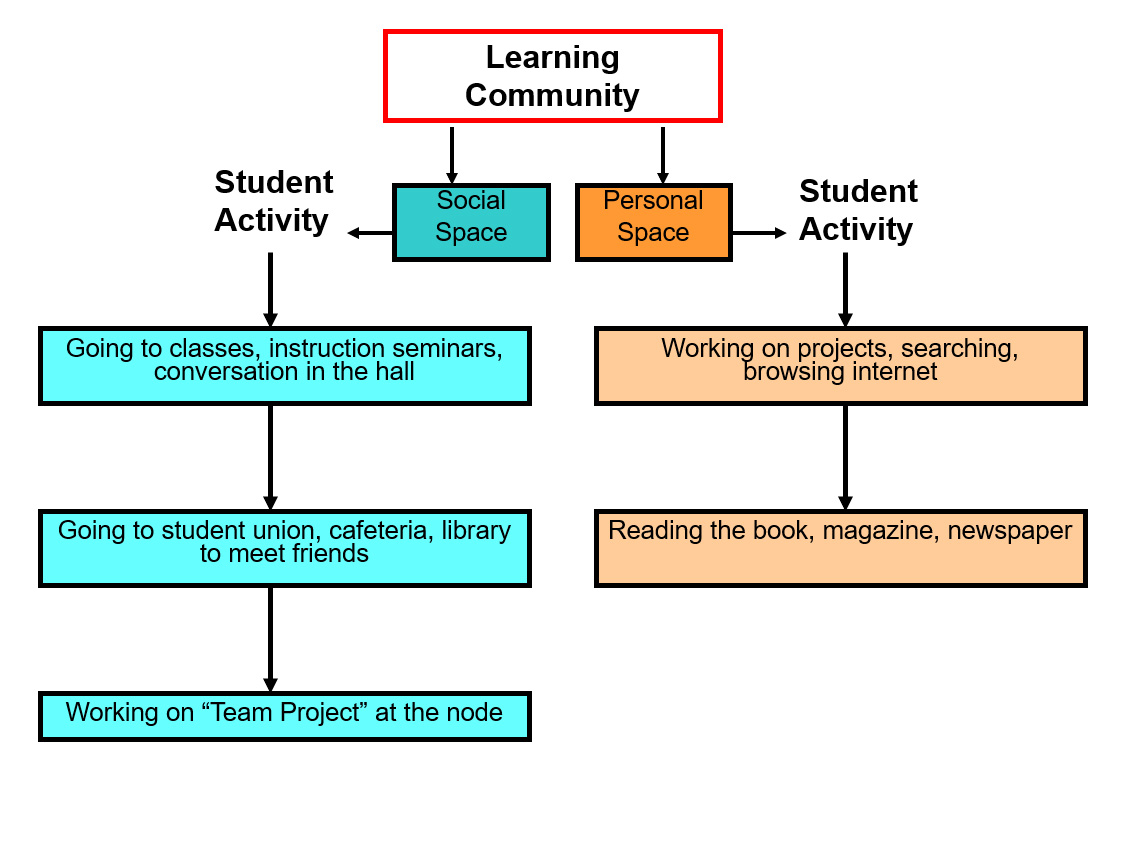
In library space planning terms, the personal desk maps directly to the individual study carrel, a bounded, private zone within a shared institutional environment. The difference is that this carrel travels with the reader across every session and every device. For institutions thinking about how to design academic library space that respects both community and individual need, this feature offers a useful conceptual model: shared infrastructure, private experience, no contamination between the two.
Publication Operations

How the Publication Is Operated
Four Dedicated Interfaces
Four dedicated administrative and editorial interfaces run the publication. The Roll, accessible only to administrators at the /patrons route, is the full patron register: every account, its enrollment date, role, and reading activity, with controls to confer or reduce roles, place a card on hold, and set individual Reference Desk quota overrides. The publication deliberately avoids the words ban and suspend; a card on hold is exactly that, a hold.
The Editor's Room, available to editorial staff at /editor, is where new sources are scraped, catalog entries are added or edited, the news wire's sources are managed, fresh Site of the Day content and headline pulls are triggered, and questions referred by patrons are answered. The Treasury at /treasury is the administrator's revenue dashboard: sponsorship and membership income by month, an approvals queue for proposed sponsorships, outstanding invoices, and recent payments. The Office of the Publisher at /office composes the full commercial picture in one place: headline financial figures, an inline rate-card editor, a standing-sponsors manager with a live colophon preview, the membership roster, and the combined applications-and-correspondence queue.
The operational clarity of these four interfaces is itself a planning lesson. In decades of work on library operations improvement, we have found that institutions suffer most not from lack of data but from lack of legibility: the right information not in front of the right decision-maker at the right moment. Reference Library Place solves this by designing for the administrator's decision-flow, not for the developer's convenience.
Revenue Model
No Display Advertising
Reference Library Place carries no display advertising. It generates revenue through three arrangements. The first is sponsored editions, in which a brand can underwrite a single day's Site of the Day. An editor proposes a sponsorship against a real catalog pick and writes the editorial note in the house voice; an administrator must approve it before it goes live. Approved but unbilled sponsorships generate a real PDF invoice, produced and emailed automatically, with a public standing-record page that the sponsor can check at any time.
The second arrangement is standing sponsors: organizations that underwrite the publication itself on a monthly or annual basis and are credited in the front-page colophon rather than on any single day. The third is reader memberships, a voluntary recurring way for readers to support the publication directly, billed through Stripe subscription checkout at monthly or annual cadences. Membership is explicitly not a card. The front page is free to anyone, and a reader's card is still granted by application at no cost. Every reader who joins during the publication's first season is marked a permanent Founding Patron.
A public commercial page called Patronage makes the sponsorship pitch with a live audience snapshot, a specimen of a sponsored edition, a credit roll of past sponsorships, and the published rate card. A Membership page makes the reader-facing case for supporting the publication. A Partners page invites libraries and institutions to inquire about co-branded editions, though no white-label infrastructure exists yet. A Support page routes general correspondence, corrections, and link suggestions from anyone into the same editor-facing queue, with administrators notified by email as each one arrives.
Institutions planning their own library fundraising strategies will recognize in this model a disciplined separation of access from revenue. The card is free because the publication's integrity depends on it. Revenue follows from demonstrated value, not from gating access. That sequence, proof first, payment second, is the same logic we apply when helping institutions build evidence-based capital campaigns.
Cost Accounting and AI Model Tiers
Financial and Operational Transparency
Every paid platform call in Reference Library Place records its own cost, job, model tier, caller, duration, and success status. The Treasury reads this back as spend by day, by job, and by model tier, displayed next to the revenue it supports. Work is assigned to one of four model tiers, labeled economy, standard, premium, and utility, based on what the job genuinely requires rather than how consequential the feature feels to a reader. Nothing on a page-load path uses the flagship tier except the Reference Desk itself. The intent is that the financial picture of running the publication is as legible as the editorial one, with every AI call accounted for alongside its human-visible output.
This level of operational transparency maps directly onto what we recommend for library technology roadmap consulting: every technology investment should produce a legible cost record, a clear assignment to a service goal, and a visible comparison against the value it generates. The four-tier model structure here is a practical template any institution can adapt when planning AI adoption at scale.
Every AI platform call records its cost, job type, model tier, caller identity, duration, and success status, creating a complete operational ledger that sits alongside revenue figures in the Treasury dashboard.
Work is routed to economy, standard, premium, or utility tiers based on what the job genuinely requires, not on perceived feature importance. Only the Reference Desk itself uses the premium tier on any page-load path.
The Treasury presents AI spend by day, by job type, and by model tier, displayed directly alongside the revenue that spending supports, so the institution's financial and operational picture is always legible together.
A signature-verified Stripe webhook is the sole source of truth for membership status, handling checkout completion, renewal, payment failure, and subscription changes without relying on any client-side state.

Design System and Editorial Voice

A Warm-White Broadsheet, Not a Technology Product
The visual identity is built to read as a warm-white broadsheet rather than a technology product. Two accent colors carry the whole system: Cardinal, a vivid editorial red used for anything live or interactive, and Moss, a confident green used for structure and taxonomy. These sit against near-black Ink for body text, a cream called Parchment for a small number of physical-feeling surfaces, and Ash for metadata. A deep navy called Stamp appears only on the masthead emblem and nowhere else in the interface.
Typography runs on three families: Neco, a display serif used for headlines and editorial flourishes; Inter for running text; and IBM Plex Mono for datelines, timestamps, labels, and every number on the site. Setting all numerals in a monospaced typeface draws from print almanac conventions where figures in running text are set in tabular faces to aid legibility and ease of comparison.
The editorial voice is literate, dry, curious, and confident. The publication maintains a house glossary that substitutes specific terms for generic ones throughout: patron instead of user, department instead of category, inquiry instead of search, and pin instead of bookmark, among others. Style rules prohibit em-dashes, emojis, and exclamation points across all editorial copy.
The deliberateness of these decisions, every typographic choice, every vocabulary substitution, every color assignment, reflects a principle that runs through every library strategic planning engagement we conduct: the institution's identity is communicated by its surfaces before anyone reads a word. A reference library that presents itself like a software dashboard will be used like a software dashboard. Reference Library Place chooses to present itself as a publication and is used accordingly.
Technical Architecture
Single-Page Application, Multiple Service Channels
Reference Library Place runs as a single-page web application with client-side routing, covering the front page, the full directory, the Reference Desk and its archive, a patron's personal desk, the sign-in and application flow, and all staff interfaces. Beyond the web, two additional interfaces run: a cron job called refreshHeadlines that fires every thirty minutes to keep the news wire current, and a signature-verified Stripe webhook endpoint that is the sole source of truth for membership status. The webhook handles checkout completion, renewal, payment failure, and subscription changes.
Almost all operations are triggered on demand by a human interacting with the site: generating new Site of the Day content, checking a batch of links, running a scrape. The scheduled news-wire refresh is the one exception, running automatically in addition to its on-visit and manual refresh paths. The application is built on the Remy platform, which provides the managed database, authentication, cron scheduling, webhook infrastructure, file storage, and AI model access that the publication runs on.
For institutions planning their own digital library infrastructure, this architecture illustrates a sound principle: automate only what must be automatic, and keep everything else under human control. Fifty years of library planning practice have shown us that the highest-failure point in any technology system is the automated process that runs when no one is watching. Reference Library Place limits that surface deliberately, and the result is a platform whose behavior is predictable and whose errors are always visible. That is not a limitation of ambition. It is a mark of institutional maturity.
Contact
We consult with institutions, library directors, trustees, and administrators on digital library planning, digital library service plans, digital asset management, and the full range of library consulting services Aaron Cohen Associates has delivered for more than fifty years. If you are building or rebuilding a reference service, designing a curated digital collection, or planning a new institutional knowledge environment, we would welcome the conversation.
Contact Us