Strategic Library
Consulting &
Design Planning

Start a Conversation
Strategic library planning and design consulting

Our Approach

Library consulting and strategic planning in action

TL;DR

Strategic library planning is not an exercise in furniture selection or square footage negotiation. It is a disciplined process of aligning institutional mission with physical environment, digital infrastructure, and service delivery — built on evidence gathered from your own community, not borrowed from another institution's last project.

Aaron Cohen Associates has guided that process across more than fifty years of academic, public, government, and specialized library installations. The methodology is consistent: observe before you prescribe, ground every recommendation in documented need, and design for the decades that follow, not the budget cycle in front of you.

Every engagement begins with a visual scan of how patrons actually move through and use a facility, proceeds through structured dialogue with staff and stakeholders, and concludes with a defensible written program that architects can use and administrators can defend. That sequence has never changed.

A Planning Story

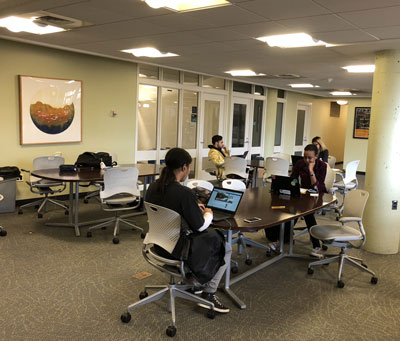
Library director reviewing space utilization data with planning team

When the Data Contradicts the Intuition

Consider a mid-sized research university whose library director arrived at a planning kickoff meeting convinced that her institution needed more individual study carrels. Circulation had dropped. The reading room felt empty on Tuesday afternoons. The obvious conclusion — students want quiet solo space — felt unassailable.

The first week of observational fieldwork told a different story. Students who entered the building alone consistently migrated toward the two small group rooms tucked in a rear corridor, waiting outside them in informal queues rather than occupying the dozens of empty carrels fifty feet away. The building was not suffering from too little quiet space. It was suffering from too little legible, bookable collaborative space positioned near the entrance.

That single insight — available only through structured observation, not survey data alone — redirected a capital program worth several million dollars. The carrel wing was converted. Group rooms multiplied. The entry sequence was reorganized around visibility and wayfinding. Three years after reopening, the library posted its highest gate count in fifteen years.

That is what strategic library consulting actually does. It replaces assumption with evidence, and evidence with a defensible program that holds up under administrative scrutiny and survives the transition from planning committee to construction documents.
Core Capabilities

What We Bring to Every Engagement

Our methodology integrates space analysis, service planning, digital systems assessment, and community engagement into a single coherent process. Each capability below represents a discipline refined across hundreds of real installations — not a marketing category, but a tested sequence of methods that produces programs institutions can build on.

Space & Behavioral Analysis

Structured observational fieldwork — what we call the visual scan — documents how patrons actually move through, linger in, and avoid zones of a facility. This behavioral baseline is the foundation every space program must rest on before any furniture plan or square footage target is proposed.

Strategic & Master Planning

A library master plan is not a building program. It is a ten-year institutional intelligence document that positions every capital and operational decision within a framework the administration and trustees can revisit as conditions change. We produce plans that survive leadership transitions.

Digital Infrastructure Planning

From digital asset management to discovery layer design and AI integration, we assess existing digital infrastructure against institutional mission and develop phased roadmaps that keep technology investments accountable to service outcomes rather than vendor cycles.

Community & Stakeholder Engagement

No planning process produces defensible results without systematic dialogue with the people who use and staff the library. We facilitate structured sessions that surface genuine need — the kind survey instruments miss — and translate community voice into program requirements that architects can act on.

Library space planning and community engagement session

Planning in Practice

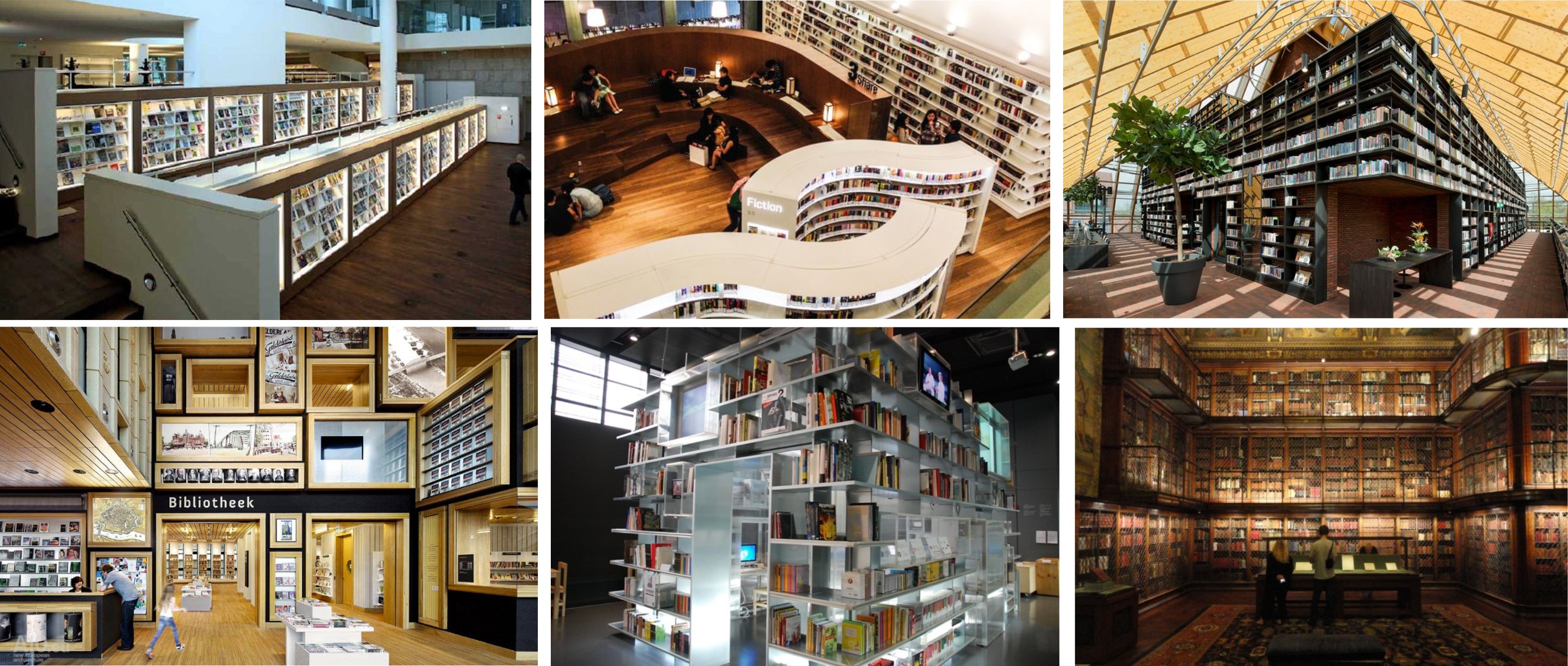
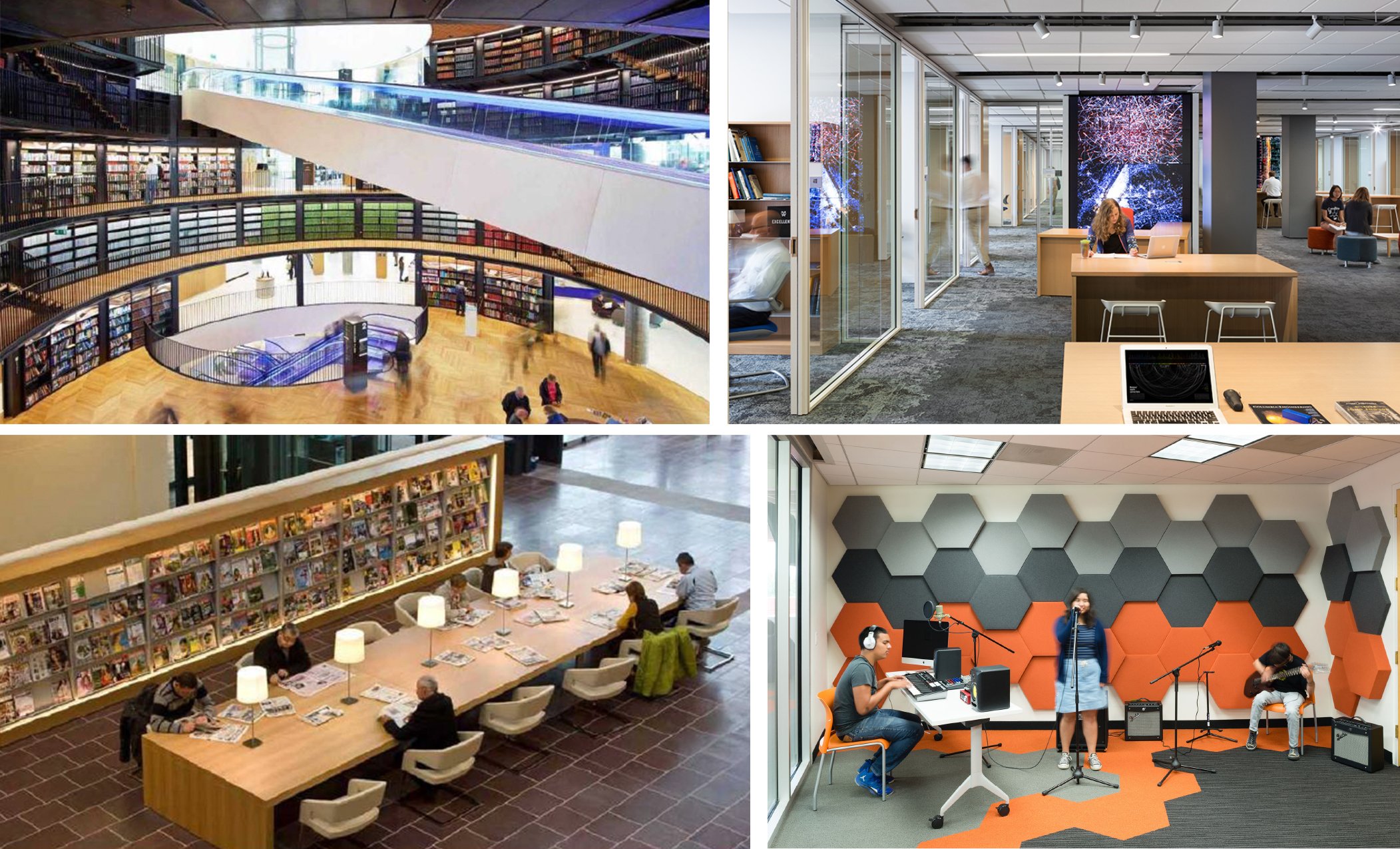
Academic library space transformed through strategic planning
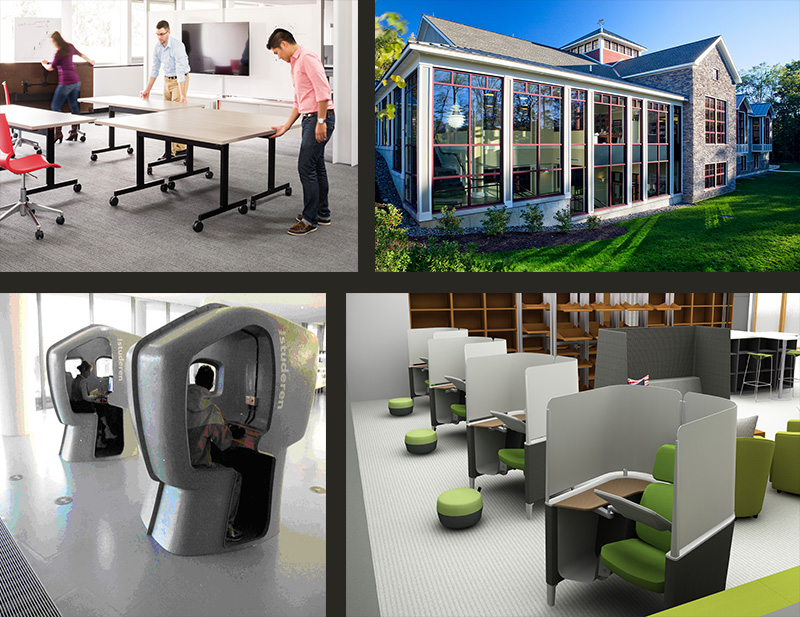
Collaborative learning zones designed for research university
Public library community engagement and design process
Special collections and archival facility planning
Digital infrastructure and technology integration in library design
Library service point and patron flow redesign

Strategic Planning

Strategic library planning framework integrating physical and digital services

Reimagine Your Library. Empower Your Community.

Strategic planning for a library is not an abstract exercise. It is the moment when an institution decides what it is for — and commits the evidence to paper in a form that can survive a budget review, a board presentation, or a bond campaign. At Aaron Cohen Associates, we have guided that moment across academic, public, government, and specialized environments for more than fifty years. The methodology does not change. The institution does.

Our strategic planning process begins where every honest planning process must: with observation. Before we produce a single recommendation, we document how patrons actually use the facility, where staff workflows create friction, and where the gap between the library's stated mission and its physical reality is widest. That gap is always the most productive place to start.

From that observational baseline, we move into structured community dialogue — not generic surveys, but facilitated conversations designed to surface the needs institutions rarely discover on their own. The result is a written strategic plan grounded in real community behavior, defensible at every level of institutional governance, and specific enough that architects can translate it directly into a building program.

Library Science Professionals

Library science professionals and strategic planning team

A Discipline Built on Evidence, Not Trend

Library science is not a soft discipline. It is a rigorous field with its own research literature, professional standards, and analytical frameworks — frameworks that, applied correctly, produce planning decisions that hold up for decades rather than a single renovation cycle. The institutions that treat library planning as an interior design problem consistently produce environments that look contemporary at opening and feel obsolete within five years.

Our principals are trained in library science and have maintained active engagement with its professional literature throughout careers that span the transition from card catalogs to AI-assisted discovery. That depth informs every recommendation we make: when we propose a service point configuration, we can cite the behavioral research behind it; when we recommend a collection storage strategy, we can reference the environmental standards that govern it.

That is the difference between a consulting practice that understands libraries and one that merely measures them. Understanding what a library consultant actually does means recognizing that the discipline behind the recommendation matters as much as the recommendation itself.

Technology and Resource Management

Library technology planning and digital resource management

Infrastructure That Serves the Mission

Technology in a library is not an end in itself. Every system — discovery platform, digital asset repository, automated storage retrieval unit, AI-assisted reference tool — must be evaluated against the same question: does it make the library more useful to the people who depend on it, or does it make the library more complex to operate for the staff who run it? Those two outcomes are not always the same.

Our technology roadmap consulting begins with an audit of existing systems against current service patterns. We document what is working, what is redundant, and what is missing. We then develop a phased implementation plan that sequences investments in order of mission impact rather than vendor convenience. The result is a technology environment that grows with the institution rather than accumulating debt it cannot service.

Digital asset management, preservation planning, and digitization lab design are integral parts of this work. An institution that has not addressed its digital infrastructure cannot fully serve a research community that increasingly expects seamless movement between physical collections and online discovery. We bridge that gap with plans that are technically rigorous and operationally realistic.

Resource management extends to collections as well. Automated storage planning and collection density analysis allow institutions to recover floor space for active programming without sacrificing access to materials that remain in scholarly demand. The calculus between square footage, collection size, and service capacity is one we have worked through on dozens of installations — the numbers are rarely what administrators expect at the outset.

Integrated Learning Environments

Integrated learning environment design for academic and public libraries

The Library as an Active Stage for Learning

The most durable planning insight from fifty years of library work is this: the library is not a container for books. It is a stage for intellectual activity — and the design of that stage determines what kinds of activity are possible, which communities feel invited, and how effectively the institution serves its mission over time. Every spatial decision is a programming decision in disguise.

Integrated learning environments combine physical space, digital access, and service delivery into a coherent experience that feels effortless to the patron and efficient for the staff. That integration does not happen by accident. It requires a planning process that considers adjacency relationships — which services benefit from proximity, which activities require acoustic separation, where natural light matters and where it does not — before a single wall is located.

Our work on academic library design and public library design consistently returns to the same organizing principle: the entry sequence is the library's most powerful planning tool. What a patron sees, understands, and can access within the first thirty seconds of entering the building determines whether they stay, return, and recommend the library to others. We design entry sequences that communicate the library's full range of services before a patron reaches the first service desk.

The service point is the second most consequential decision in any library floor plan. Its location, configuration, and staffing model shape patron behavior across the entire building. We have redesigned service points in environments ranging from law libraries to children's wings to research university reading rooms, and the same behavioral principles apply in every context: visibility, legibility, and approachability determine whether the service point functions as a resource or a barrier.

Historical Development

Historical library development and planning legacy at Aaron Cohen Associates

Five Decades of Institutional Knowledge

Aaron Cohen Associates was founded at a moment when academic libraries were navigating the transition from manual card catalogs to early automated systems — a disruption that felt, to the institutions living through it, as transformative as anything they had encountered in a century of operation. The firm's founders understood that the challenge was not primarily technological. It was organizational: how do you plan a building program for an institution whose core workflows are changing faster than a construction schedule?

That question has never stopped being relevant. The specific technology has changed — from OPAC to web discovery to AI-assisted reference — but the planning challenge remains identical: how do you commit capital to a physical environment that must serve a community whose information behaviors are actively evolving? The institutions that have answered that question well have done so by investing in a planning process rigorous enough to remain valid across the lifecycle of a building, not just the tenure of the director who commissioned it.

Our historical development as a firm tracks that challenge across a half-century of real installations. The Aaron Cohen Associates legacy is not a marketing narrative. It is a documented methodological record — hundreds of completed projects across academic, public, government, law, medical, and specialized library environments — that informs every new engagement we begin. When we walk into a planning kickoff, we bring that record with us. It changes what questions we ask and how quickly we recognize what a facility actually needs.

The full portfolio of our consulting work is available for review by sector — academic, public, government, law, medical, special — and represents not a sample but a working record of practice. We encourage institutions beginning a planning process to study that record not as a credential but as evidence of methodological consistency: the same analytical discipline applied across radically different institutional contexts, producing results that have held up over time.

Service Areas

Planning Disciplines We Practice

Our engagements span the full arc of library planning, from initial needs assessment through post-occupancy evaluation. The service areas below represent the specific disciplines we bring to every project — each one grounded in documented methodology and refined across the firm's fifty-year practice history.

Capital & Facility Planning

From bond campaign evidence briefs to architectural programming documents, we produce the institutional intelligence that makes capital decisions defensible. This includes feasibility studies, ROI modeling, and the written building program that every architect requires before design can begin.

Collection & Storage Strategy

Automated storage planning, collection density analysis, and archival facility design allow institutions to manage growing collections without consuming the floor space that active programming requires. We work from current holdings data to produce storage programs that meet preservation standards and operational realities simultaneously.

Special Collections & Archival Planning

Environmental controls, rare book reading room design, and archival facility planning for fragile and irreplaceable holdings require a level of technical specificity that general library consultants rarely carry. We carry it — and we can translate preservation standards into architectural specifications that contractors can price and build.

Digital Library Development

Building a digital library that actually serves its community requires the same observational discipline as physical space planning. We facilitate the structured dialogue that produces a defensible digital service plan — one grounded in documented patron behavior rather than platform vendor presentations.

Library collections and service planning in practice

Sectors We Serve

Library consulting across academic, public, government, and specialized sectors

Every Library Type Has a Distinct Planning Logic

The mistake institutions most commonly make when selecting a library consultant is treating sector experience as a secondary credential. It is not. The planning requirements of a law library — adjacency to courtrooms, access control, collection density, attorney workflow — are structurally different from those of a children's public library branch, which are in turn different from those of a biomedical research library serving a clinical staff on rotating shifts. Methodology transfers across sectors; specific knowledge does not.

Aaron Cohen Associates has completed engagements across all major library sectors. Our academic library portfolio spans community colleges through research universities. Our public library work ranges from rural branch renovations to major urban system masterplans. Our government library, law library, and special library portfolios represent decades of sector-specific practice.

That breadth is not a liability — it is the source of the cross-sector insight that makes our recommendations sharper than those produced by a practice limited to a single institutional type. When we plan an academic library, we bring knowledge of how public library patron flow research has advanced space programming. When we plan a law library, we draw on archival planning standards developed for special collections environments. The disciplines inform each other in ways that produce better buildings.

If your institution is beginning a planning process and wants to understand how sector experience shapes methodology, the criteria for evaluating library consulting firms we have published lays out exactly what to look for — and what to ask — before signing an engagement.

Begin a Conversation

Every engagement at Aaron Cohen Associates begins the same way: with a conversation about what your institution is trying to accomplish and what is currently standing in the way. That conversation is free, specific, and grounded in the kind of institutional knowledge that only comes from fifty years of library planning practice across every sector and scale.

If you are a director, trustee, provost, or municipal leader beginning a library planning process — or trying to understand why a previous planning process did not produce the results your institution needed — we want to hear from you.

Contact Aaron Cohen Associates