
Library
Consulting
Portfolio
Explore the Work
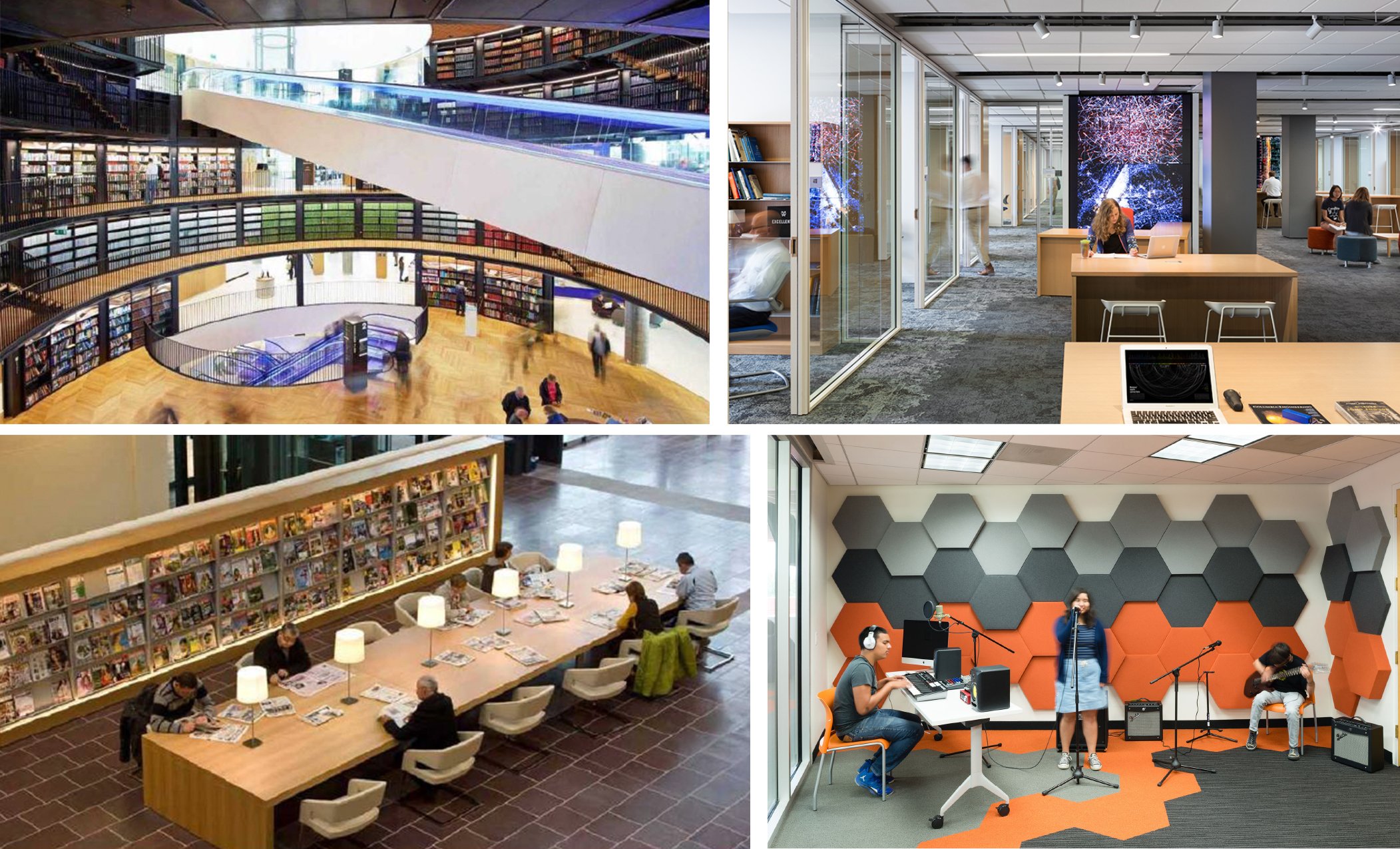
Our Portfolio
Fifty Years. Eight Hundred Projects. One Methodology.
A provost once called us three weeks before construction documents were due. The architect had produced a beautiful building. It had no processing room, no adjacency between the reference stacks and the new research commons, and a service desk positioned so that half the floor was invisible to staff. The program, it turned out, had never been written. We were brought in to retrofit institutional intelligence into a design that had moved too fast.
That story is not unusual. It is, in fact, the most common reason institutions call Aaron Cohen Associates. What you will find in this portfolio is the record of what happens when planning comes first: buildings that work on opening day and keep working for thirty years, digital collections that researchers actually use, service models calibrated to real patron behavior rather than aspirational diagrams.
Explore Aaron Cohen Associates' extensive library consulting portfolio, spanning 800+ projects across academic, public, government, medical, law, and school libraries. We offer a dynamic, forward-thinking approach to library consulting services, highlighting the transformation from traditional repositories to innovative learning ecosystems.
At a Glance
TL;DR
What this portfolio represents. More than eight hundred completed library planning engagements across every institutional sector — academic, public, government, medical, law, and school — built on a single consistent methodology: ground every spatial decision in behavioral evidence, then design the services before you design the building.
What distinguishes the work. Each project in this record began with a structured needs assessment and ended with a written program that the architect could actually build from. The portfolio is not a gallery of attractive interiors; it is a proof-of-method archive showing what defensible programming produces over five decades of institutional practice.
What you should take away. The transformation from traditional repository to innovative learning ecosystem does not happen through renovation alone. It requires a methodology that connects patron behavior, collection strategy, digital infrastructure, and capital evidence into a single, coherent document before a single wall moves. That document is what we produce.
Core Capabilities
What We Bring to Every Engagement
Fifty years of library planning has produced a set of capabilities that are genuinely difficult to replicate: not because the methods are secret, but because they have been refined through hundreds of real projects, real budgets, and real communities. Each capability below represents a strand of expertise that is active in every engagement we take, regardless of institution type or project scale. For a fuller account of how these capabilities integrate, see our services overview and the space planning practice.
We build every space program from observed patron behavior and institutional data, not from industry benchmarks applied by formula. The result is a square-footage argument that survives administrative scrutiny and bond-campaign review alike. Learn more about how we assess facility performance.
A master plan is not a rendering. It is a ten-year rolling framework that aligns space, services, and institutional mission before any architect is engaged. We produce that document, then work alongside the design team to protect its logic through schematic design and construction documents. See our detailed treatment of library master planning.
Digital transformation fails when it is treated as a procurement decision rather than a service-design problem. We map current and projected digital workflows, then program the infrastructure — physical and logical — that makes those workflows reliable. Our approach to digital asset management and digital library planning connects collection strategy to spatial reality.
The most carefully designed building will underperform if the service model inside it has not been redesigned alongside the space. We facilitate the stakeholder dialogue, produce the written strategic plan, and work with library leadership to align staffing, service points, and technology to the new environment. Our strategic planning practice and academic strategy work document this process in detail.
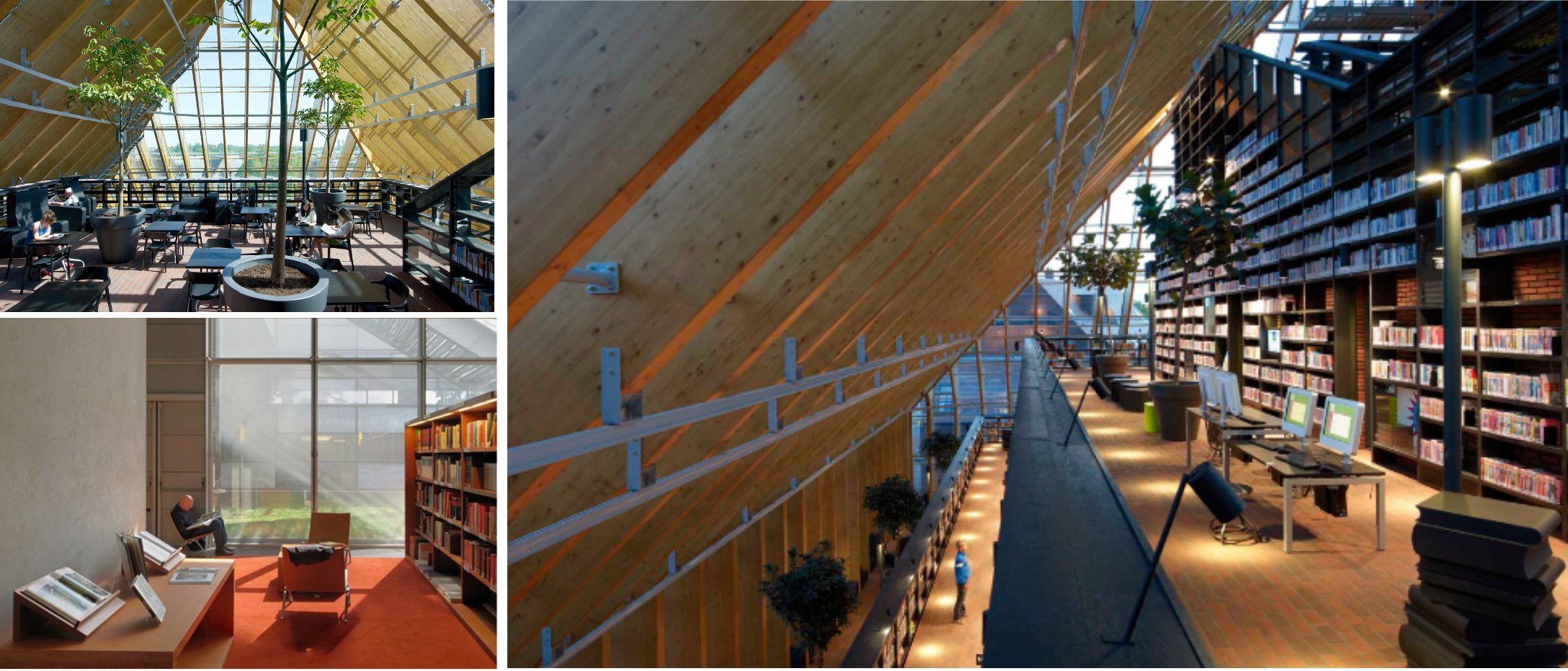
Projects Across Every Sector
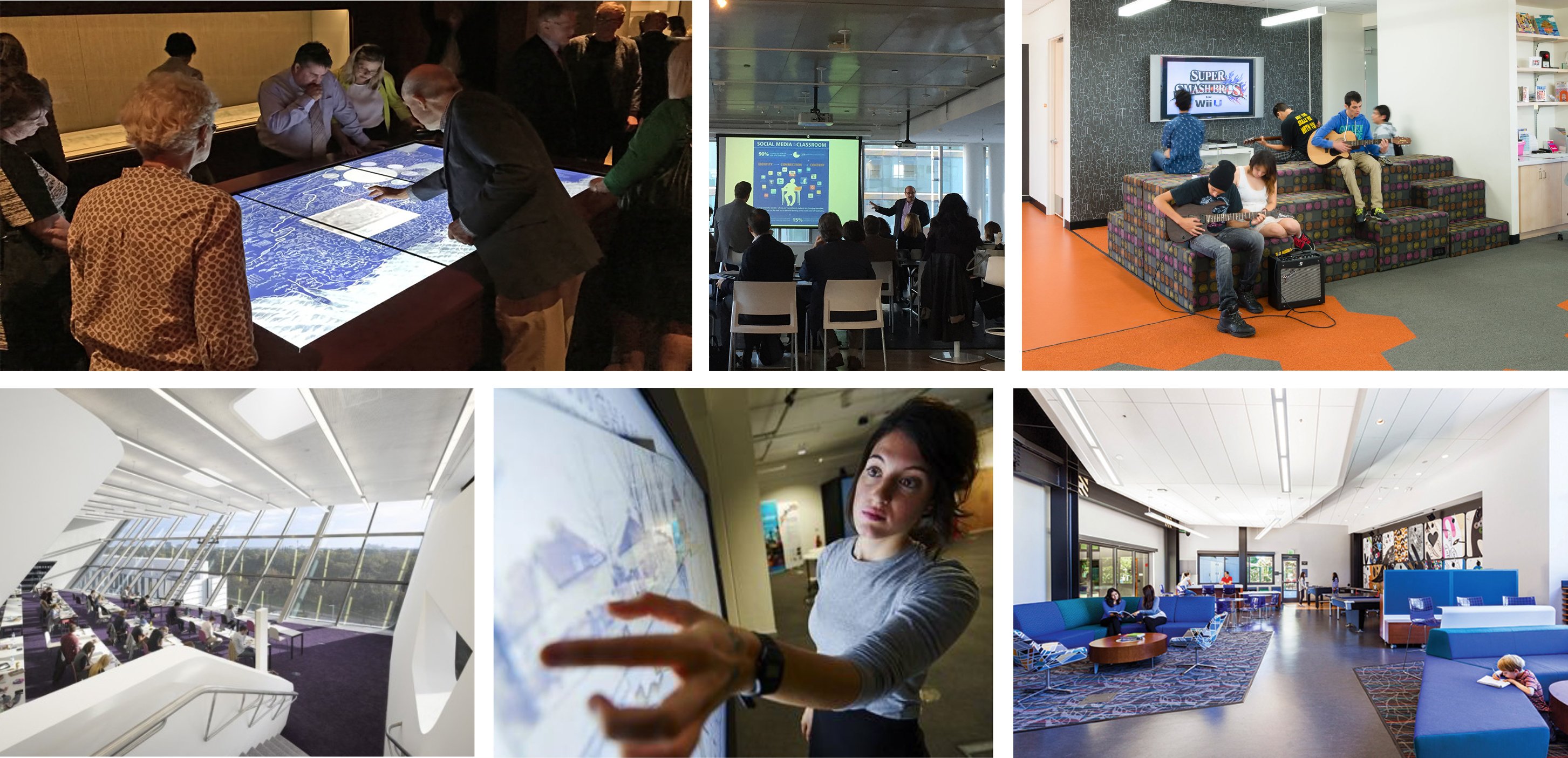
Portfolio by Sector
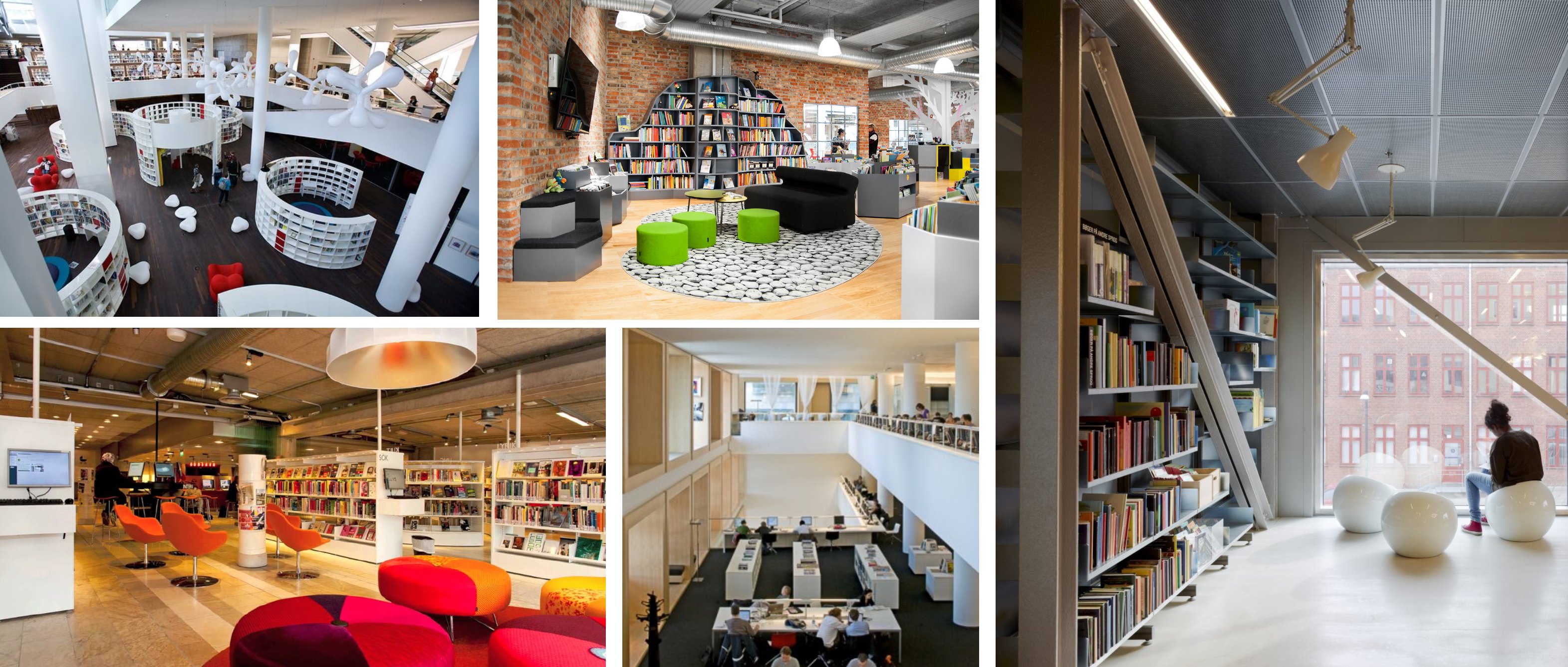
Eight Hundred Projects. Every Institutional Type.
The breadth of this portfolio is not a marketing claim; it is a methodological asset. When a law library director asks whether a particular adjacency arrangement has been tried at a comparable institution, the answer is almost always yes, and the case history is in our files. The same is true when a university provost needs to understand how a comparable research commons performed five years after opening, or when a municipal library board wants to know what a renovation of their scale typically costs in programmatic disruption during construction.
Browse the full project record by sector below. Each list represents a sample of completed engagements; additional projects are available on request.
- College & University Libraries — academic planning, learning commons, research commons, collection consolidation
- Public Libraries — community needs assessment, branch network planning, capital campaign support
- Government Libraries — security-conscious space planning, agency-specific collection management, service point redesign
- Law Libraries — adjacency planning, access control, collection density, courthouse integration
- Medical Libraries — clinical workflow support, evidence-based design, digital integration for health sciences
- Private School Libraries — curriculum-aligned space programming, age-appropriate zoning, flexible learning environments
- Special, Corporate & Research Libraries — knowledge-flow optimization, retrieval speed, security architecture
A Forward-Thinking Approach
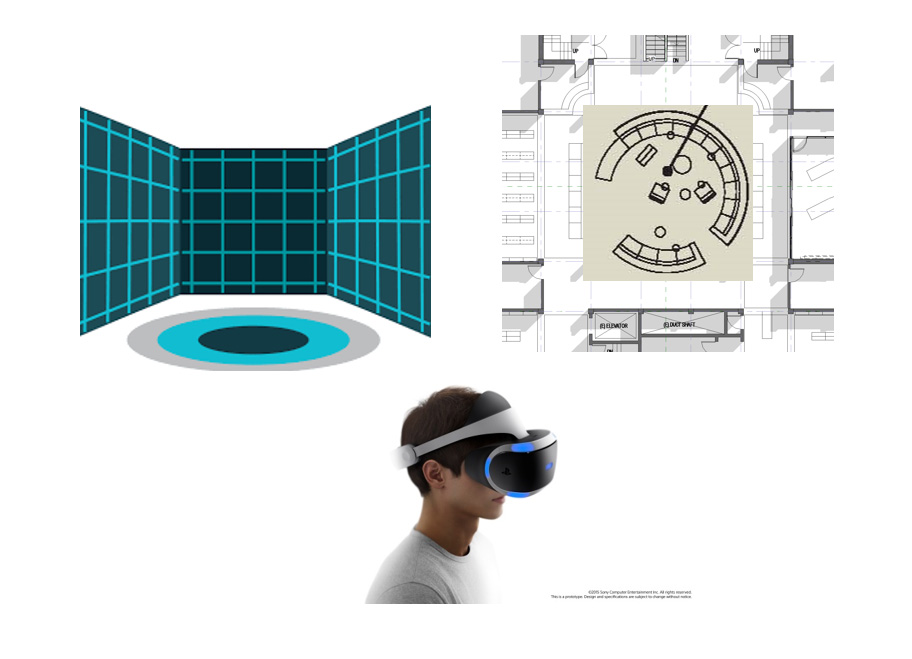
From Traditional Repository to Innovative Learning Ecosystem
Innovative library design is not about aesthetics. It is about understanding how knowledge moves through an institution — from acquisition, through organization, to discovery and use — and designing every physical and digital system to accelerate that movement rather than impede it. This is what we mean when we describe the transformation from traditional repository to innovative learning ecosystem.
Digital transformation in the library context means rethinking every workflow that currently depends on a physical artifact or a staff intermediary, and deciding deliberately which of those dependencies should remain, which should be automated, and which should be eliminated. Our work in digital library development and digital asset management addresses each of these decisions in sequence.
Academic space optimization begins with enrollment data and ends with a space program in which every square foot is justified by a measurable use pattern. We do not recommend open collaborative zones because they are fashionable; we recommend them when the behavioral data shows that students are currently using corridor floors and café tables to do the work that the library's interior has not accommodated. See our framework for academic library planning from enrollment data.
Collaborative learning environments require more than furniture rearrangement. They require service-point repositioning, acoustic zoning, technology integration at the workstation level, and staff training that shifts reference practice from reactive transaction to proactive instruction. Our service point planning methodology addresses each of these dimensions.
Technology integration is a planning problem before it is a procurement problem. We map current and projected workflows, identify the infrastructure gaps that will prevent new technologies from being used as intended, and produce a technology roadmap that the institution can execute in phases without stranding capital investment. Our library technology roadmap consulting practice documents this method.
The Planning Framework
User Experience Engineering for Libraries
Every project in this portfolio was planned using a methodology that treats the library as a system: a set of interdependent spatial, service, collection, and technology decisions that must be made in a defensible sequence. The following dimensions represent the analytical framework we apply consistently across institution types. For the full twelve-dimension treatment, see Twelve Critical Dimensions of Modern Academic Library Space.
The boundary between the physical library and its digital counterpart is now operationally invisible to most patrons. Planning must treat both environments as a single service system, with adjacency logic applied to digital discovery workflows just as rigorously as to stack placement and reading room location. Our work on building a digital library from first principles addresses the institutional decisions that underpin this convergence.
Strategy in a library context means making explicit, defensible choices about what the institution will do, what it will stop doing, and what it will invest in over a defined horizon. We facilitate the stakeholder process that produces those choices and then write them into a document that governs capital, collection, staffing, and technology decisions for the following decade. The strategic planning practice describes this process in full.
Immersive and AI-assisted learning technologies are entering academic library environments faster than most building programs can accommodate them. We plan the spatial and infrastructure conditions — power density, acoustic isolation, adjacency to instruction spaces, storage for equipment — that allow these technologies to function as designed rather than as afterthoughts. See our perspective on AI, creativity, and the library as a thinking system.
The research commons model works when it is designed around the actual interdisciplinary workflows of the institution, not around a generic open-plan ideal. We interview faculty and graduate researchers, map their real collaboration patterns, and use that data to program zones, equipment, and service adjacencies that support work that would otherwise have to happen off-campus. Our research library planning and learning space design service applies this directly.

AI Planning Tool
An Intelligent Tool for Library Space Planning
This portfolio page includes access to an interactive AI planning tool developed to support early-stage library space planning and facility transformation conversations. The tool draws on the full body of Aaron Cohen Associates' methodological frameworks — needs assessment, space programming, service-point planning, collection projection, and digital infrastructure mapping — and makes them accessible in a guided conversational format.
It is not a replacement for a full consulting engagement. What it does is give institutional decision-makers — directors, trustees, provosts, facilities officers — a structured way to surface the planning questions they should be asking before they engage an architect, before they commission a feasibility study, and before they put a capital request to their board.
The tool is designed to reflect the voice and methodology of this practice: authoritative, specific, grounded in case history, and resistant to the kind of generic design-trend advice that produces buildings that look right in a rendering and fail in practice. Use it to begin a conversation about your institution's planning challenge, then bring that conversation to us.
For more on how this practice integrates analytical tools into its planning process, see our work on bibliometrics for strategic library planning and our library strategic analytics consulting practice.
Open the Interactive Portfolio ToolSpaces That Work

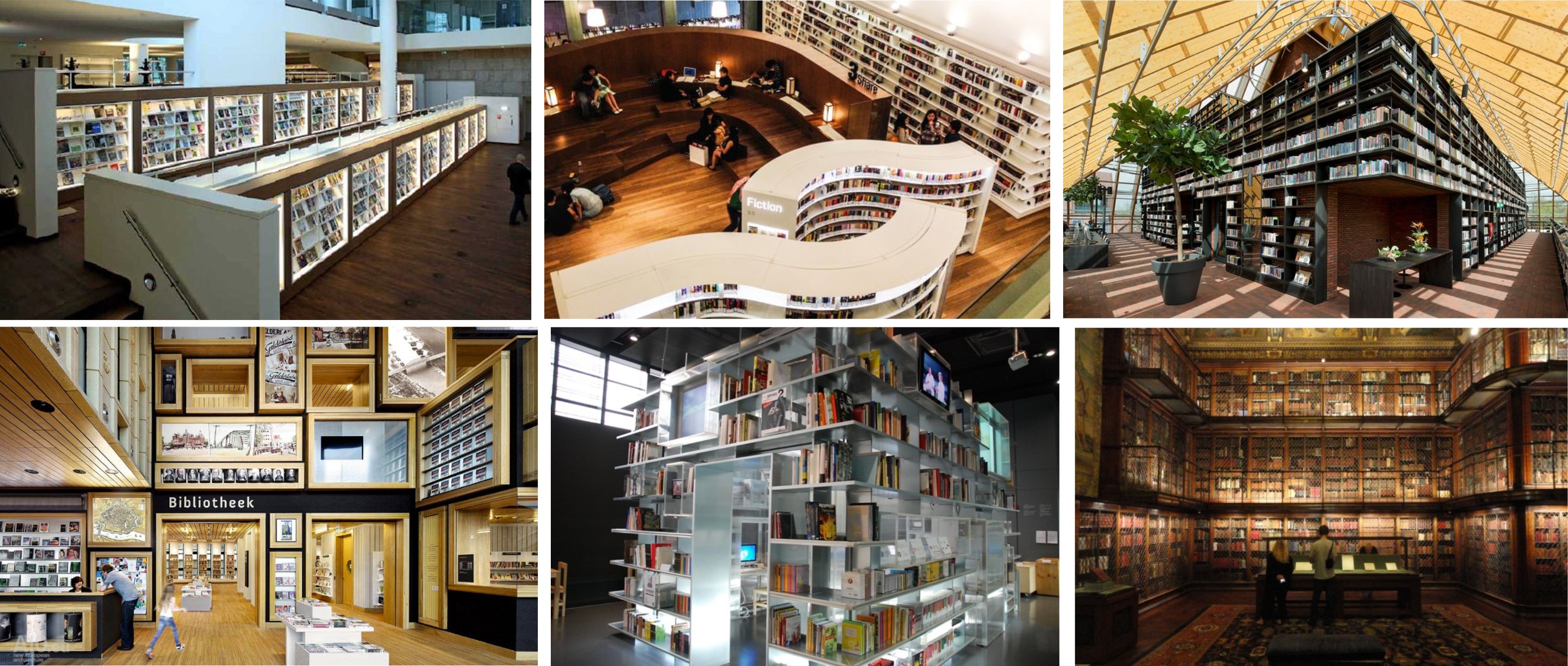
Evidence-Based Practice

Strategic Library Planning Built on Defensible Evidence
The projects in this portfolio share a common foundation: every recommendation was grounded in data that the institution itself could verify, challenge, and defend to external audiences. This is not a methodological preference; it is a practical requirement. Capital campaigns fail when their underlying space programs cannot withstand the scrutiny of a bond counsel, a provost's budget office, or a facilities committee that has seen too many optimistic architectural projections fall apart in construction.
Our evidence base typically draws from three streams: circulation and collection-use data analyzed bibliometrically; patron behavior observations conducted through structured visual scanning of the existing facility; and comparative institutional data drawn from projects of similar type, scale, and mission. When these three streams converge on a single space program, that program is fundable. When they diverge, the divergence tells you where the institution's assumptions need to be revised before any capital commitment is made.
For the full account of how we build the evidence base for a capital project, see Library Capital Planning: Building the Evidence Base for a Bond Campaign. For the bibliometric strand of this methodology, see Bibliometrics for Strategic Library Planning. For the visual scan methodology, see How Library Consultants Assess Facility Performance.
This practice has never recommended a building program it could not defend to the institution's most skeptical internal audience. That record is what this portfolio represents.
Begin a Planning ConversationSector-Specific Expertise
Not Every Library Faces the Same Problem
A courthouse law library and a university research commons share a planning methodology, but almost nothing else. The law library's adjacency requirements are driven by judicial workflow and security protocol. The research commons is driven by the intersection of enrollment growth, collection consolidation, and the need to support graduate interdisciplinary collaboration in a single environment. Treating these as variations on a single template produces buildings that work adequately in both contexts and excellently in neither.
This practice has worked across all major library sectors for more than fifty years because we begin each engagement by identifying what is genuinely specific to this institution's type, mission, and community — and what can legitimately be informed by comparable case histories from our project record.
- Academic libraries: enrollment-driven space programming, learning commons, digital literacy infrastructure, collection consolidation. See academic library design and college library design consulting.
- Public libraries: community needs assessment, branch network optimization, capital campaign development. See public library design consulting.
- Law libraries: adjacency to legal practice, access control, collection density, digital transition. See law library consulting.
- Medical and biomedical libraries: clinical workflow integration, evidence-based design, regulatory compliance, digital infrastructure. See medical library facility planning.
- Special collections and archives: preservation environment, security architecture, researcher access, digitization lab planning. See museum and special collections planning and archival facility planning.
- Corporate and research libraries: knowledge-flow optimization, retrieval speed, security architecture. See library design consulting for corporate and research environments.
Start Your Planning Engagement
Every engagement begins with a conversation. Tell us what you are facing — a building program that has stalled, a renovation that is moving faster than the planning, a strategic plan that needs an evidence base, a capital campaign that needs a defensible space program — and we will tell you honestly whether and how we can help. Aaron Cohen Associates has been having that conversation with library directors, trustees, provosts, and facilities officers for more than fifty years. We know how to make it useful.
Reach out through our contact and feedback page, or use the button below to begin the conversation directly.
Contact Aaron Cohen Associates